Best Chiang Mai Tourist Spots for First-Time Visitors
Jump to: Chiang Mai Tourist Spots | Day Trips | Where to Stay | Plan Your Trip | FAQs

I first visited Chiang Mai as part of a seven-day trip around Thailand — and it ended up being one of my favorite parts of the trip. It was also my first time traveling solo, ever.
I stayed in the Old City for four days, explored the temples on a Segway tour, spent day three on a long trip out to Chiang Rai that started before sunrise and ended well after dark, and wandered the quiet streets on my last morning. Chiang Mai made solo travel feel like the easiest, most natural thing in the world.
Northern Thailand’s largest city sits about 700 kilometers from Bangkok, surrounded by mountains and jungle. It’s slower, cooler, and in many ways more welcoming than the capital — with a dense concentration of temples, a walkable historic center, and day trips that take you to some of the most distinctive landscapes in Southeast Asia. If you’re figuring out what to see and where to go, this guide covers the Chiang Mai tourist spots worth your time.
📌 Quick Guide: Best Chiang Mai Tourist Spots
If this is your first time visiting, here are the best Chiang Mai tourist spots you should visit:
⏳ Planning a trip to Thailand? Use my favorite resources.
Here are the booking sites I personally use:
🛌 Hotels & Accommodation: Agoda & Booking.com
🏞️ Tours & Activities: I usually compare tours across GetYourGuide, Viator, and Klook before booking
🚂 Trains & Buses: I check 12Go & Trip.com
📍 Chiang Mai Tourist Spots You Should Visit
1) Chiang Mai Old City
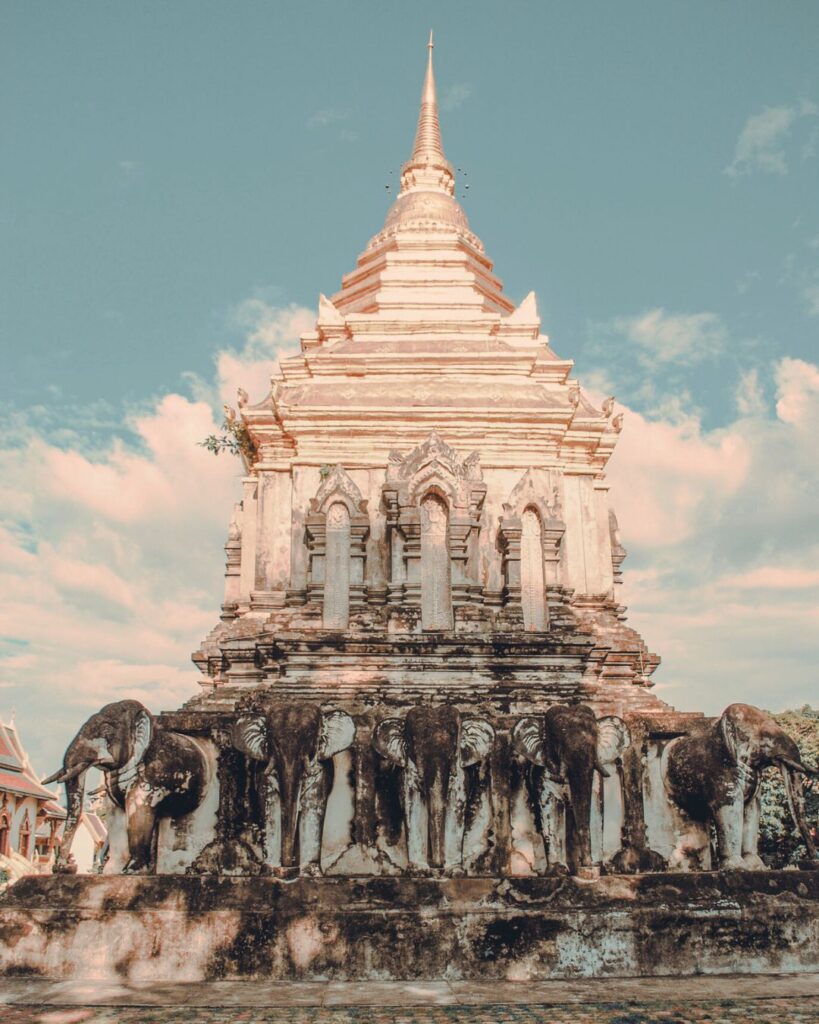
The Old City is the square kilometer at the center of Chiang Mai, defined by a moat and what remains of the ancient city walls. Almost everything that draws first-time visitors — the temples, the walking streets, the guesthouses and cafés — is either inside the walls or within easy walking distance.
Tha Phae Gate, on the eastern wall, is the most recognizable landmark and a good orientation point. From there, you can walk almost anywhere in the Old City in under twenty minutes. The streets inside the walls are quieter than you’d expect for a major city — wide enough, tree-lined in places, mostly pedestrian-friendly.
I stayed in the Old City for all four of my days in Chiang Mai, and I’d make the same choice again. It keeps you close to everything without the noise and pace of a more commercial area. On my last morning, I walked these streets in the soft rain at my own pace, picked up a postcard somewhere along the way, and had my hostel mail it before I left. That’s the kind of city the Old City is — unhurried enough to let you do that.
2) Wat Chiang Man
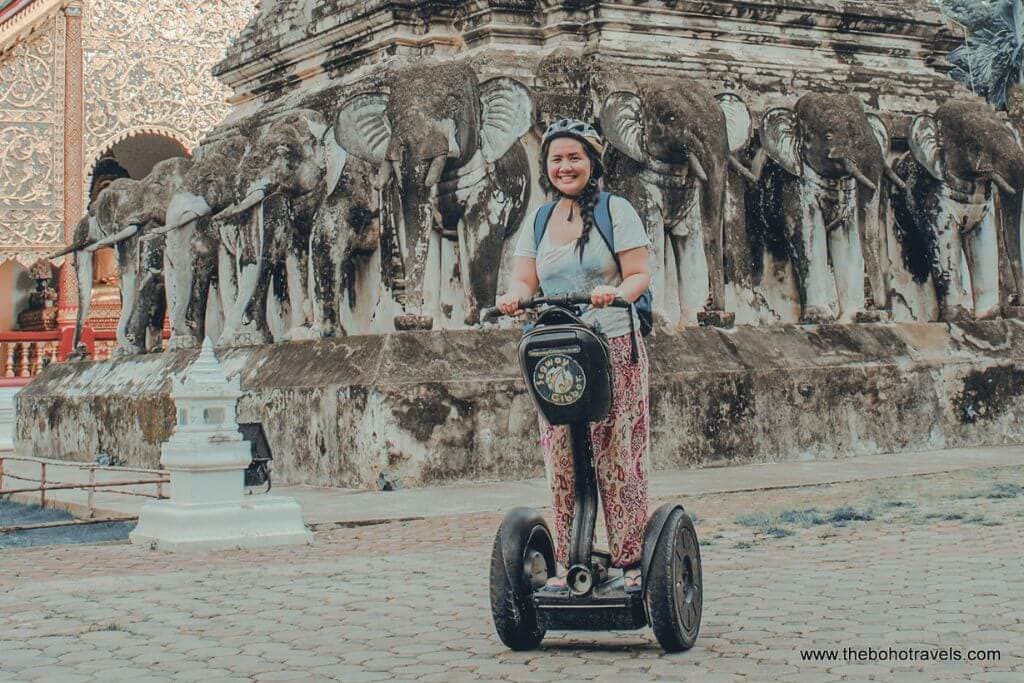
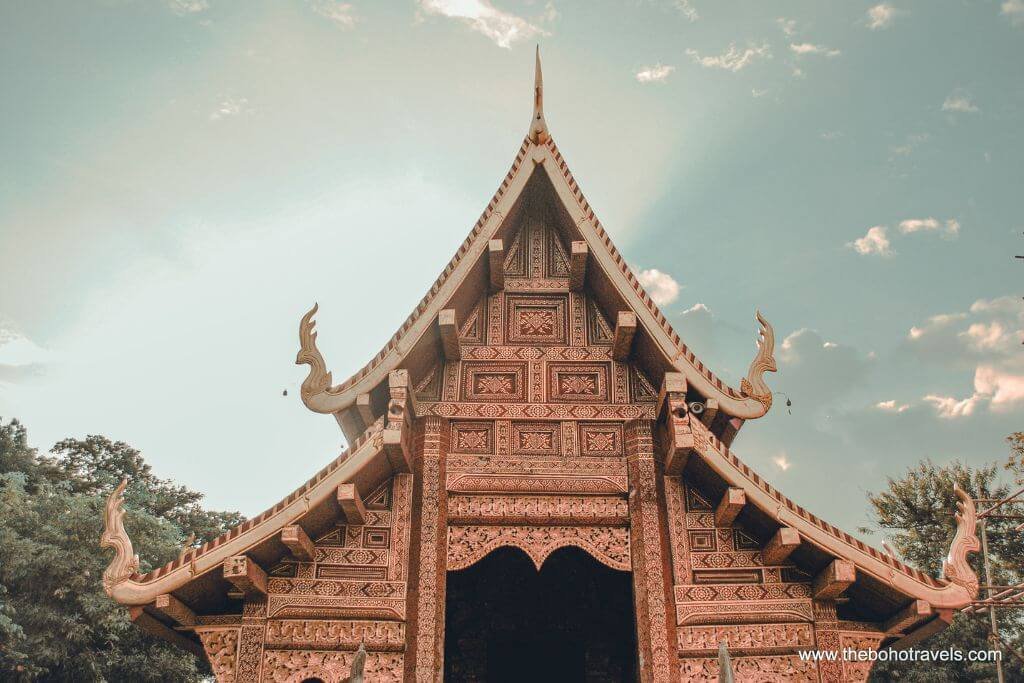
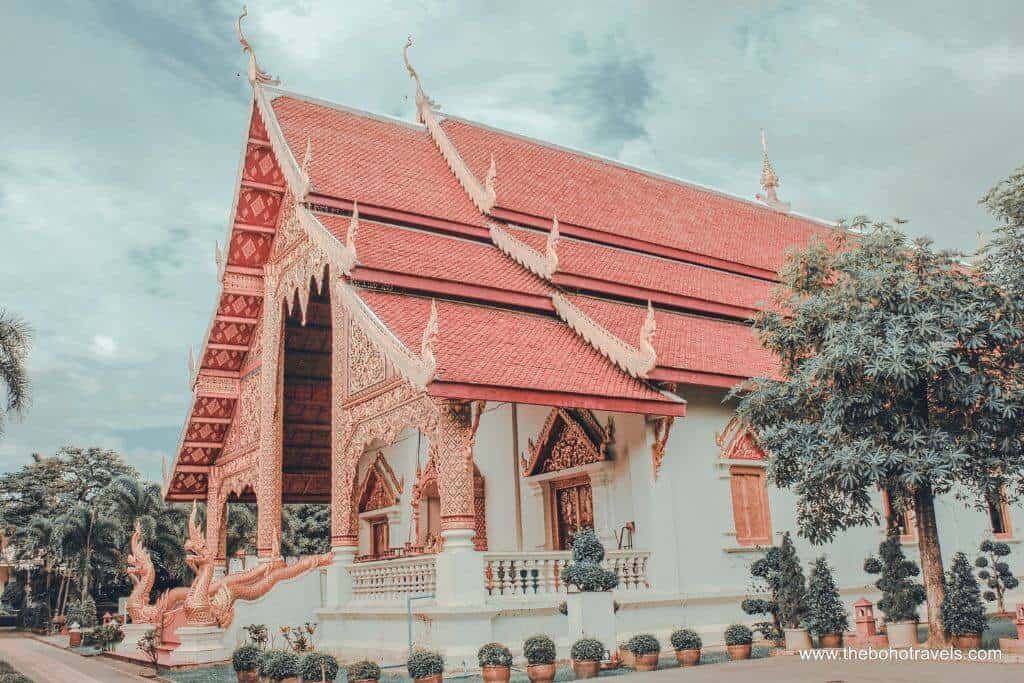
The oldest temple in Chiang Mai, Wat Chiang Man sits in the northeastern part of the Old City, slightly outside the center, which means it tends to be quieter than the more visited temples. The grounds are well-maintained and peaceful. This was the first temple I visited on my Segway tour. Seven hundred years old — and it’s still standing — makes it a worthy stop.
3) Wat Phra Singh
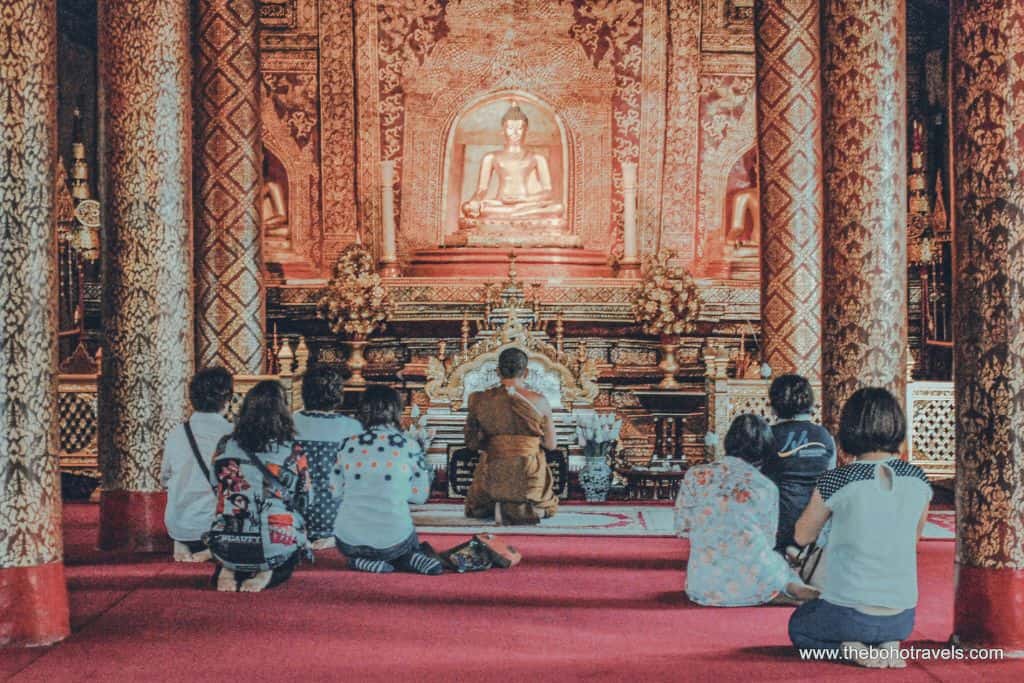
One of the most important temples in Northern Thailand — and the one that surprised me most. What I didn’t expect were the wax figures of monks inside, lifelike and still, slightly startling if you walk in without knowing about them. I hadn’t done much research on the temples beforehand, so this stopped me in my tracks.
What stuck with me most was how serene the atmosphere was. I’ve been to a lot of temples in Southeast Asia that are also tourist destinations, and most of them indeed look like a tourist destination. That wasn’t the case in Wat Phra Singh. People were there to pray, genuinely, and our tour group instinctively lowered our voices without anyone asking us to.
4) Wat Chedi Luang
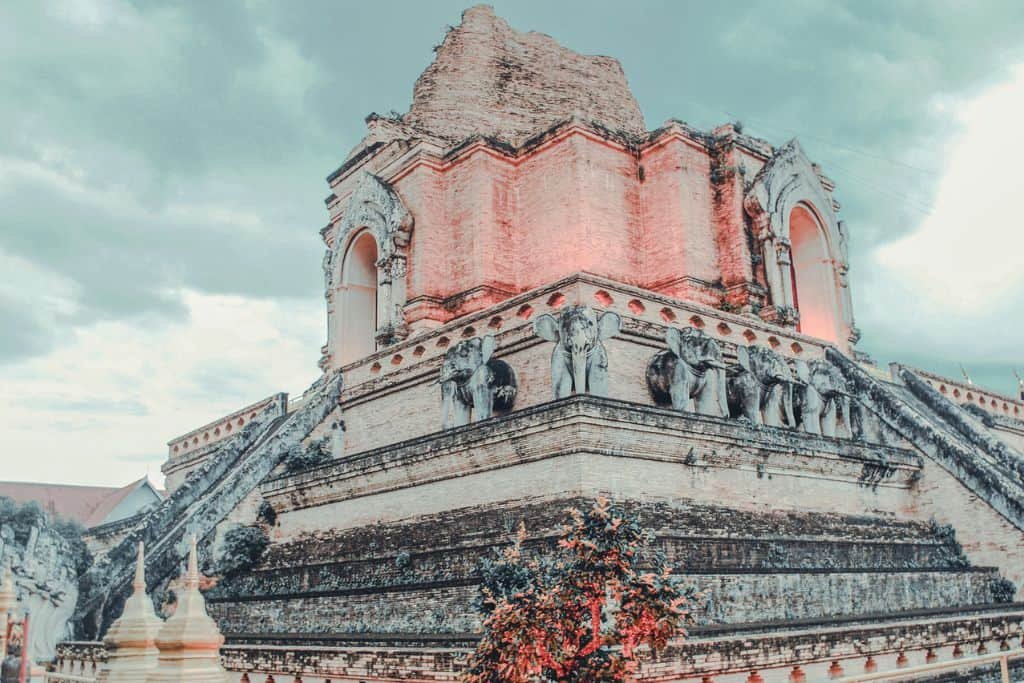
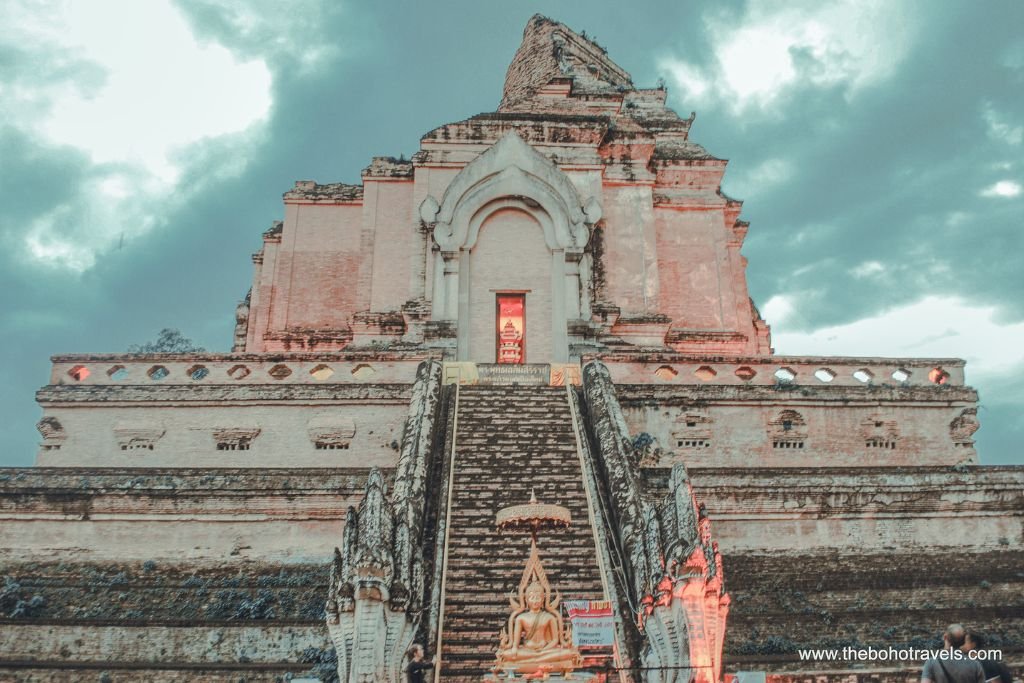
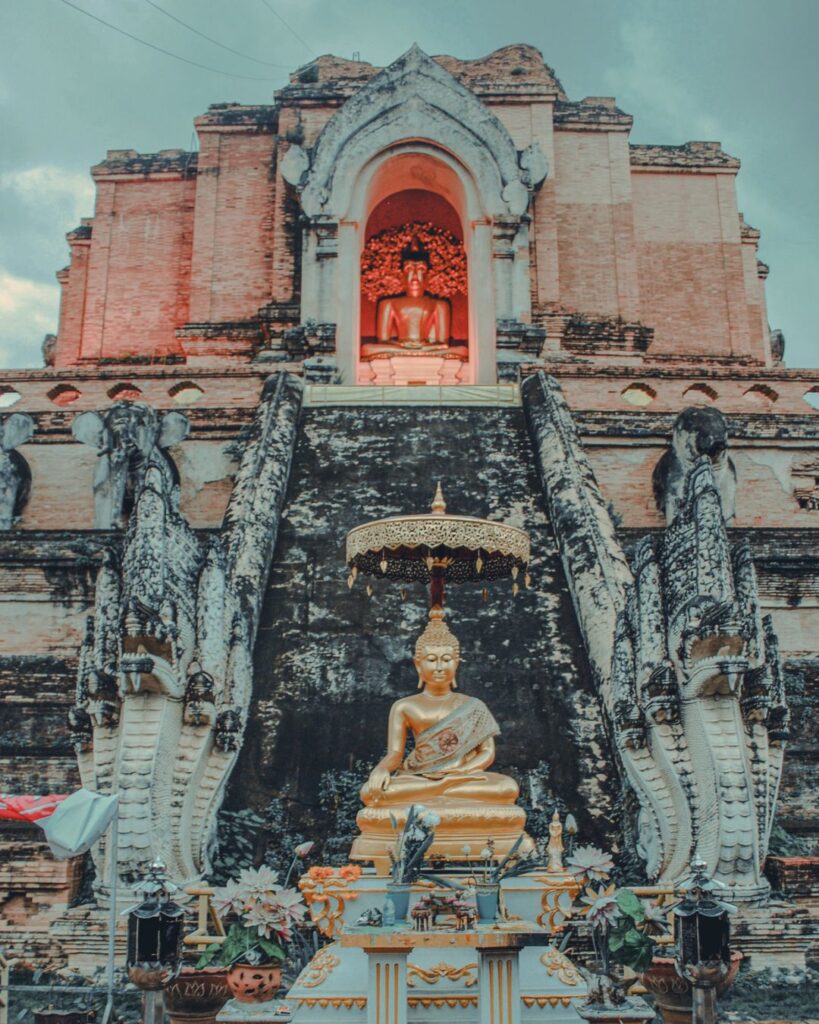
The most dramatic of the three visually — a partially ruined chedi that was once the tallest structure in the Lanna Kingdom. An earthquake in the 16th century brought down the top portion, and what remains is still impressive: a massive, layered structure with naga serpents flanking the stairways. We stayed outside and walked the perimeter, which gave us a full view of the scale of it.
5) Sunday Walking Street (Wualai Road)
A weekly night market that runs along Wualai Road, just south of the Old City, every Sunday evening. It has a more local feel than the Night Bazaar — local vendors, handmade goods, traditional crafts, and food stalls. By most accounts it’s one of the better markets in Chiang Mai for actually finding something worth bringing home. I missed it during my visit, but I’d prioritize it on a return trip.
6) Chiang Mai Night Bazaar
One of the most well-known night markets in Thailand, running nightly along Chang Khlan Road near the eastern moat. It’s a mix of handicrafts, clothing, street food, and souvenir stalls — more commercial than the walking streets but convenient if you’re in the area in the evening. I didn’t make it here during my visit. My introvertedness got the best of me, and I spent my evenings closer to the hostel. It’s on the list.
7) Warorot Market (Kad Luang)
Chiang Mai’s oldest market, running daily near the Ping River, is Warorot Market. It’s popular with locals rather than tourists, so it’s worth going here if you want to have a more honest picture of the daily life in the city. I didn’t get a chance to visit it during my trip, but it’s on my list for the next one.
8) Nimmanhaemin (Nimman)
I didn’t get to spend time here during my visit, but if you’re staying longer or need to work while you’re in Chiang Mai, Nimman is worth knowing about. It has specialty coffee shops, co-working spaces, boutiques, and a younger, more international crowd — great for remote workers or anyone who wants a more contemporary base.
9) Doi Suthep
Wat Phra That Doi Suthep sits on a mountain about 15 kilometers from the city center, at roughly 1,080 meters above sea level. It’s one of the most sacred temples in Northern Thailand, and the views of Chiang Mai from the top are something people talk about long after their trip. I ran out of time on this visit — it’s the first thing on my list when I go back. You can reach it by songthaew, scooter, or tour. Factor in the 306-step staircase to the entrance, or take the funicular if it’s running.
10) Doi Inthanon National Park
About 90 kilometers south of Chiang Mai, Doi Inthanon National Park is Thailand’s highest mountain. The park has waterfalls, royal pagodas, and temperatures cool enough that it feels like a different climate from the city. Most visitors go on a day tour from Chiang Mai. I wasn’t able to visit it during my trip, but this is high on my list for when I return.
🛏️ Where to Stay in Chiang Mai

For first-time visitors, the Old City is the most practical base. It’s walkable, well-located, and keeps you close to the temples, the markets, and most of the cafés and restaurants that come up in any Chiang Mai recommendation.
- Hostel One Art & Gallery — A well-regarded Old City hostel with a creative vibe, good common spaces, and the kind of social atmosphere that makes solo travel easier without being overwhelming.
- Phra Singh Village — A guesthouse-style property steps from Wat Phra Singh, right in the heart of the Old City — walkable to the main temples and the Sunday Walking Street.
- The Inside House — A boutique heritage hotel in a restored building in the Old City, with traditional Lanna-influenced interiors and a quiet atmosphere that feels like Chiang Mai at its best.
🚗 Day Trips from Chiang Mai
Chiang Rai Day Trip
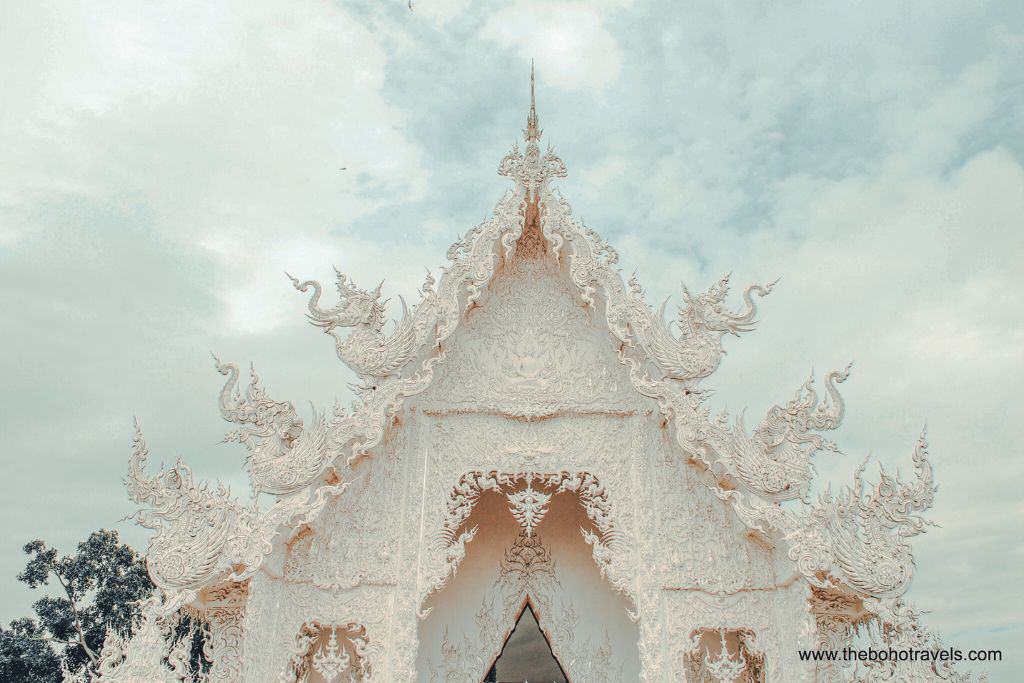
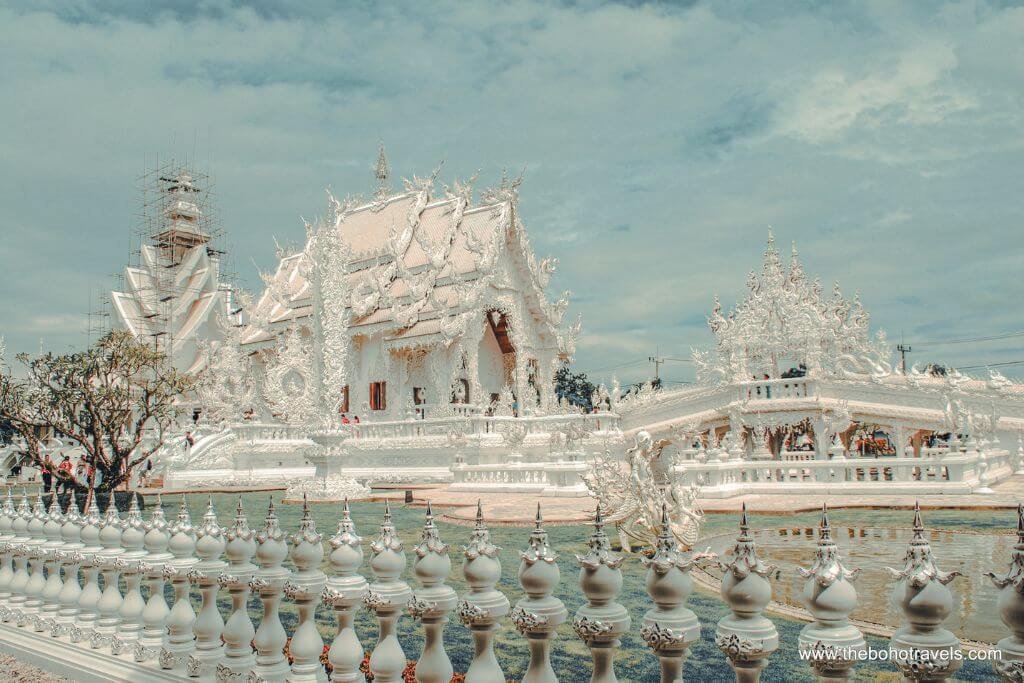
This was a full day — an early start and a late return — but it covered more ground than any other single day of my Thailand trip. The highlights: Wat Rong Khun (the White Temple), the Golden Triangle where Thailand, Laos, and Myanmar meet at the Mekong River, a brief boat crossing to Don Sao Island in Laos, and a visit to a Kayan village near the Golden Triangle. I booked through the staff at my hostel, which made the logistics effortless. If you’re in Chiang Mai for at least three days, I’d set one aside for this.
💡 Full guide: Chiang Rai Day Trip from Chiang Mai.
Other Day Trips Worth Knowing About
Doi Inthanon National Park is the other day trip that comes up most — Thailand’s highest peak, waterfalls, and cool air even in the warmer months. I haven’t done it yet, but it’s on my list.
Elephant sanctuaries outside the city are also worth considering if you have the time and budget — look for sanctuaries that don’t offer elephant riding as the simplest filter for ethical operators.
📝 Plan Your Chiang Mai Trip
Best Time to Visit Chiang Mai
November to February is the most comfortable time to visit. Temperatures are cooler, skies are clearer, and this is when the Yi Peng lantern festival takes place, usually in November on the full moon of the second month of the Lanna calendar. It’s one of the most visually striking festivals in Southeast Asia and one of the reasons Chiang Mai draws the crowds it does during this period.
March to May is burning season. While agricultural burning is done in the surrounding region, it creates smoke and haze that can significantly affect air quality in Chiang Mai. Check AQI levels before visiting if you have respiratory sensitivities.
June to October is the rainy season. Expect afternoon downpours, greener landscapes, and fewer tourists. I visited during this period — pack a light rain jacket and don’t let it put you off.
How to Get Around Chiang Mai
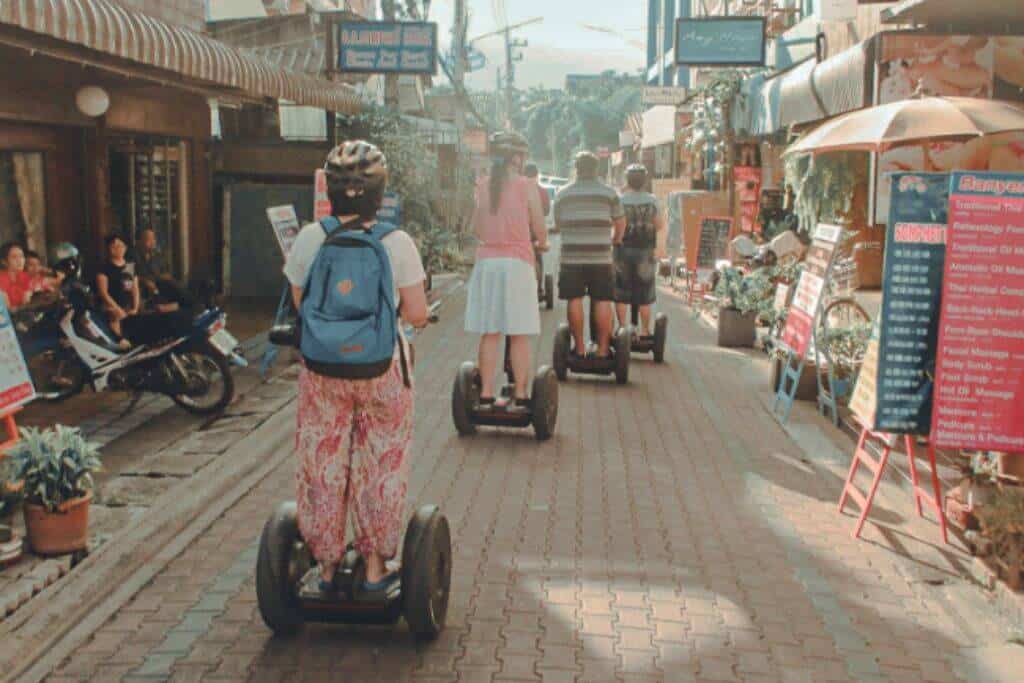
The Old City is walkable. If you’re based there, you can reach most temples and cafés on foot. For longer distances — Nimman, the Night Bazaar area, or the airport — Grab is reliable and easy to use. Tuk-tuks are available but agree on a price before you get in. Songthaews (red shared truck taxis) run fixed routes and are the most local way to get around, but require a bit more local knowledge to navigate. For day trips, joining a group tour is the most practical option if you’re not renting a scooter — the staff at most hostels and guesthouses can help with bookings.
🤔 Is Chiang Mai Worth Visiting?
Yes — and I say that as someone who went in without strong expectations and came out wanting to go back. Chiang Mai has a particular quality that’s hard to name: it’s manageable without feeling small, historic without feeling like a museum, and easy to be alone in without feeling lonely.
💭 FAQs: Chiang Mai Tourist Spots
How many days do you need in Chiang Mai?
Four days gives you enough time to explore the Old City, visit the main temples, and do the Chiang Rai day trip. If you want to add Doi Suthep, Doi Inthanon, or spend time in Nimman, budget for five to six days.
Is Chiang Mai good for solo travelers?
It’s one of the better cities in Southeast Asia for solo travel. The Old City is walkable and easy to navigate, English is widely spoken in tourist areas, and the hostel scene is active enough that you’ll meet people if you want to — without it being forced. I did my first ever solo trip here and felt comfortable throughout.
Is Chiang Mai worth visiting if I’ve already been to Bangkok?
Yes, and it’s a different experience. Bangkok is fast, dense, and relentless in the best way. Chiang Mai is slower, cooler, and more manageable — with a different cultural identity rooted in the Lanna Kingdom rather than central Thai history. They complement each other well on the same itinerary.
💌 The Wrap-Up: Chiang Mai Tourist Spots
Four days in Chiang Mai gave me a good first look — the temples, the Chiang Rai day trip, the quiet mornings in the Old City. I arrived with no expectations, but I left with a longer list of what I would love to do differently. The Chiang Mai tourist spots I didn’t get to visit aren’t a regret, but a reason to go back.
If you’re just starting to plan, the things to do guide covers what to fill your days with, and the where to stay guide breaks down the best areas and picks by budget. And if you’re still deciding whether Chiang Mai belongs on your Thailand itinerary at all — it does.
Chiang Mai is one of my favorite stops across Southeast Asia — and I’m excited for you to find out if it’s yours, too.