
Southeast Asia Travel Guide: Where to Go, What to Know, and How to Plan Your Trip
Jump to: Why Southeast Asia | Where to go | Building your trip | Getting between countries | What it costs | Best time to visit | What to know before you go | Start planning

My first trip outside the Philippines was to Bangkok in 2011 — not purely for leisure, but for a personal development course. We had a few hours to spare, and someone suggested the Grand Palace. I said yes, mostly out of curiosity, not knowing it would open something in me that I haven’t been able to close since.
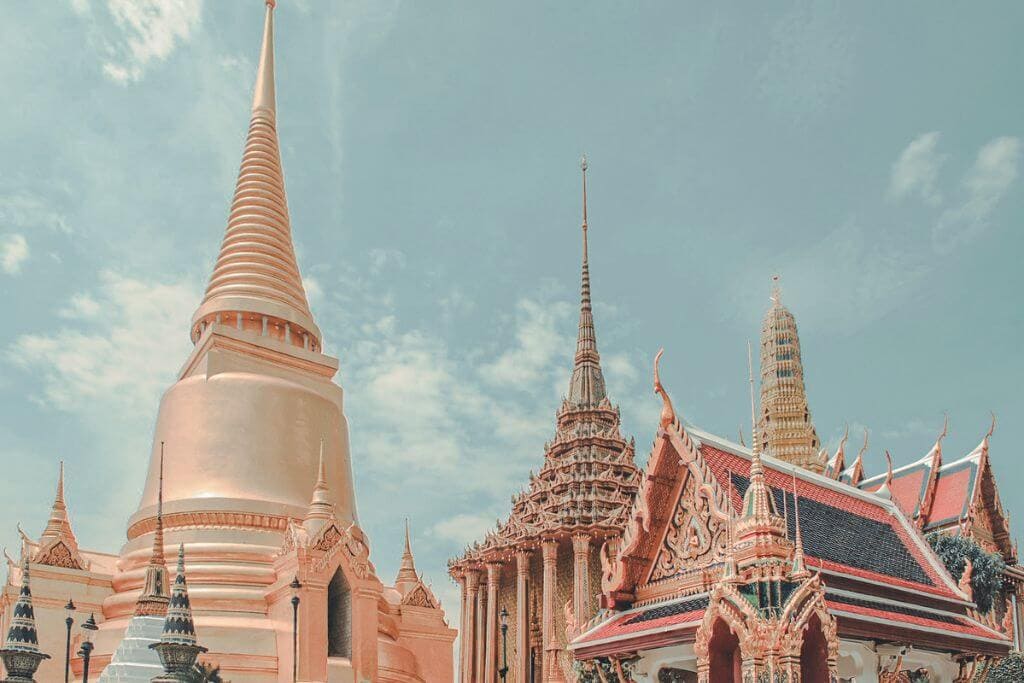
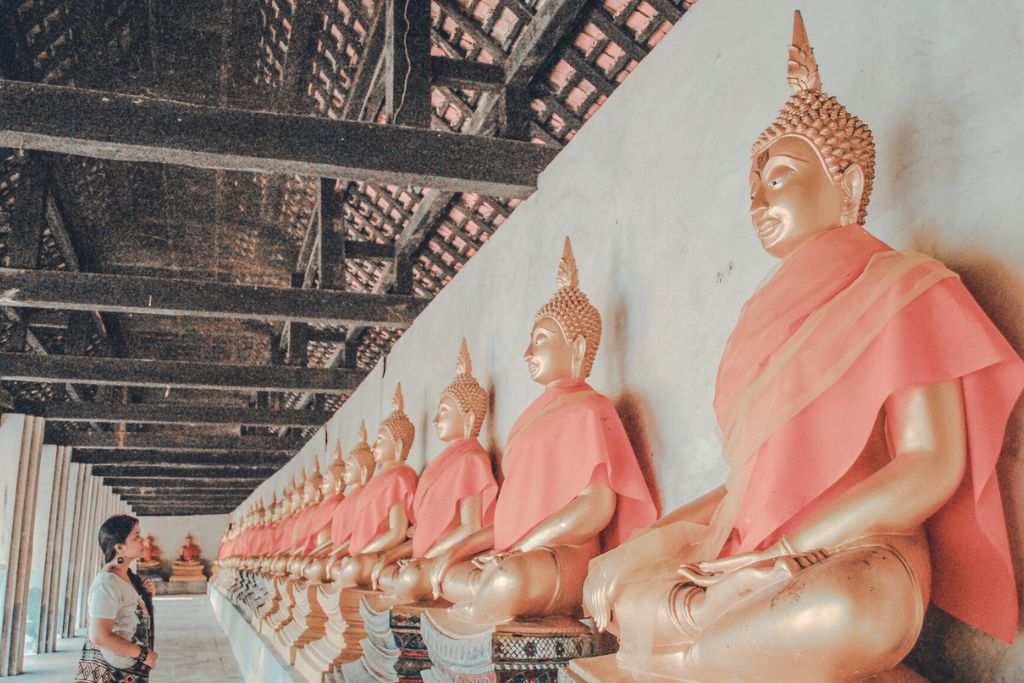
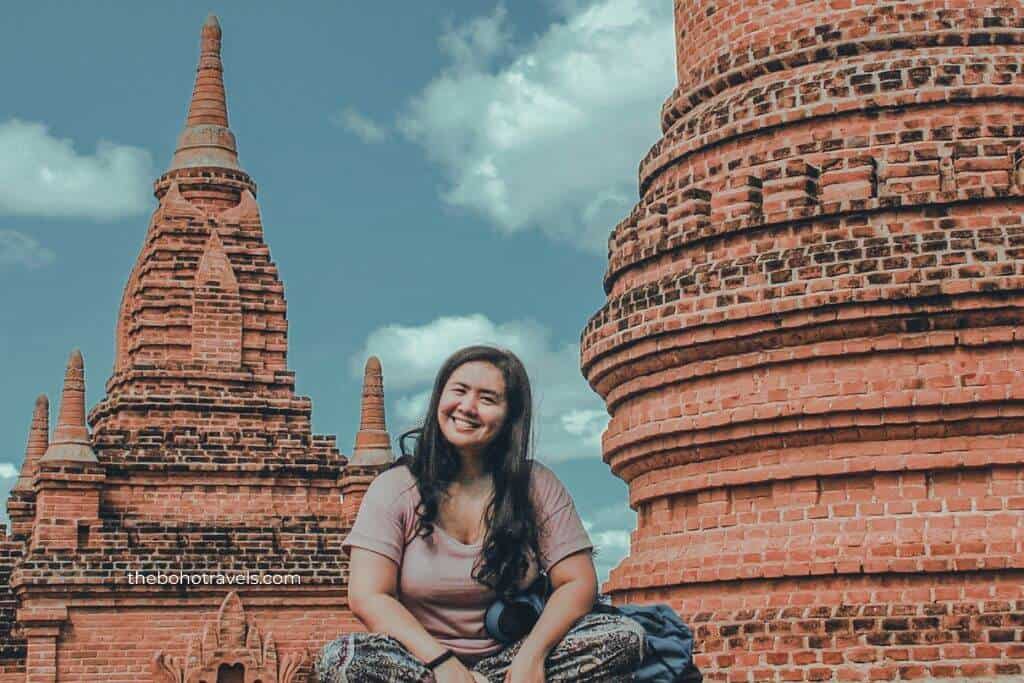
That trip to Bangkok was the beginning of more than a decade of traveling across Southeast Asia: returning to Thailand multiple times to explore Ayutthaya and Chiang Mai, backpacking through Vietnam and Cambodia to see Angkor Wat, spent four days in Singapore to attend the Laneway Festival and exploring the country budget-style, making my way to Brunei, spending two weeks in Myanmar across Bagan, Yangon, Mandalay, Sagaing, and Inle Lake, going back to Vietnam for Da Nang, Hoi An, and My Son Sanctuary, exploring Kuala Lumpur and Penang in Malaysia, and visiting Indonesia — first for Yogyakarta and Borobudur, then multiple times back to Bali.
This guide covers what I know from those trips — honestly, practically, and with details that only comes from actually being there. It’s written for international travelers planning their first or second foray into the region, and for Filipinos heading outside the country for the first time who want to know what to expect.
My Asia coverage is growing. Taiwan is next on my list, and more destination guides are in the works. But Southeast Asia is where I started, and it’s where this guide begins.
Why Travel to Southeast Asia?
Southeast Asia is a region that holds together despite — or maybe because of — how different each country feels on the ground.
The food in Vietnam bears no resemblance to the food in Thailand. The pace of Brunei is nothing like the pace of Ho Chi Minh City. The spiritual weight of Borobudur is a world apart from the beach clubs of Bali. And yet there’s something that runs through all of it: a warmth in the people, a vividness in the colors, and a sense that life here is lived at a different register than what most of us are used to.
Traveling around Southeast Asia helped shape my curiosity, my creativity, and my sense of self. I’ve always been proud to be Filipino, and being on the road here — meeting people from across the region and across the world, sharing stories of where we’d been and where we were headed — made me more comfortable with who I am. It also made me braver. More willing to say yes to the unknown.
From a practical standpoint, Southeast Asia is one of the most accessible regions in the world for first-time international travelers. Many destinations are affordable, transportation between countries is manageable, and most tourist areas have enough English-speaking locals to make navigation relatively smooth. The infrastructure varies widely — Singapore and Malaysia feel polished and well-connected; getting to a village in northern Thailand or a remote temple in Cambodia requires a different kind of patience — but that range is part of what makes the region so interesting to explore.
One thing that consistently surprised me: how well-connected other countries’ public transport systems are. Being able to take a train straight from Bangkok’s airport to a stop near my hostel — no negotiation, no guessing the fare — was a revelation after years of navigating NAIA. The region has invested seriously in making itself easy to move through, and it shows.
💡 Southeast Asia is not just Thailand, Vietnam, or Indonesia. Every country in the region — including the Philippines — has something distinct and worth discovering. The more of it you see, the more you realize how much there is left to find.
Where to go in Southeast Asia
The countries and destinations below are the ones I’ve personally visited and write about on this blog. Each is its own world. Here’s an honest sense of what you’ll find.
The Philippines
I’ll start here because this is home — and because the Philippines deserves more than a footnote in any honest Southeast Asia guide.
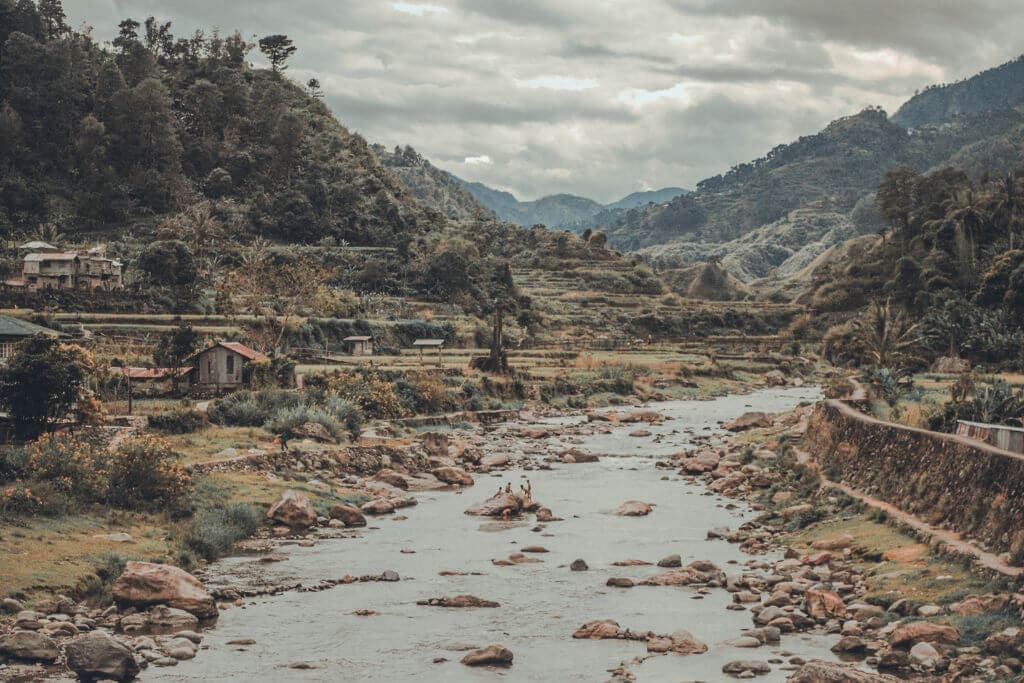
With over 7,000 islands, the Philippines offers a kind of variety that’s hard to find anywhere else in the region: pristine beaches and world-class dive sites in Palawan and Bohol, the rice terraces and indigenous culture of the Cordillera highlands, the colonial history of Intramuros in Manila, and a warmth in the Filipino people that visitors consistently say they didn’t expect and never forget. It’s a destination that rewards the curious traveler — the one willing to go beyond the obvious and discover something that doesn’t feel like it’s been packaged for tourism yet.
I’ve visited 34 provinces and counting, and I still feel like I’ve only scratched the surface. Because I write about the Philippines extensively, it has its own dedicated pillar on this site. Everything you need to plan your trip is there.
Thailand
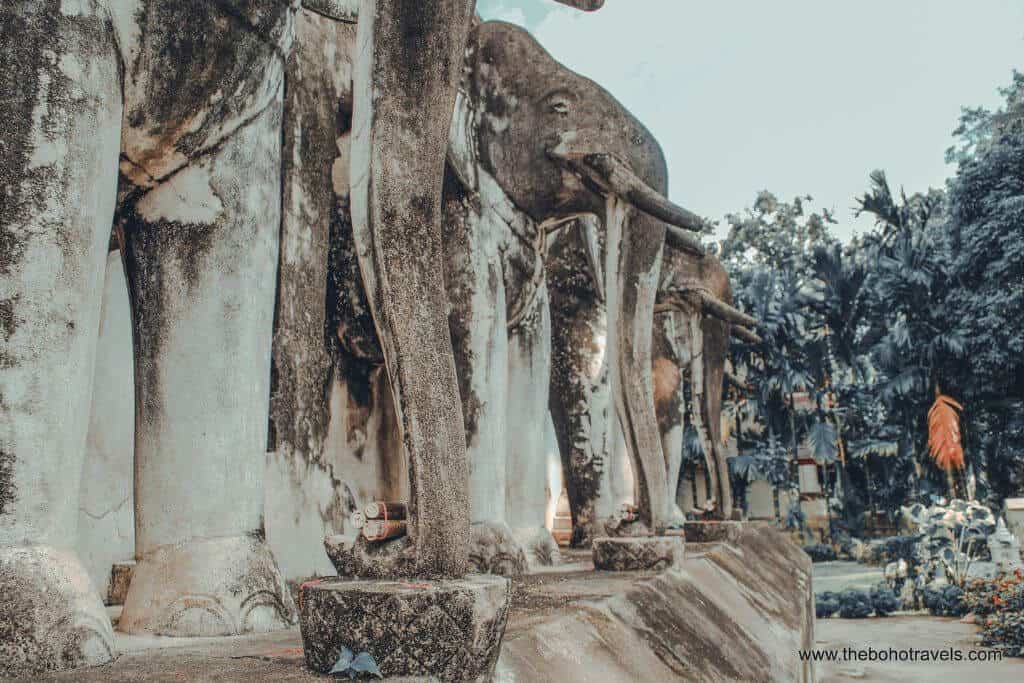
Thailand was my first foray into international travel, and it’s still one of the easiest entry points into Southeast Asia for first-timers. The transport infrastructure is excellent, English is widely spoken in tourist areas, and the country has been hosting international visitors long enough to have figured out how to do it well. But don’t let the accessibility fool you into thinking there’s nothing left to discover.
Bangkok was the city that opened my eyes to how beautifully different the world could be beyond my own four walls. The art scene surprised me. Bangkok’s history, culture, and food pulled me in every direction. It’s loud and chaotic in the best possible way, and it rewards the traveler who slows down enough to wander beyond the obvious. Read my guide on Things to Do in Bangkok to start planning your visit.
Chiang Mai is where I took my first solo trip, and it remains one of the places I feel most at ease in the region. It draws a certain kind of traveler — people looking for culture, for slow travel, for a city that has personality without demanding that you keep up with it. The backpacker community here is real, but it’s not overwhelming. Read my guide on Things to Do in Chiang Mai to plan your time there, or start with the best Chiang Mai tourist spots for an overview of what the city has to offer.
Ayutthaya — the ancient capital north of Bangkok — is worth making time for. The temple ruins scattered across the city are unlike anything else in the country, and the scale of what was once here stays with you.
Chiang Rai surprised me completely. The White Temple (Wat Rong Khun) was nothing I had ever seen before — strange and beautiful and utterly unlike the temple aesthetic I’d come to expect. A day trip from Chiang Mai, paired with a stop in Mae Hong Son, was one of the most memorable days of that trip.
It was on the Chiang Rai day trip, at a Kayan village near the Golden Triangle, that I met the Karieng tribe. It was a humbling experience. Seeing how content people can be with a life so different from anything I knew was something I wasn’t prepared for, and something I’m glad I encountered.
💡 A day tour from Chiang Mai to Chiang Rai — including the Golden Triangle and a Kayan village — is worth including in your itinerary. The contrast between Wat Rong Khun’s otherworldly architecture and the quiet introduction to the hill tribe communities makes for a full and meaningful day.
Vietnam
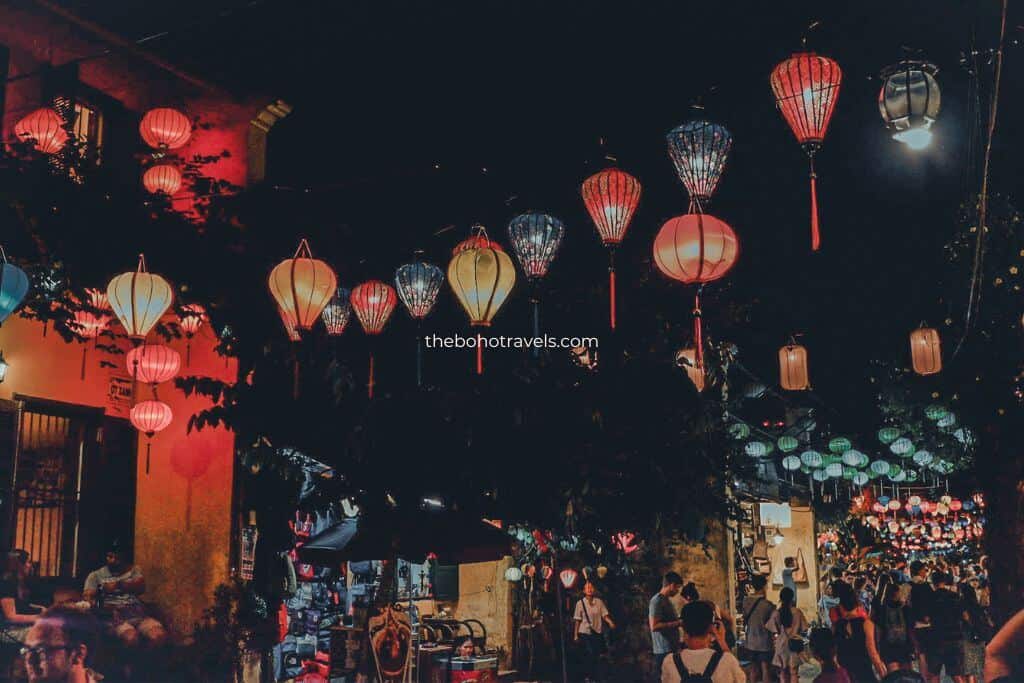
Vietnam was the destination that taught me how much a country can hold within itself. I’ve visited twice — the first time for Ho Chi Minh City and a backpacking loop through Cambodia, the second time for Da Nang, Hoi An, and My Son Sanctuary. Both trips gave me something completely different.
Ho Chi Minh City is chaotic and noisy — but that chaos is part of its charm. It was the first place I’d ever been where motorcycles seemed to own the streets more than cars. Crossing the road is an art form. The energy is relentless, and somehow that relentlessness becomes addictive.
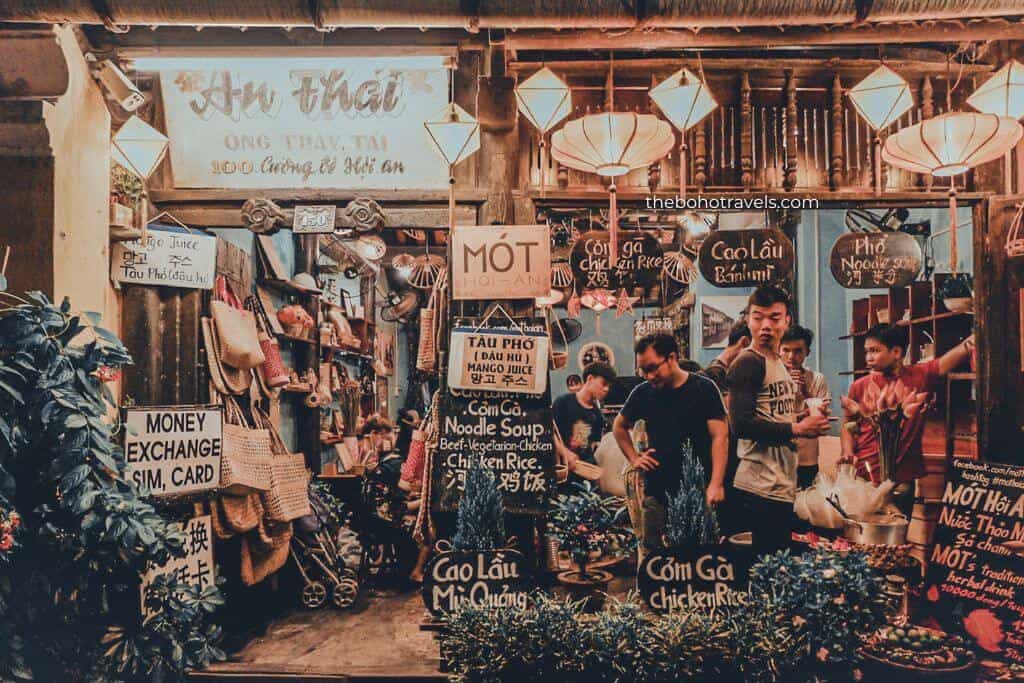
Hoi An felt like stepping into another world entirely — colorful and peaceful at the same time, which shouldn’t work as well as it does. The lantern-lit streets, the tailor shops, the riverside cafes. One memory that has stayed with me: we had tea and biscuits at Reaching Out Tea House, a cafe staffed by people with speech and hearing impairments. It was one of the most quietly moving dining experiences I’ve had anywhere.
💡 Vietnam is an excellent first destination for food-forward travelers. The cuisine changes dramatically from north to south, and even within cities, the variety is extraordinary. If food matters to your trip, Vietnam will not disappoint.
Indonesia
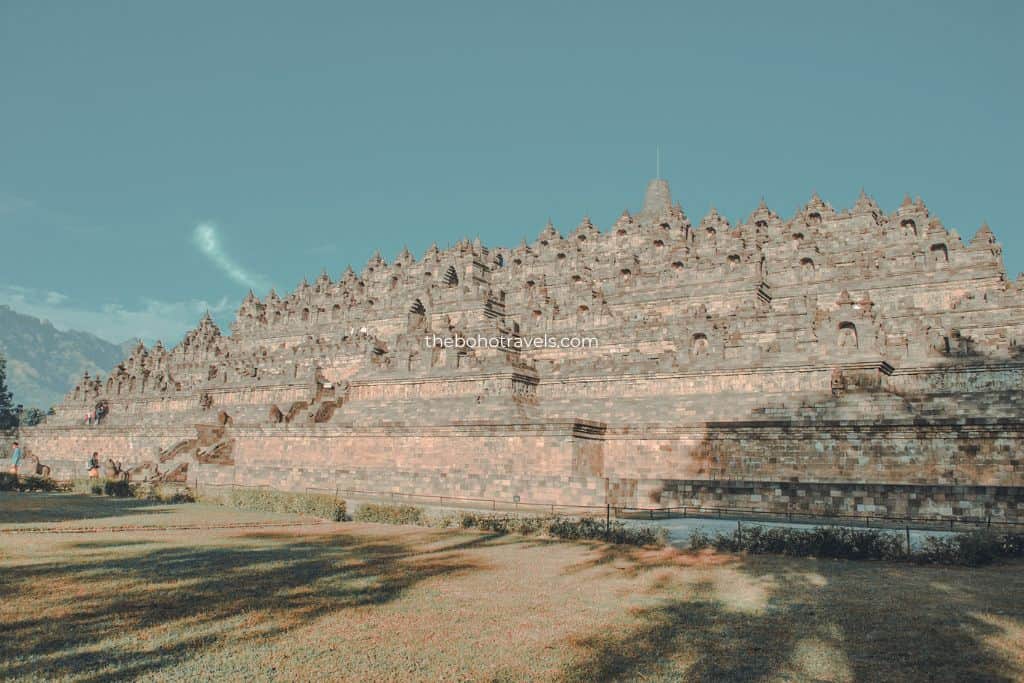
Indonesia is vast — over 17,000 islands, hundreds of languages, and a cultural diversity that most visitors only begin to scratch the surface of. I’ve spent time in Central Java and Bali, and both have rewarded me in completely different ways.
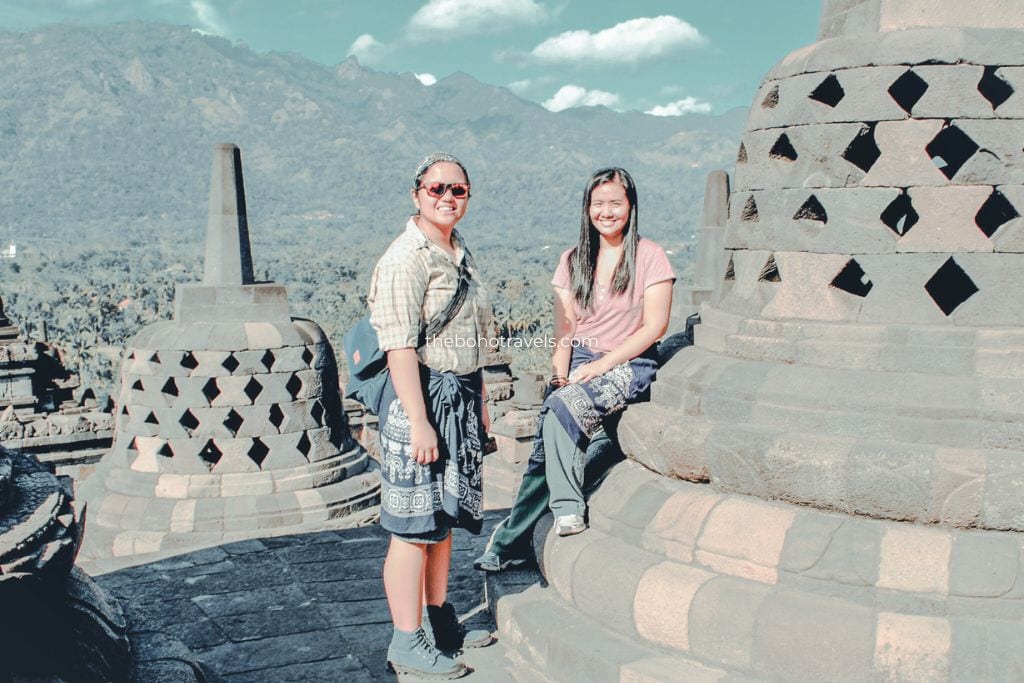
Yogyakarta is worth visiting for Borobudur alone — a 9th-century Buddhist temple complex that is a UNESCO World Heritage Site and one of the largest Buddhist monuments in the world. The scale of it, the carvings, the sunrise light across the stupas — it earns every superlative. But Yogyakarta also has Prambanan, a stunning Hindu temple compound, and Mount Merapi nearby. The city itself has a creative, student energy that makes it a pleasure to spend a few days in.
Bali is sometimes dismissed as overexposed — and yes, parts of it are crowded and touristy. But Bali is worth visiting not just for its gorgeous beaches, but for its rich culture and heritage. Ubud, even if it has become a bit of a cliché, is still genuinely beautiful. I’ve been to Bali multiple times — I’ve watched sunrises in Sanur, explored the rice terraces and temples of Ubud, and spent evenings by the beach — and I would go back in a heartbeat if given the chance. That’s not something I say about every destination.
Brunei
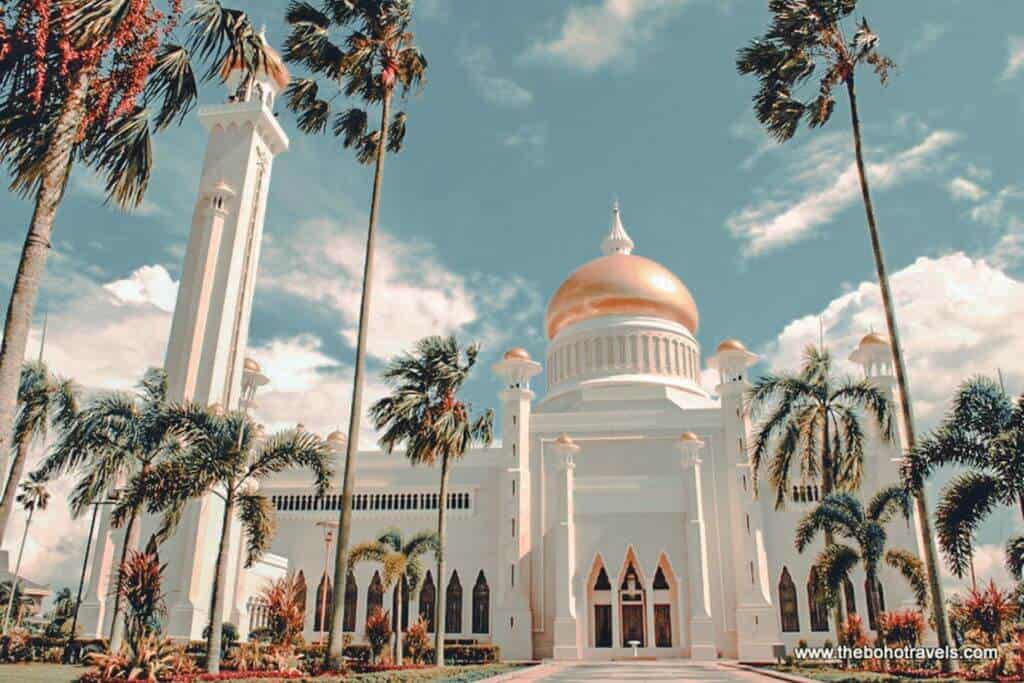
Brunei sits differently from every other country in this guide. It’s not a typical backpacker stop, and most travelers who visit do so as an add-on to a Malaysia or Borneo itinerary rather than as a standalone destination. But I visited it on its own, and I’m glad I did.
The best way I can describe Brunei is this: it’s your quieter break from the beautifully chaotic and vibrant energy of the rest of Southeast Asia. We spent our time visiting mosques, connecting with the local Couchsurfing community, and being shown around by residents who had no agenda other than genuine hospitality. There’s a grandioseness to some of its architecture — the Omar Ali Saifuddien Mosque is extraordinary — and a simplicity to everyday life that I found genuinely restful.
💡 Brunei is one of the more expensive destinations in the region. It’s also a dry country, so adjust your expectations accordingly. But if you want to experience a side of Southeast Asia that most travelers skip , it’s worth the trip.
→ Explore the Brunei Travel Guide
Cambodia
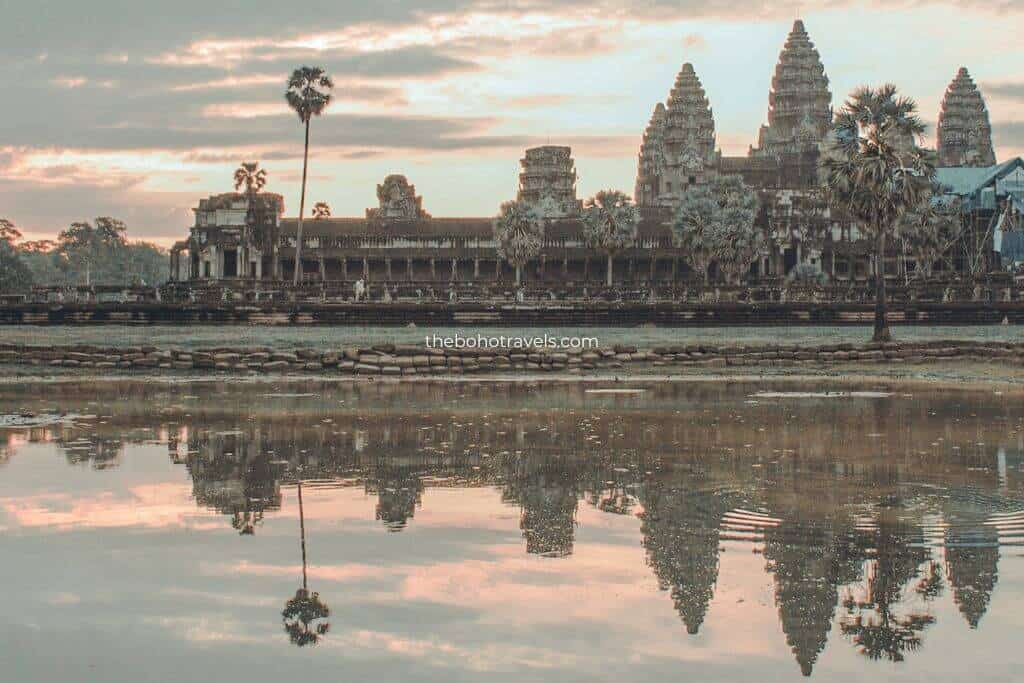
Siem Reap and Angkor Wat were the reason I planned my first backpacking loop through the region. Angkor Wat is one of those places that you’ve seen in photographs your whole life, and still manages to exceed what you imagined when you’re standing in front of it. The temple complex is vast — plan at least a full day, ideally two.
Phnom Penh is heavier — the history of the Khmer Rouge is present in ways that are impossible to look away from, and shouldn’t be. It’s a city that asks something of you as a visitor, and I think that’s appropriate.
Cambodia Travel Guide [guide coming soon]
Malaysia

Malaysia was a pleasant surprise — a country I visited to meet friends and ended up genuinely falling for.
Kuala Lumpur is modern, well-connected, and easier to navigate than most Southeast Asian capitals. The food scene is exceptional — the multicultural makeup of the country (Malay, Chinese, Indian) means the culinary variety is extraordinary.
Penang is the destination I’d recommend to anyone who loves street art and colonial history. George Town’s historic center is a UNESCO World Heritage Site, which, in itself, is a great reason to be part of your itinerary. In addition, its creative energy makes it stand out from anywhere else in Malaysia.
💡 Malaysia is one of the best starting points for first-time Southeast Asia travelers. English is widely spoken, public transport in KL is excellent, and the country’s diversity means you get an enormous amount of cultural variety in a relatively compact trip.
Malaysia Travel Guide [guide coming soon]
Singapore
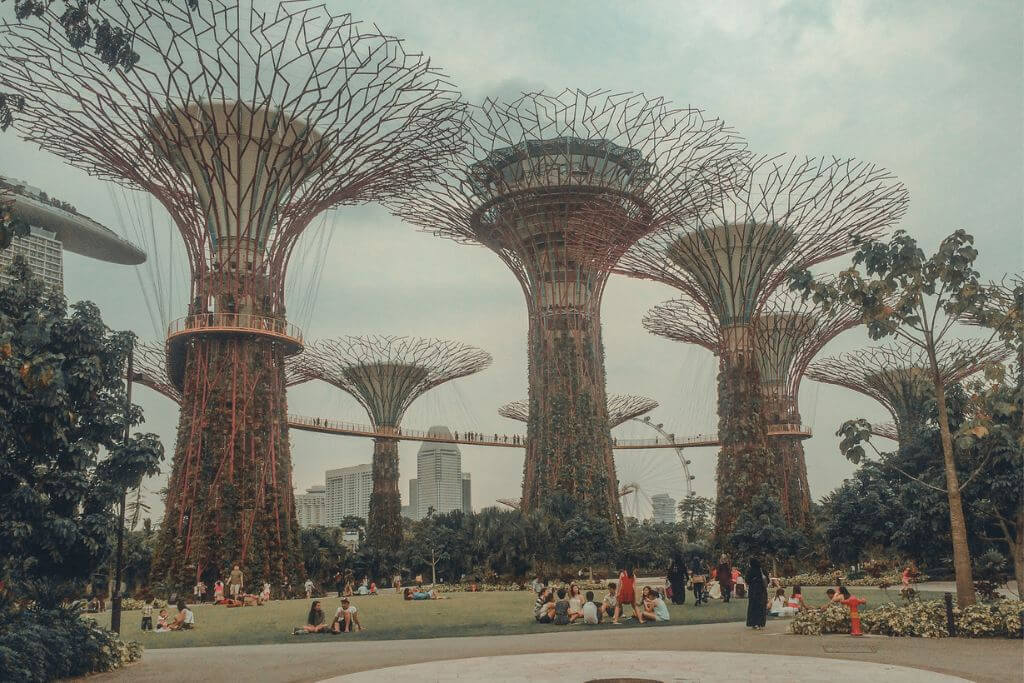
Singapore is unlike anywhere else in Southeast Asia — so clean, so organized, so efficient that it can feel almost surreal after a week in Bangkok or Ho Chi Minh City. I visited for the Laneway Festival and stayed four days, exploring the country on a budget. It’s entirely possible, though it requires more planning than most destinations in the region.
Singapore is best experienced as a contrast — either at the start of a Southeast Asia trip, to ease yourself in gently, or at the end, as a palate cleanser before heading home. As a destination in its own right, it rewards the curious: the food, the architecture, the cultural neighborhoods (Chinatown, Little India, Kampong Glam) all punch well above what the city’s size would suggest.
Singapore Travel Guide [guide coming soon]
Myanmar — A Note
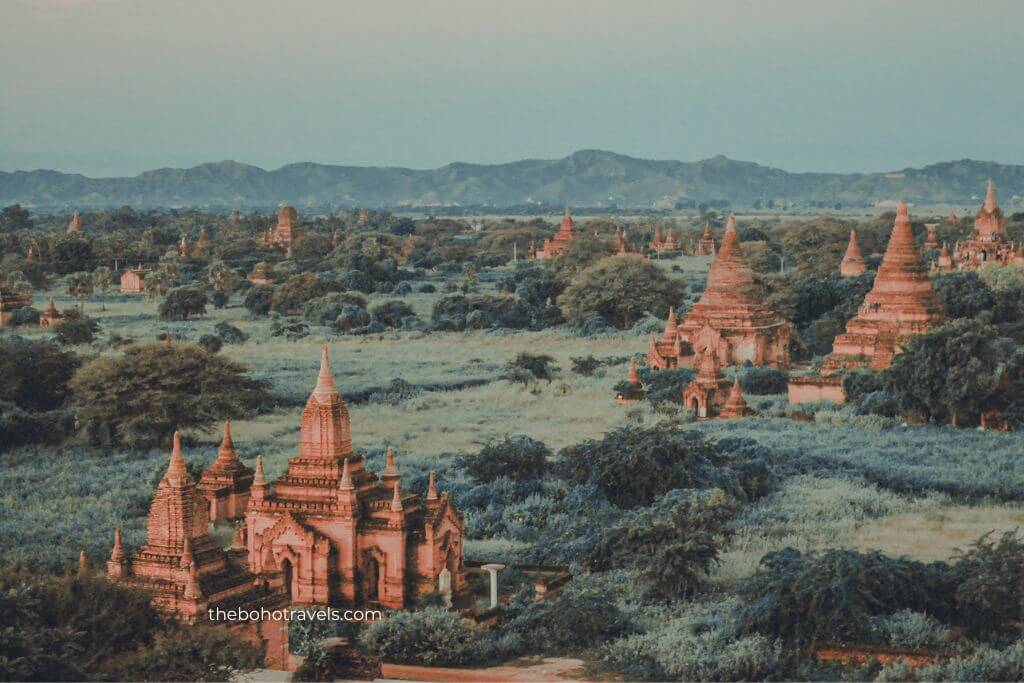
I have to mention Myanmar, even though I can’t recommend it for travel right now.
Of all the places I’ve visited in Southeast Asia, Myanmar is the one that gave me butterflies for days afterward — an almost unreal beauty, an untouched quality, a warmth in the people that I haven’t encountered anywhere else in quite the same way. Bagan at sunrise. The quiet of Inle Lake. The gold of Mandalay’s temples. A hot air balloon festival in Taunggyi that I stumbled into entirely by chance.
The political situation in Myanmar since the 2021 military coup has made travel there unsafe and, for many travelers, ethically complicated. I won’t pretend otherwise. But I want to name it as a place worth watching — because once the situation changes, it will be one of the most extraordinary destinations in the region. The people deserve visitors who come with open eyes and genuine curiosity.
Building your Southeast Asia Trip

I didn’t do Southeast Asia in one long trip. I did it in batches over several years: Thailand and Myanmar together; Vietnam and Cambodia together; a return to Vietnam paired with Malaysia; then Brunei, Indonesia, and Singapore as standalone trips at different points.
This is actually a travel style I’d stand behind — going deep rather than wide. My preference has always been to spend a couple of days covering the main tourist spots, then build in at least one day of just being somewhere without an itinerary. In Da Nang, while my friends went to Ba Na Hills, I found a hotel cafe with an overlooking view of the city and spent the day journaling and reading. That ended up being one of the days I remember most clearly from that trip.
For someone with limited vacation time who wants to see multiple countries in one go, here’s how I’d think about it.
For 10–14 days: realistic combinations
You can visit two to three countries comfortably in 10 to 14 days, or push to four if you’re willing to accept a packed schedule and the possibility of feeling rushed by the end. My recommendation is to stay at two to three destinations and go deeper.
Some of the combinations that work well geographically and logistically:
- Thailand (Bangkok or Chiang Mai) → Cambodia (Siem Reap + Phnom Penh): Well-connected, culturally rich, manageable pacing.
- Malaysia → Thailand → Vietnam → Cambodia: A four-country loop that flows well geographically and gives you a good cross-section of the region. Best suited to 14 days minimum.
- Vietnam (Ho Chi Minh City) → Cambodia (Siem Reap + Phnom Penh): Ho Chi Minh City to Siem Reap via land crossing is a classic backpacker route — affordable, doable, and rewarding.
- Indonesia alone (Yogyakarta in Central Java → Bali) is a perfect standalone trip for a first-time visitor to Indonesia. Fly between them — it’s a short hop — and give each destination at least three to four days.
💡 Four countries in 14 days is doable, but it will be packed. You risk missing a lot of great places — or arriving home more tired than when you left. Two or three destinations done properly is almost always the better trip.
Common trip-planning mistakes
A few things I’ve seen go wrong, including on my own trips:
Assuming all destinations are close to each other. Southeast Asia looks compact on a map. It isn’t. In Indonesia, I once joined a trip where the itinerary had been planned without properly accounting for distances between sites. By midday, it was clear we were overshooting — people got frustrated and disappointed. I’ve planned my own itineraries ever since, or at a minimum, contributed to the planning before the trip.
Assuming the weather is consistent across the region. There’s no single Southeast Asia season. I’ve been in Indonesia in blazing heat while a typhoon was flooding parts of the Philippines. Check the forecast for each specific destination you’re visiting, not just the region.
Underestimating traffic. Bangkok traffic is legendary. What looks like a 20-minute journey on Google Maps can take an hour on the wrong day. Build buffer time into any city itinerary.
Thinking all Southeast Asian countries are cheap. Brunei, Singapore, and Malaysia can surprise you with costs closer to European levels. Thailand, Vietnam, Cambodia, and Indonesia are generally more affordable. Budget accordingly for where you’re going, not where you assume you’re going.
Getting between countries

If you’re flying into the region from outside Southeast Asia, you’ll almost certainly arrive at one of the major hubs: Bangkok (Suvarnabhumi), Kuala Lumpur (KLIA), Singapore (Changi), or Jakarta. All four are excellent international airports with strong onward connections.
Once you’re in the region, here’s how to think about moving between destinations:
Flying is the fastest option between countries that aren’t connected by land, and often the most practical for time-limited travelers. Budget carriers like AirAsia and Cebu Pacific connect most major Southeast Asian cities affordably — book early for the best fares. I flew between Thailand and Myanmar, and between Vietnam and Malaysia, and both were quick and painless.
Land crossings are worth considering for routes where they make geographic sense and where you want to save money or simply experience the overland journey. The Vietnam–Cambodia crossing between Ho Chi Minh City and Siem Reap is one of the classic backpacker routes in the region — affordable, well-traveled, and genuinely interesting. The border formalities are manageable if you’ve done your research in advance.
Ferries connect some island destinations and coastal routes. Research your specific route in advance — operator quality and safety standards vary.
💡 For most first-time visitors with limited time, flying between countries is the safest and most efficient choice. Save overland crossings for trips where you have the time to enjoy the journey, not just the destination.
What it costs
Southeast Asia covers a wide range of price points depending on where you go — and the variation within the region is significant enough that a single daily budget figure would be misleading.
Vietnam, Thailand, Cambodia, and Indonesia are generally affordable, with options at almost every price point. On the other hand, Singapore, Malaysia, and Brunei sit closer to mid-range or higher.
Accommodation is where you’ll feel the difference most. In Vietnam and Cambodia, clean guesthouses and hostels are genuinely inexpensive. In Singapore, even a modest private room in a hostel is a line item worth budgeting for separately. Bali has options at every price point — from surfer hostels to world-class resorts — so your experience of the island’s cost depends almost entirely on the choices you make.
Factor flights in separately from your daily budget. Budget carriers keep prices low when you book early, but last-minute bookings or peak season fares can significantly change your overall spend.
Food is almost always the area where you can stretch your money the furthest. Eating where locals eat — street food stalls, markets, local restaurants — is not only more affordable but often better. Some of the most memorable meals I’ve had in the region cost almost nothing.
💡 Prices vary significantly by season. Check the current accommodation rates for each destination on Agoda before finalizing your budget.
Best time to visit
There is no single best time to visit Southeast Asia as a region. The weather patterns vary enough between countries — and even between regions within the same country — that the answer always depends on where specifically you’re going.
It’s generally comfortable traveling around Thailand, the Philippines, Vietnam, Cambodia, and Myanmar from November to February, when the weather is dry, cooler, and generally stable. March to May can be unbearably hot, especially for those not used to hot, humid weather. The monsoon season runs roughly from June to October across much of the region.
Indonesia follows a different pattern — Bali and Java have their own seasonal rhythms that don’t align neatly with mainland Southeast Asia. I’ve been in Indonesia, experiencing conditions that felt like full summer heat, while a typhoon was causing flooding back in the Philippines. The region is not all the same.
For a multi-country trip, the practical advice is this: Check the forecast for each destination you’re visiting, not just the country or region. Build in enough flexibility in your itinerary to adjust if the weather changes your plans.
Myanmar note: Historically, November to February was considered the best window for travel there. That’s less relevant now, given the current situation, but it’s worth knowing for when conditions change.
What to know before you go
Visas
For Filipino passport holders, Southeast Asia is one of the most accessible regions in the world. ASEAN member countries extend visa-free access to each other’s citizens, which is one of the main reasons I started my international travel here. Most of the countries in this guide — Thailand, Vietnam, Indonesia, Malaysia, Cambodia, Singapore, Brunei — are either visa-free or offer visa-on-arrival for Filipino passport holders, with stays of 14 to 30 days depending on the country.
For other international travelers, Thailand, Bali (Indonesia), and Vietnam are among the most accessible for most passport holders, with visa-on-arrival or e-visa options widely available. Before you travel, please make sure to check the specific requirements for your nationality and the most current visa and entry rules.
Language and communication
Command of the English language varies significantly across the region. In the Philippines, almost everyone speaks at least basic English, even in remote areas. That’s not the case everywhere in Southeast Asia, especially outside major tourist areas.
Always be respectful, and try to use simple, clear English when talking to locals instead of assuming they’ll understand your usual way of speaking. Even better, learn a few basic travel words in their language before you go. You can also use Google Translate to help you communicate.
For Filipinos traveling outside the Philippines for the first time
A few things worth knowing that travel guides don’t always tell you:
You will probably be mistaken for a local in several countries. It happened to me in Indonesia and in Myanmar — locals would speak to me in their language, and I’d only reveal I was a foreigner when I opened my mouth. They’re usually nice about it, so I just generally feel like I belong.
You will also, at some point, encounter the “Asians age well” phenomenon. In Chiang Mai, I met a couple of Europeans who tried to guess my age and were off by a decade. They said they never would have guessed. I didn’t realize until that moment that we carry something in our faces that the rest of the world notices differently than we do.
The visa-free access we have as ASEAN citizens is genuinely valuable — use it. Southeast Asia is the most natural starting point for Filipino travelers venturing outside the country for the first time, and there’s enough variety within the region to fuel years of travel.
Culture and conduct
Southeast Asian cultures share a general quality of warmth and hospitality toward visitors, but the specifics vary by country and religion. A few consistent principles:
- Dress modestly when visiting temples and religious sites — covered shoulders and knees are standard requirements across the region, regardless of how hot it is.
- Remove your shoes before entering homes and many smaller temples. When in doubt, look at what others are doing.
- In Brunei, which is an Islamic sultanate, dress conservatively and be aware that alcohol is not publicly available.
- Across the region, people are genuinely happy to help visitors who approach them respectfully. A smile and a genuine attempt at connection go a long way.
Travel insurance
Get it. For every trip, to every destination. This isn’t optional advice — it’s the one thing experienced travelers consistently wish they’d done before something went wrong.
Start planning your Southeast Asia trip
Southeast Asia reminds you that there’s a world outside your own — and there’s no better time to discover it than now. Life is short, and the trip you keep putting off won’t plan itself.
Explore the destination guides below to go deeper into each country and city:
Philippines
Thailand
- Is Thailand Worth Visiting?
- Best Places to Visit in Thailand for First Timers
- 7-Day Thailand Itinerary: Chiang Mai & Ayutthaya
- Is Chiang Mai Worth Visiting?
- Best Chiang Mai Tourist Spots for First-Time Visitors
- Things to Do in Chiang Mai
- Where to Stay in Chiang Mai, Thailand, for First-Time Visitors
- Chiang Rai Day Trip from Chiang Mai: My Honest Review
- Things to Do in Bangkok
- Thailand Destination Guide [guide coming soon]
Brunei
- Is Brunei Worth Visiting?
- Brunei Tourist Spots: A First-Timer’s Guide
- Things to Do in Brunei for First-Time Visitors
- Where to Stay in Brunei for First-Time Visitors
Vietnam
- One Day in Ho Chi Minh City
- Ho Chi Minh City Destination Guide [guide coming soon]
- Hoi An Destination Guide [guide coming soon]
Indonesia
- Things to Do in Yogyakarta
- Is Borobudur Temple Worth Visiting?
- Is Candi Sukuh Worth Visiting?
- Yogyakarta Destination Guide [guide coming soon]
- Bali Destination Guide [guide coming soon]
Cambodia
- Cambodia Travel Guide [guide coming soon]
Malaysia
- Malaysia Travel Guide [guide coming soon]
Singapore
- Singapore Travel Guide [guide coming soon]
Myanmar
- Myanmar Travel Guide [guide coming soon]
💡 When you’re ready to book accommodation, I use Agoda for most of my bookings across Southeast Asia — the inventory across the region is comprehensive, from budget guesthouses to beach resorts. Browse current options and rates before you finalize your plans.