10 Best Places to Visit in Thailand for First-Time Visitors
Jump to Best Places to Visit Thailand | Map | Planning Your Trip | FAQs

Thailand is a country you’d want to return to — not just for its stunning beaches, but for the temples, the ruins, the hill tribe communities, the food markets, its history, its people.
I first visited Thailand in 2010 and only saw just enough of Bangkok to know I needed to come back. In 2015, I returned for a week — including a few days of a first solo backpacking trip, ever — and covered Chiang Mai, a day trip to Chiang Rai, and Ayutthaya.
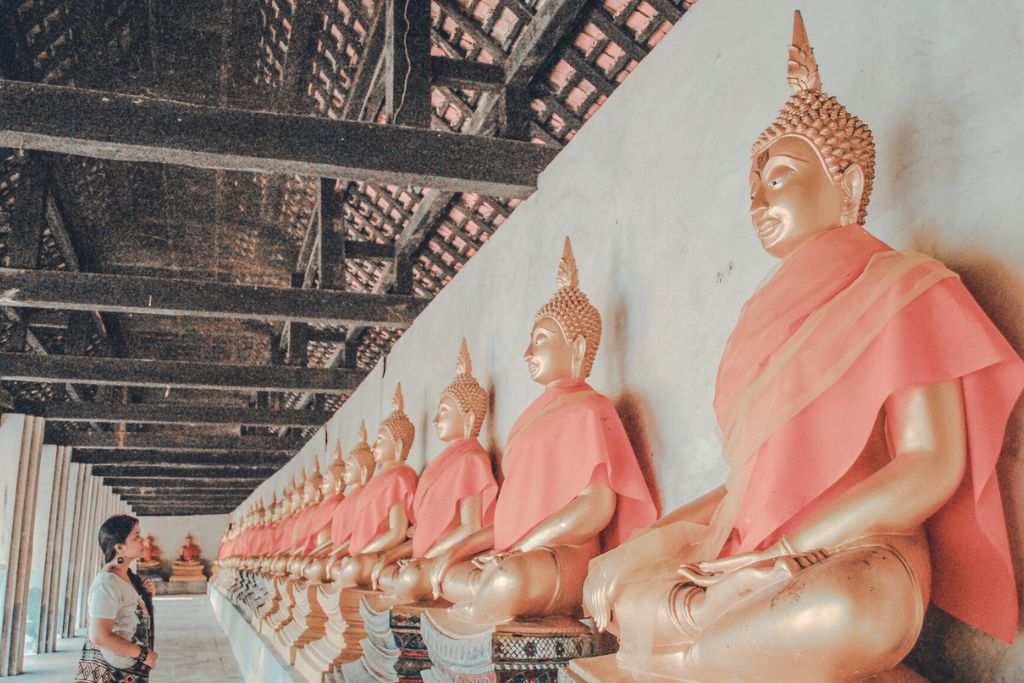
With so many great options and limited time, here are the 10 best places to visit in Thailand for first-time visitors — ordered geographically so you can plan what to pair together.
⏳ Planning a trip to Thailand? Use my favorite resources.
Here are the booking sites I personally use:
🛌 Hotels & Accommodation: Agoda & Booking.com
🏞️ Tours & Activities: I usually compare tours across GetYourGuide, Viator, and Klook before booking
🚂 Trains & Buses: I check 12Go & Trip.com
Best Places to Visit in Thailand
1) Bangkok

Bangkok is where most first-time visitors to Thailand tend to begin. Majestic temples exist alongside rooftop bars and floating markets. Street food stalls successfully attract customers from all over the world alongside Michelin-starred restaurants. It’s a city of contrasts, and navigating those contrasts is part of the experience.
The temples alone are worth a couple of days: Wat Pho (the reclining Buddha), Wat Arun (the Temple of Dawn, best seen from the river at dusk), Wat Phra Kaew and the Grand Palace complex. Beyond temples, the floating markets at Damnoen Saduak and the Maeklong Railway Market are among the most distinctive experiences in the country.
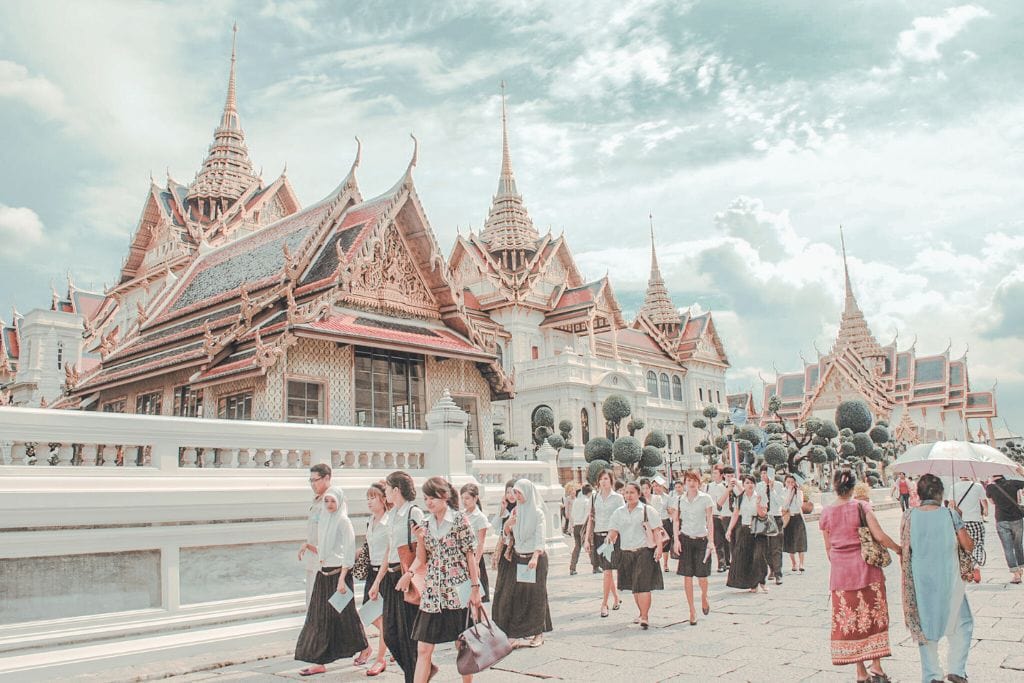
Best things to do: visit the Grand Palace and Wat Phra Kaew, explore Wat Pho and Wat Arun, go on a street food tour in Chinatown, experience the Maeklong Railway Market, see Bangkok from the river at night.
Full guide: Best Things to Do in Bangkok for First-Time Visitors
Where to stay in Bangkok
- Siam Eco Hostel (Budget Option)
- Noursabah Boutique Bed-Bangkok (Mid-range)
- Eastin Grand Hotel Phayathai (Luxury Option)
2) Ayutthaya

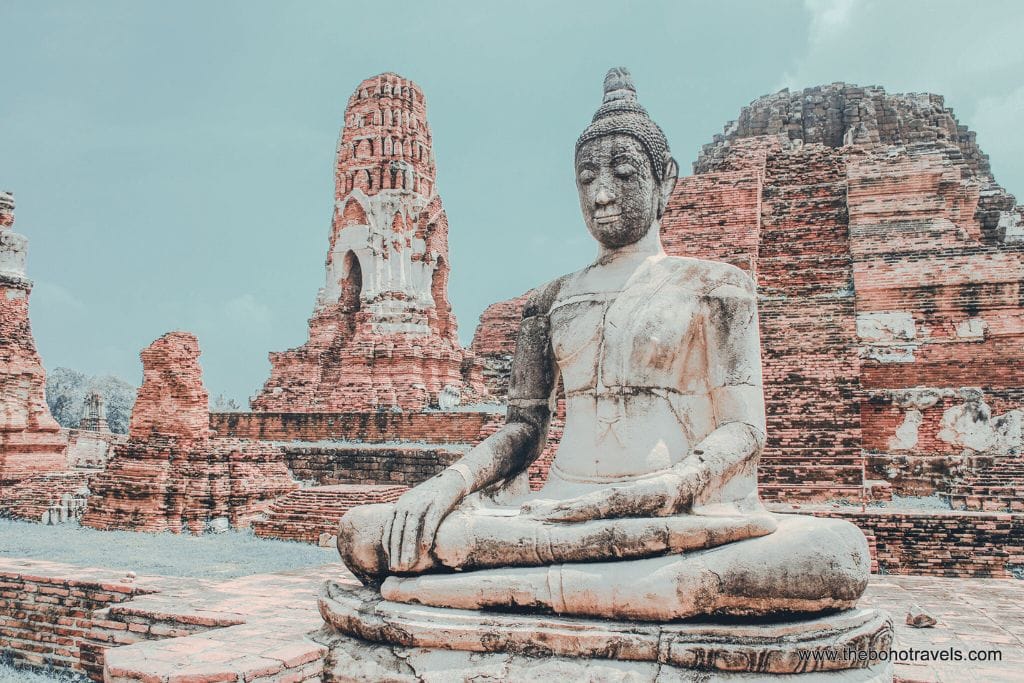
About 90 minutes north of Bangkok by train, Ayutthaya was the capital of the Kingdom of Siam for over 400 years before it was sacked by the Burmese in 1767. What remains is one of the most extraordinary collections of temple ruins in Southeast Asia — a UNESCO World Heritage Site that most visitors see as a day trip from Bangkok, though staying overnight gives you more time and a completely different atmosphere once the day-trippers leave.
I stayed overnight at Baan Thai House — a beautiful property that we liked so much we extended our stay. On our first evening, we took a sunset boat tour of the riverside temples, which gave us a perspective you simply can’t get on land. The next day, we explored with Mr. Pok, a local guide recommended by our accommodation. He gathered us like students before each temple, shared the history, and made the whole day feel like something other than a standard tour.
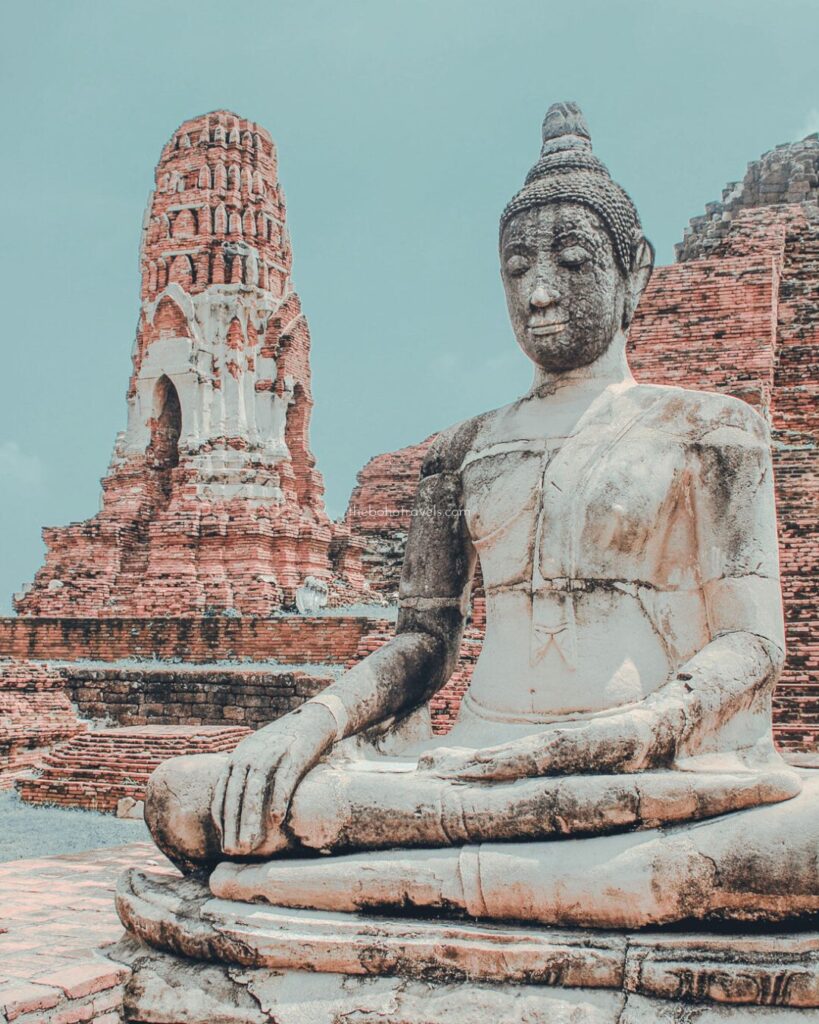

Best things to do: visit Wat Mahathat (home of the famous Buddha head in tree roots), Wat Yai Chai Mongkol, Wat Na Phramen, and Wat Chaiwatthanaram. Take a sunset boat tour. Hire a local guide — it makes an enormous difference.
Where to stay in Ayutthaya
- Room Story Hostel (Budget)
- Baan Thai House (Mid-range)
- Sala Ayutthaya (Luxury)
3) Kanchanaburi
I haven’t made it to Kanchanaburi yet — but it’s high on my list for a return trip.
About two to three hours west of Bangkok, Kanchanaburi is primarily known for the Death Railway — the World War II-era railway built by Allied prisoners of war and Asian laborers under Japanese occupation. The history here is sobering and important, and the JEATH War Museum and the famous Bridge on the River Kwai make it one of the most historically significant destinations in Thailand.
Beyond the history, Kanchanaburi has gorgeous natural landscapes — Erawan Falls, a series of seven emerald-green tiers popular for swimming, and ethical elephant sanctuaries in the surrounding area.
Best things to do: walk the Death Railway, visit the JEATH War Museum, swim at Erawan Falls, visit an ethical elephant sanctuary.
4) Sukhothai
Older than Ayutthaya and less visited, Sukhothai was the first capital of the Thai kingdom, founded in the 13th century. The historical park — another UNESCO World Heritage Site — contains the ruins of 193 temples spread across a vast area best explored by bicycle.
I haven’t made it to Sukhothai yet — but it’s high on my list for a return trip. Travelers who have been often say it feels more atmospheric than Ayutthaya precisely because it’s quieter and less structured as a tourist destination.
If you’re traveling the central Thailand historical route, Sukhothai fits naturally between Bangkok and Chiang Mai.
Best things to do: explore Sukhothai Historical Park by bicycle, visit Wat Mahathat (the largest temple in the park), watch the sunset over the ruins.
5) Chiang Mai
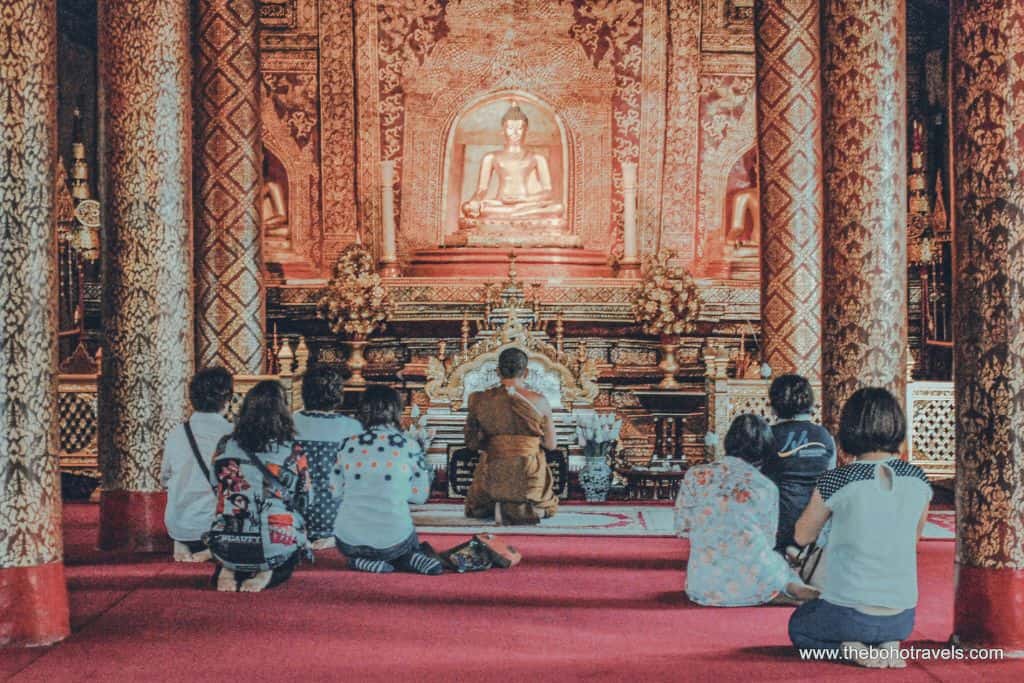
Chiang Mai is one of the best places in Thailand for first-time visitors and one you shouldn’t miss. It was where I did my first solo trip, where I spent four days in the Old City exploring temples on a Segway tour and wandering quiet streets in the rain, and where I based myself for a day trip to Chiang Rai that remains one of the best single days I’ve had traveling in Southeast Asia.
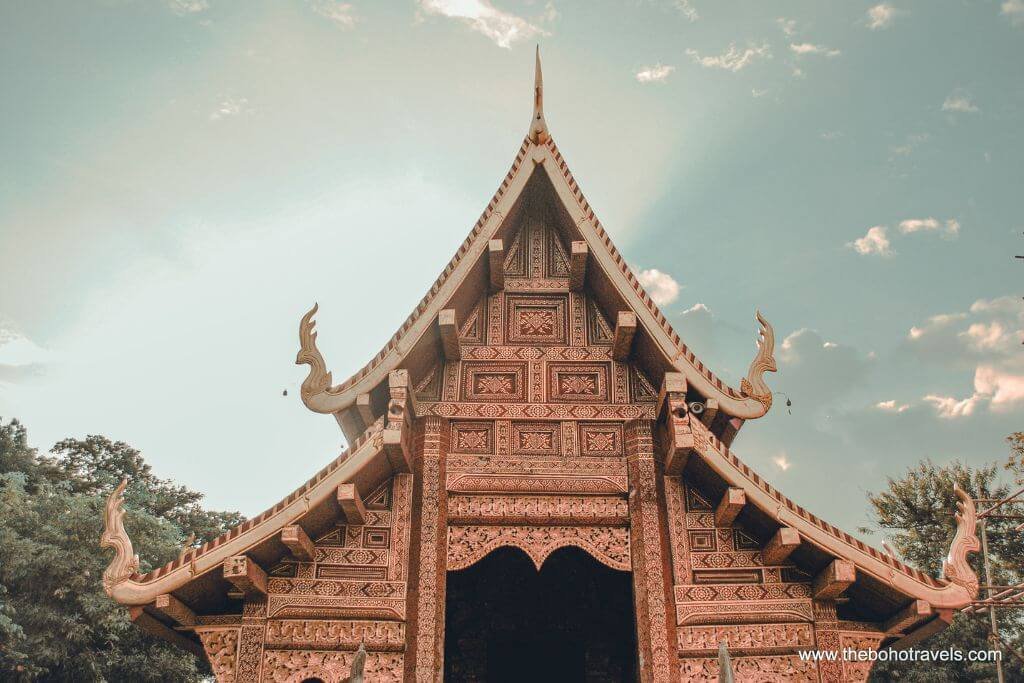
The city has its own distinct cultural identity rooted in the Lanna Kingdom — different from Bangkok in pace, architecture, and atmosphere. The temples in the Old City (Wat Chiang Man, Wat Phra Singh, Wat Chedi Luang) are genuinely moving rather than just photogenic. The ethical elephant sanctuaries outside the city are among the most reputable in Southeast Asia. The cooking classes are some of the best in Thailand.
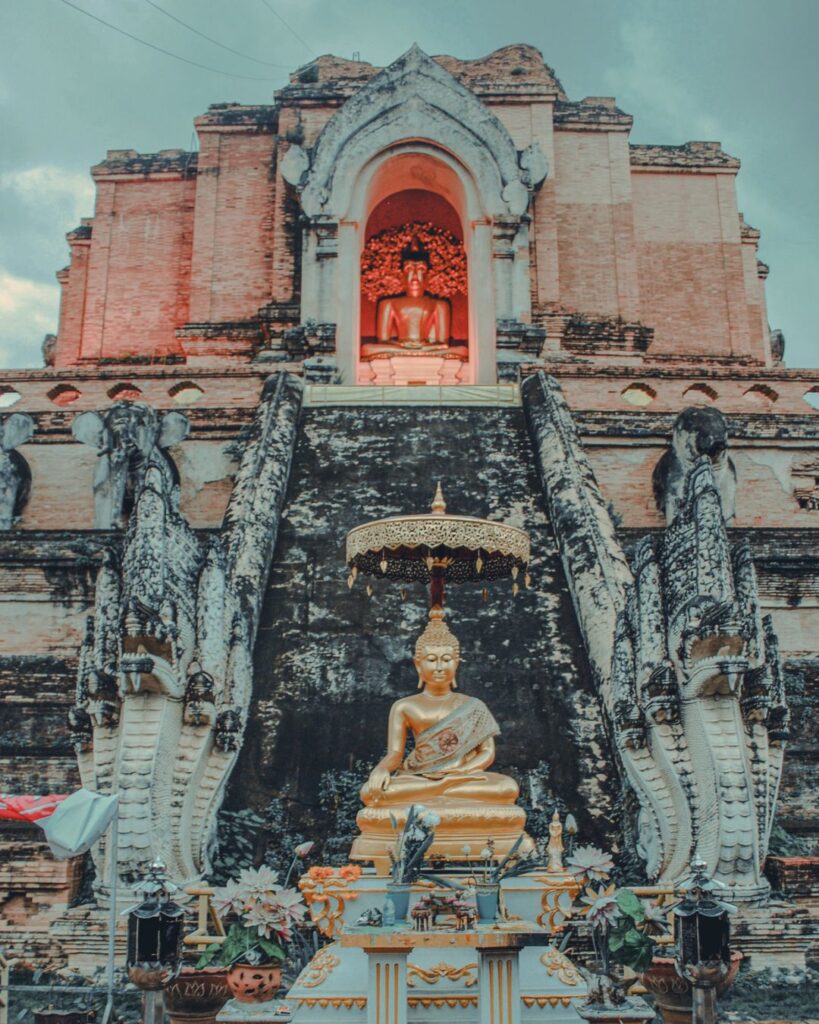
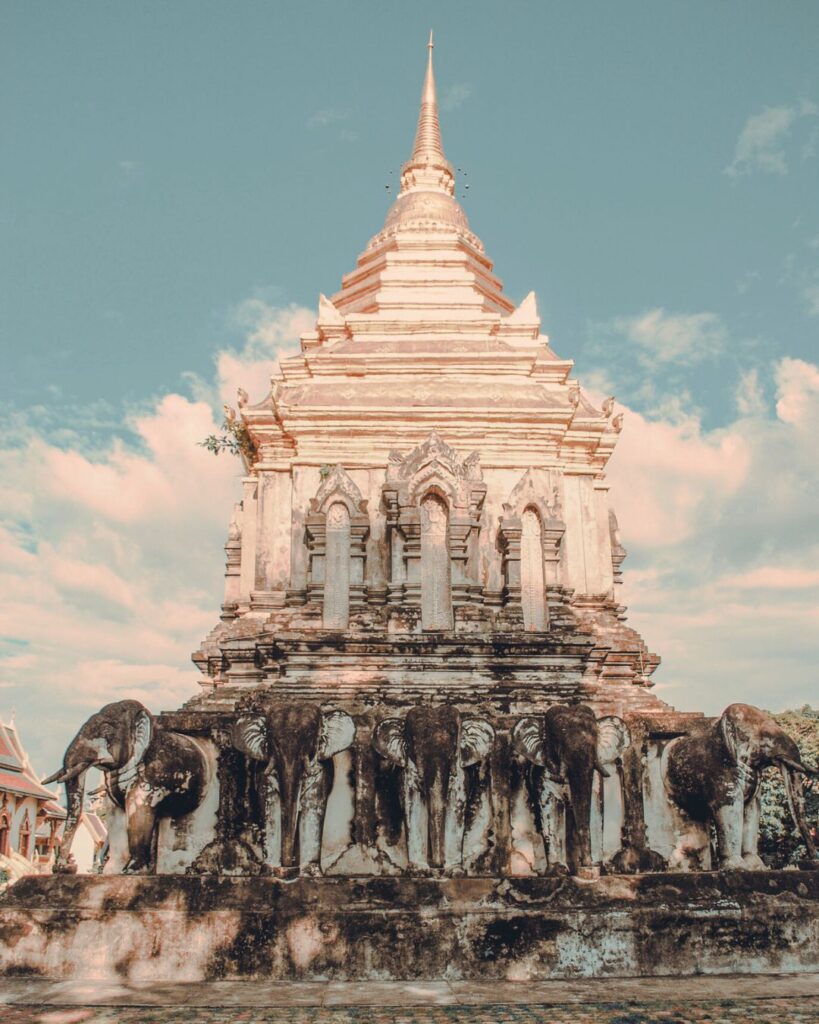
Best things to do: explore the Old City and its temples, take a day trip to Chiang Rai, visit an ethical elephant sanctuary, take a Thai cooking class, watch the Yi Peng lantern festival in November.
Full guide: Best Things to Do in Chiang Mai
Where to stay in Chiang Mai
- Hostel One Art & Gallery (Budget Option)
- Phra Singh Village (Mid-Range)
- The Inside House (Luxury Option)
6) Chiang Rai
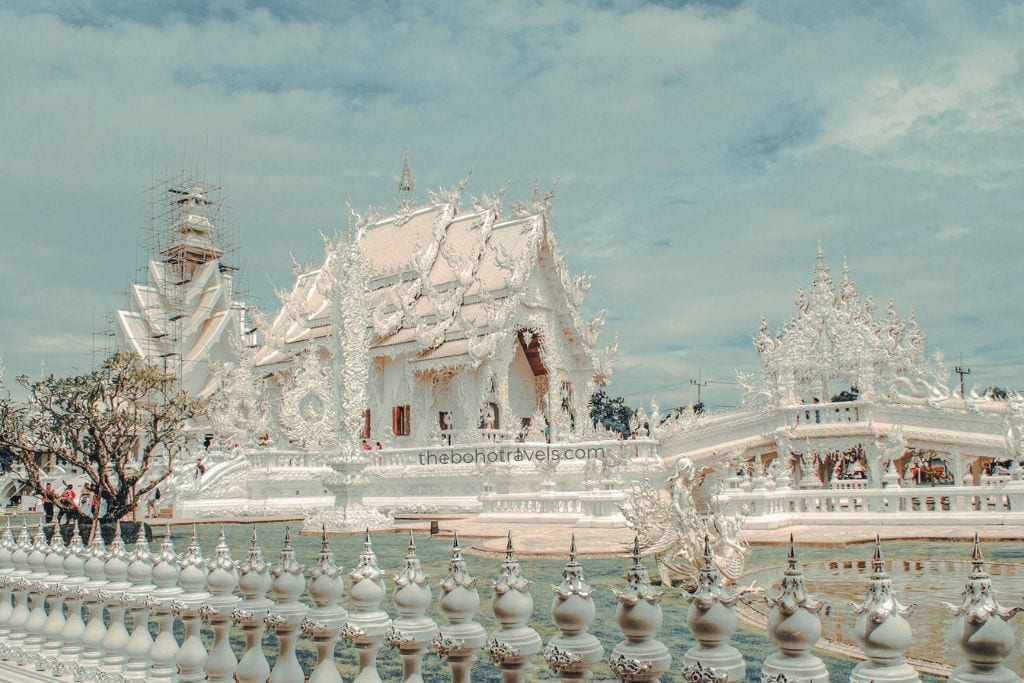
Most visitors to Chiang Mai do Chiang Rai as a day trip, which is exactly what I did — and it was one of the most memorable days of the whole trip. The province sits in the far north of Thailand, bordering Myanmar and Laos, and has a distinctly different feel from Chiang Mai: quieter, more remote, and home to some of the most visually striking art in Southeast Asia.
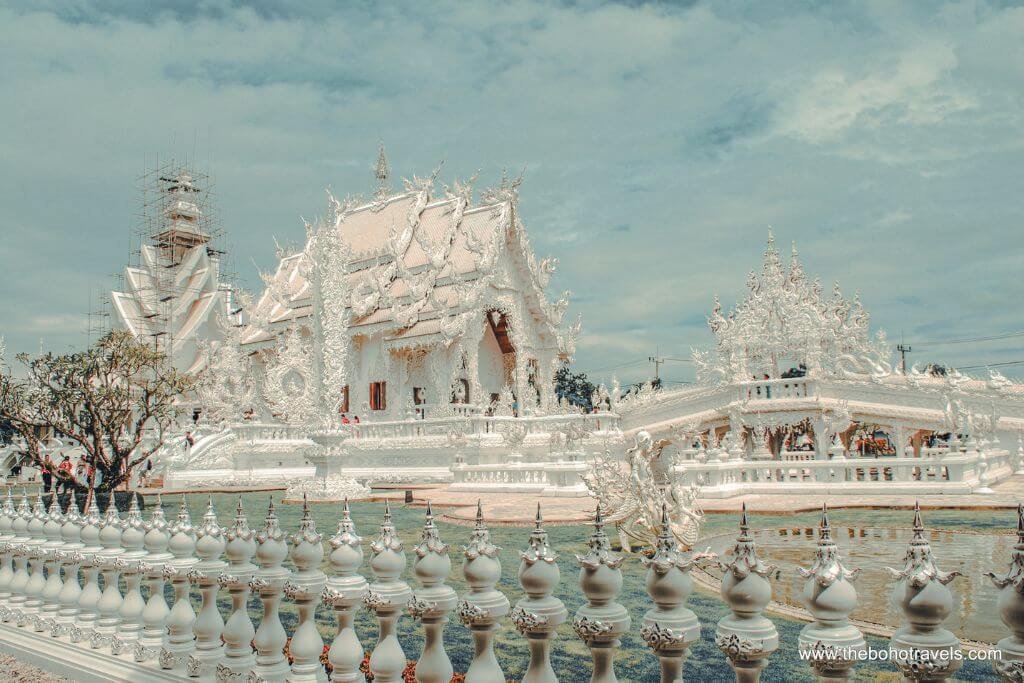
Wat Rong Khun (the White Temple) is unlike any temple I’ve seen anywhere — white and mirror-encrusted, with a bridge flanked by hundreds of sculpted hands and murals inside that mix Buddhist iconography with pop culture references. The Golden Triangle, where Thailand, Laos, and Myanmar meet at the Mekong River, is quieter and more reflective than the name suggests. And a visit to a Kayan village near the Golden Triangle — where our guide explained the brass rings tradition, and I watched a young woman weave at a traditional loom — was the stop I thought about most afterward.
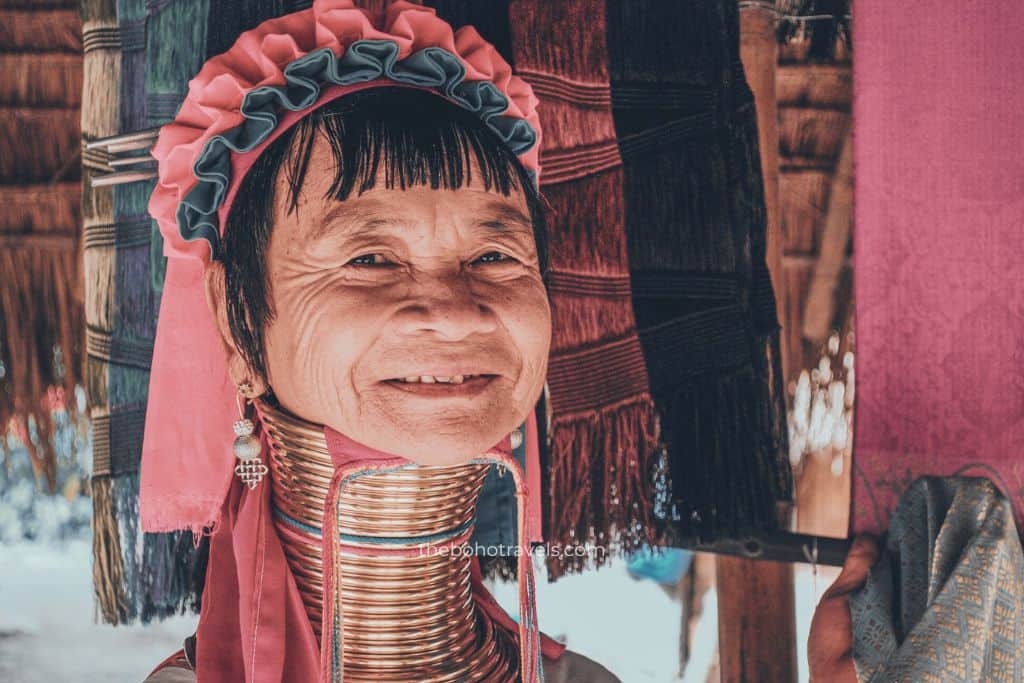
Best things to do: visit Wat Rong Khun (White Temple), Wat Rong Seu Ten (Blue Temple), and Baan Dum Museum (Black House); experience the Golden Triangle; visit a Kayan village.
Full guide: Chiang Rai Day Trip from Chiang Mai
7) Pai
A small town in the mountains about three hours north of Chiang Mai, Pai has a reputation for being one of those places travelers stumble into for a night and end up staying for a week. It’s slow, scenic, and surrounded by mountains, waterfalls, hot springs, and hill tribe villages. The journey there — a winding mountain road with hundreds of curves — is part of the experience.
I haven’t made it to Pai yet — but it’s high on my list for a return trip. For culture-focused travelers, the area around Pai has Karen and Lisu communities, and the town itself has a strong local arts and crafts scene. It’s a counterpoint to the temple circuit — somewhere to slow down and engage with the landscape and communities of Northern Thailand at a different pace.
Best things to do: visit the Pai Canyon, explore the hot springs, visit nearby hill tribe villages, explore local markets.
8) Mae Hong Son
I haven’t made it to Mae Hong Son yet — but it’s high on my list for a return trip, particularly because of its indigenous communities.
A remote mountainous province in the far northwest of Thailand, bordering Myanmar, Mae Hong Son is one of the least visited provinces in the country — which is exactly what makes it worth going to. Ancient temples sit at the edge of misty lakes (Wat Chong Klang and Wat Chong Kham, reflected in Nong Kham Lake at dawn, are among the most photographed scenes in Northern Thailand). Tham Pla National Park has a fish cave that draws pilgrims and curious travelers alike. And the surrounding mountains are home to Hmong, Karen, Lisu, and Kayan communities.
Best things to do: visit Wat Chong Klang and Wat Chong Kham at dawn, explore Tham Pla National Park, trek to hill tribe villages with a responsible local guide.
📝 I visited a Kayan village during my Chiang Rai day trip — that community was near the Golden Triangle, not Mae Hong Son. But Mae Hong Son has its own Kayan and Karen communities, and visiting them with a responsible local guide is one of the reasons the province draws culture-focused travelers.
9) Phuket
Thailand’s largest island is most famous for its beaches — Maya Bay, Patong, Kata — but Phuket has a cultural layer that’s easy to miss if you don’t look for it. Phuket Old Town, in the island’s capital, has beautifully preserved Sino-Portuguese shophouses, Chinese shrines, and a walking street that gives a sense of the island’s trading history. Wat Chalong, the largest Buddhist temple on the island, is one of the most important religious sites in Southern Thailand.
For first-time visitors who want both beach and culture, Phuket is the most practical southern base — well-connected by air from Bangkok and Chiang Mai, and close enough to Krabi and Koh Lanta for onward travel.
I haven’t made it to Phuket yet — but it’s high on my list for a return trip.
Best things to do: explore Phuket Old Town, visit Wat Chalong, go on a speedboat cruise to Phi Phi Islands and Maya Bay, kayak around Phang Nga Bay and James Bond Island.
10) Koh Lanta
South of Krabi, Koh Lanta is quieter and less developed than Phuket or Koh Samui — which is precisely why it comes up consistently when experienced Southeast Asia travelers talk about their favorite Thai islands. Long sandy beaches, clear water, and a pace that hasn’t been entirely taken over by mass tourism.
I haven’t made it to Koh Lanta yet — but it’s high on my list for a return trip. I’d love to experience for myself what sets Koh Lanta apart culturally — its Moken community. They are sea nomads who have lived in the waters of the Andaman Sea for generations and have a small village on the island. It’s one of the few places in southern Thailand where you can engage with a coastal indigenous community rather than just the beach resort version of the country.
Best things to do: explore the Moken village at Ban Sang Ga-U, visit Mu Ko Lanta National Park, snorkel or dive around the surrounding islands, explore Koh Lanta Old Town.
🗺️ Map of the best places to visit in Thailand
Here is a map of the best places to visit in Thailand:
📝 Planning Your Trip to Thailand
- If you’re deciding whether Thailand is worth the trip at all, start here: Is Thailand Worth Visiting?
- If you’re ready to plan and want a tried-and-tested 7-day route, this is the itinerary I followed on my first solo trip: 7-Day Thailand Itinerary: Chiang Mai, Bangkok, and Ayutthaya
- And if Chiang Mai is on your itinerary — which it should be — here’s the full guide: Is Chiang Mai Worth Visiting?
💭 FAQs: Best Places to Visit in Thailand
What is the best part of Thailand to visit for first-timers?
Bangkok is the most practical starting point — well-connected internationally and a good introduction to Thailand’s food, temples, and energy. From there, Chiang Mai in the north and Ayutthaya as a day trip or overnight stay cover the cultural and historical highlights most first-timers come for. Add a southern island like Phuket or Koh Lanta if beaches are on your list.
What is the number one tourist attraction in Thailand?
The Grand Palace and Wat Phra Kaew complex in Bangkok is the most visited attraction in Thailand. Beyond Bangkok, Wat Rong Khun (the White Temple) in Chiang Rai and the ruins of Ayutthaya are among the most distinctive.
Is Thailand safe for solo travelers?
Generally yes. Thailand is one of the more traveled countries in Southeast Asia and is well set up for independent visitors. Chiang Mai in particular is considered one of the safer cities in the region for first-time solo travelers — it’s where I did my first solo trip and felt comfortable throughout.
What is the best time to visit Thailand?
November to February is the most comfortable — cool and dry in the north, pleasant throughout the country. March to May brings heat and burning season in Northern Thailand (check AQI if you’re sensitive to air quality). June to October is the rainy season — fewer tourists, lower prices, and manageable afternoon downpours.
Do I need a visa for Thailand?
It depends on your passport. Philippine passport holders can enter Thailand visa-free for up to 30 days. Many other nationalities also qualify for visa-free or visa-on-arrival entry. Before your travel, check your country’s Thai embassy or consulate website.
💌 The Wrap-Up: Best Places to Visit in Thailand for First-Time Visitors
Thailand is one of the best entry points into Southeast Asia — and these 10 places are where I’d tell anyone to start.
Narrowing it to 10 places is genuinely difficult. But these 10 cover the range of what makes the country worth visiting — ancient ruins, living temple culture, mountain communities, coastal landscapes, and the kind of history that slows you down and makes you pay attention.
Start with Bangkok. Add Ayutthaya. Fly to Chiang Mai. Take the Chiang Rai day trip. And leave room for the places you didn’t plan — because Thailand will surprise you when you let it.
Save this for later!