Brunei Tourist Spots: A First-Timer’s Guide
Brunei Tourist Spots | Where to Stay | Where to Eat | Plan Your Visit | FAQs

Brunei doesn’t usually top a regular traveler’s Southeast Asia travel list. When I first got the invitation to go, my own reaction was somewhere between wait, where exactly is that? and what’s even there to do?
But I’ve always wanted to visit every Southeast Asian country — not just the famous ones — and see how they’re the same and how they’re different. Feedback from people who’d been varied significantly, which made me more curious. What does make Brunei different? What does it actually feel like to walk around a country like theirs?
I visited in 2015 with my friend Justine. We didn’t have high expectations going in. What we found was a country that was calm, deeply layered, and unlike anywhere else I’ve been in the region.
This guide covers the Brunei tourist spots worth putting on your itinerary — the ones I visited firsthand, and a few I’m saving for when I go back.
⏳ Planning your Brunei trip? Use my favorite resources.
🛌 Hotels & Accommodation: Agoda & Booking.com
🏞️ Tours & Activities: GetYourGuide, Viator, and Klook.
🚗 Car Rental: DiscoverCars.com
*These are all the sites I personally use to book my trips, and if you use them, some of them will earn me a commission at no extra cost to you. This helps reduce the ever-increasing costs of keeping my site up. Thanks!
Brunei Tourist Spots First-Timers Should Visit
Brunei has more to offer than most travelers realize. Here are the tourist spots we visited and recommend, the ones I’m going back for, and a few cultural gems that most visitors never find
Brunei Tourist Spots I Visited
Two full days go faster than you’d think, but we made the most of what we had. These are the spots we visited firsthand — what they were like, and why they’re worth your time. Most of them were in Bandar Seri Begawan.
💡 If you’d rather have someone take care of the logistics, this full-day Brunei tour covers the mosques, Kampong Ayer, and a mangrove safari — all in one day with hotel pickup included. It’s a good option if you’re short on time or prefer a guided experience.
💡 For a more flexible private experience, the Private Bandar Heritage & Water Village Tour covers both mosques, the Royal Regalia Museum, Kampong Ayer, and Tamu Kianggeh — everything in this guide, in one morning with a personal guide.
Masjid Sultan Omar Ali Saifuddien
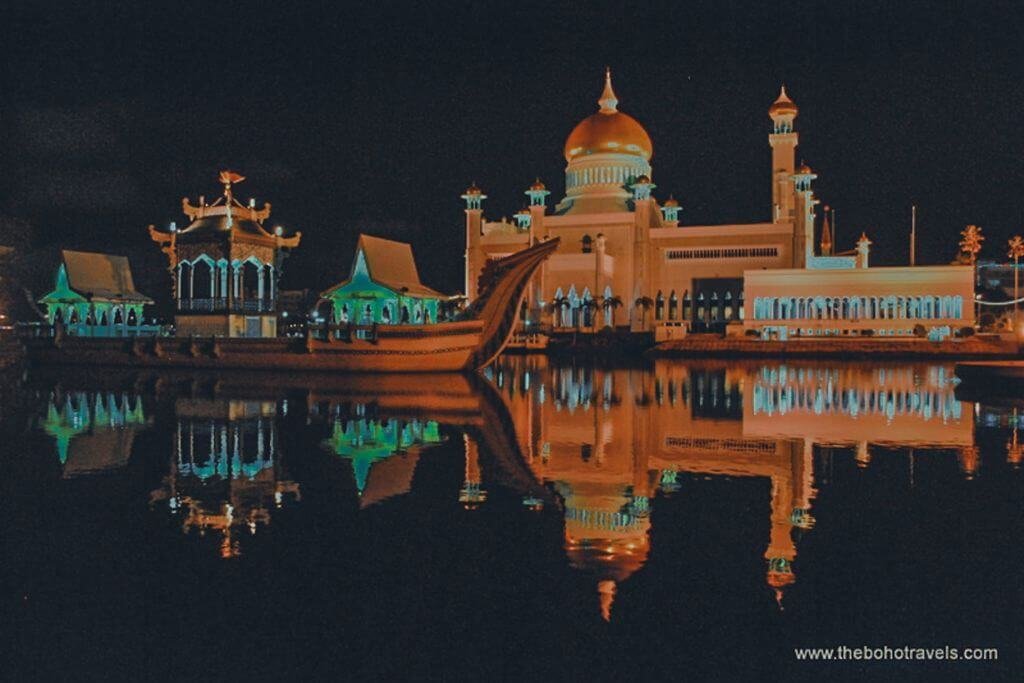
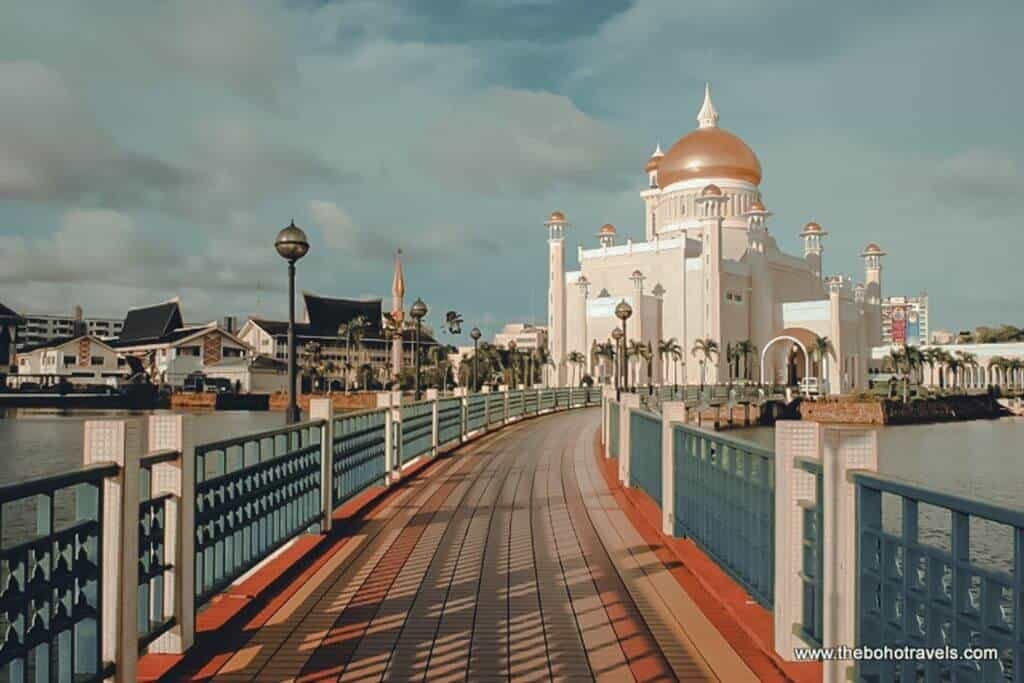
Masjid Sultan Omar Ali Saifuddien sits in the heart of Bandar Seri Begawan, surrounded by an artificial lagoon that doubles its beauty — especially when the water catches the reflection of its gold-plated dome and marble tower. Named after the 28th Sultan of Brunei, the mosque was completed in the 1950s and remains one of the most stunning examples of Islamic architecture in Southeast Asia.
We visited a few times during our stay. It was not planned, but the mosque grounds seem to have a way of pulling you back. You don’t feel rushed. You don’t feel like a tourist. You just feel like someone who found a good place to be still for a while.
We didn’t go inside — non-Muslims are welcome during visiting hours, but there’s a dress code to follow, and we weren’t prepared on our first visit. If you plan ahead and dress appropriately (covered shoulders, long pants or skirts), I’d encourage you to step inside.
And if you can, come back in the evening. The mosque lit up at night is something else entirely.
Jame’Asr Hassanil Bolkiah Mosque
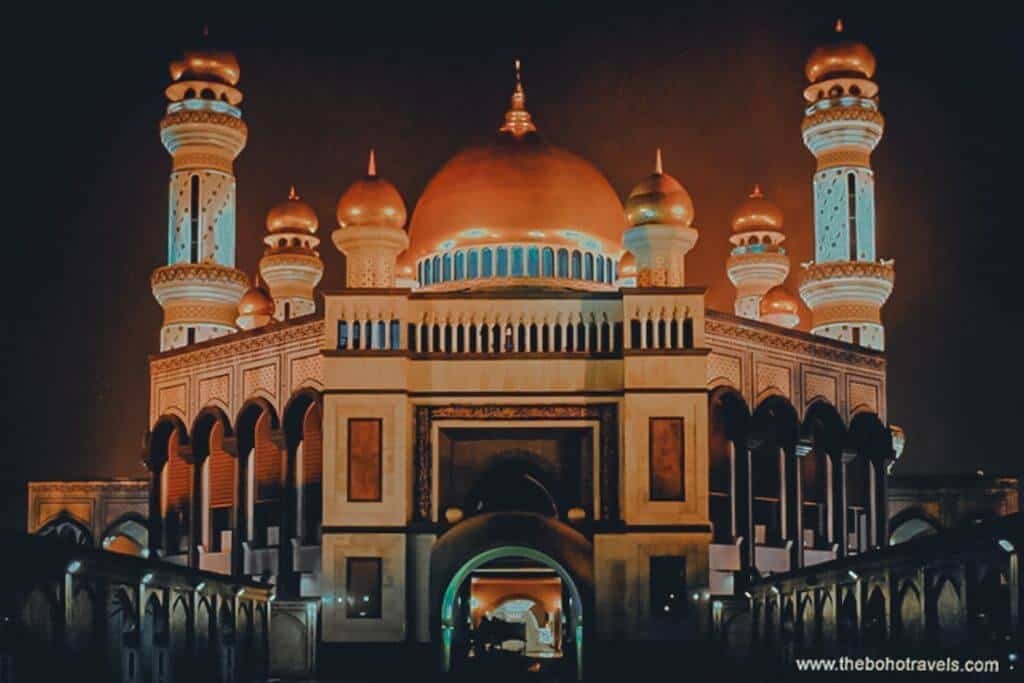
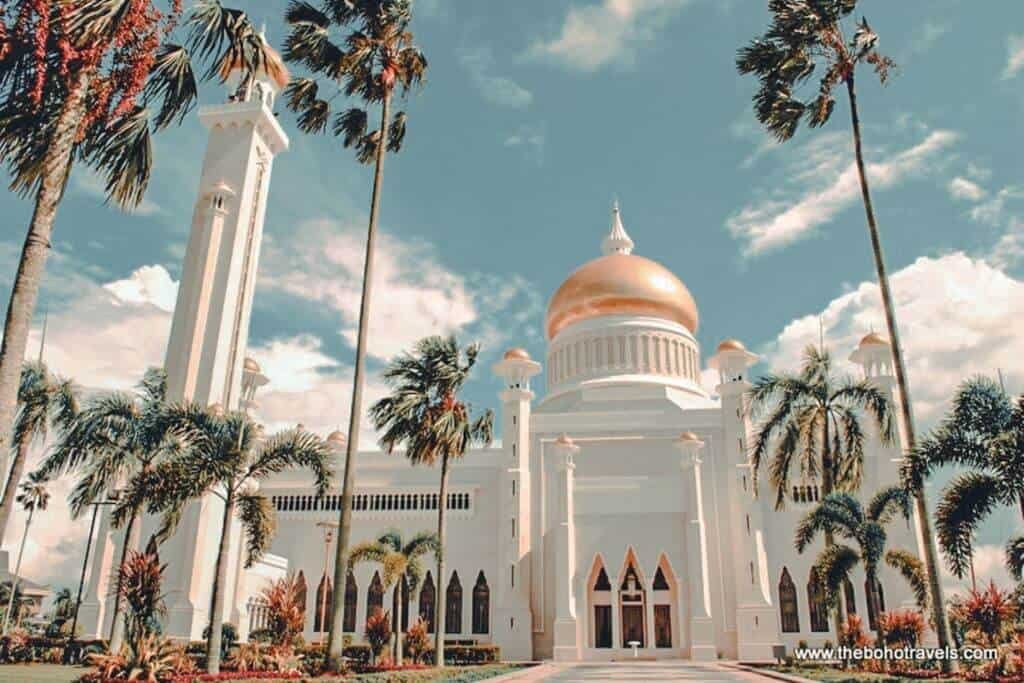
A short drive from the city center, Jame’Asr Hassanil Bolkiah is the largest mosque in Brunei — and the one you’ll likely see in many travel photos of the country.
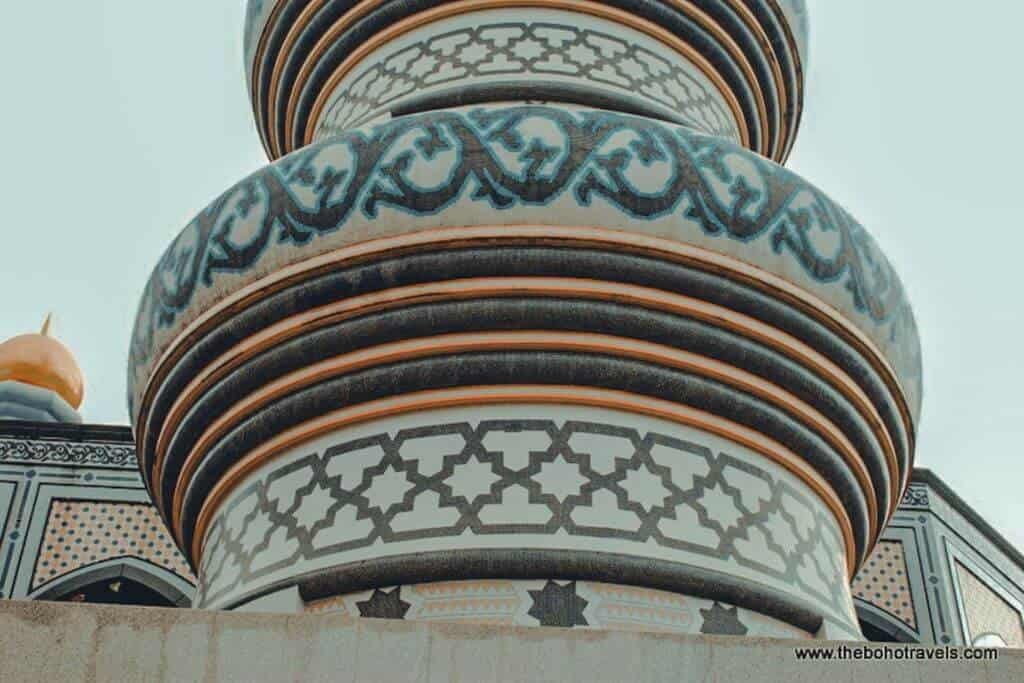
Built to mark the 25th anniversary of the current sultan’s reign, it’s crowned with 29 golden domes and surrounded by manicured gardens that make the whole complex feel grand but still welcoming.
We walked the outer grounds and spent time taking in the details up close — the craftsmanship on the exterior alone is worth the visit. We missed going inside for the same reason as the Sultan Omar Ali Saifuddien Mosque — wrong attire. Lesson learned: when visiting Brunei, always have a scarf and a pair of long pants within reach.
Like the other mosque, this one is worth seeing twice — once in daylight, once after dark when it’s fully lit up.
Kampong Ayer (Water Village)
Kampong Ayer is one of those places that surprises you even when you think you know what to expect.
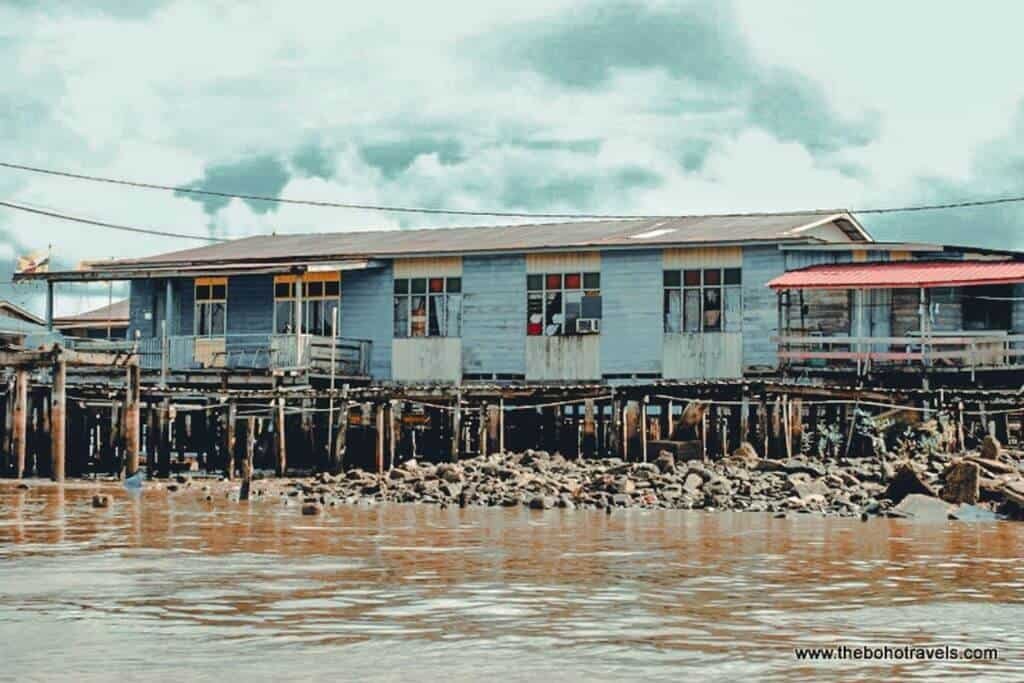
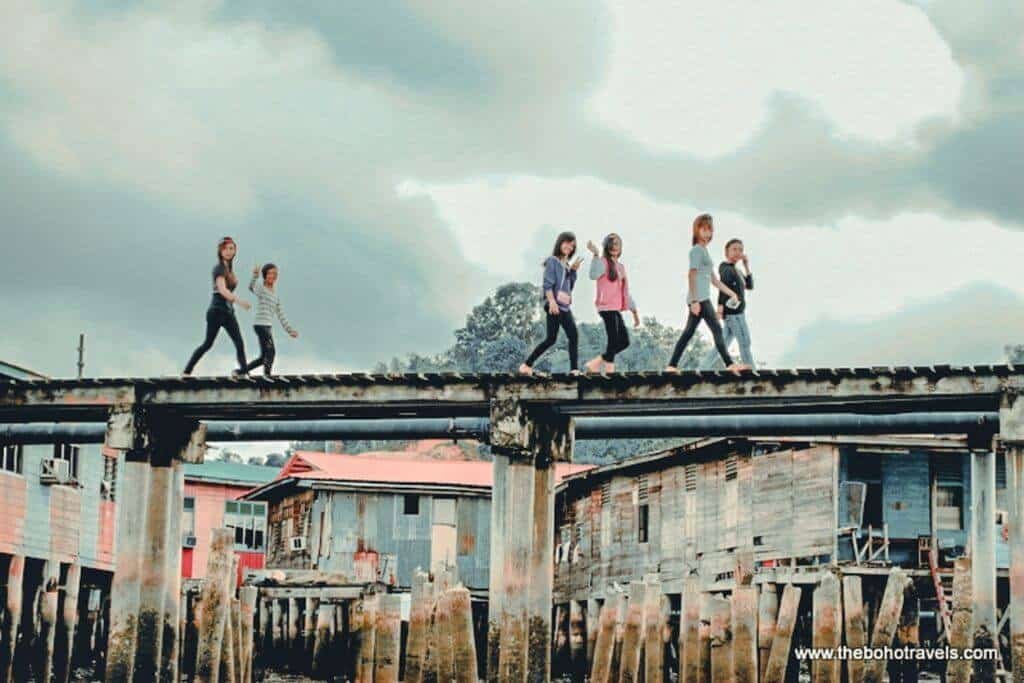
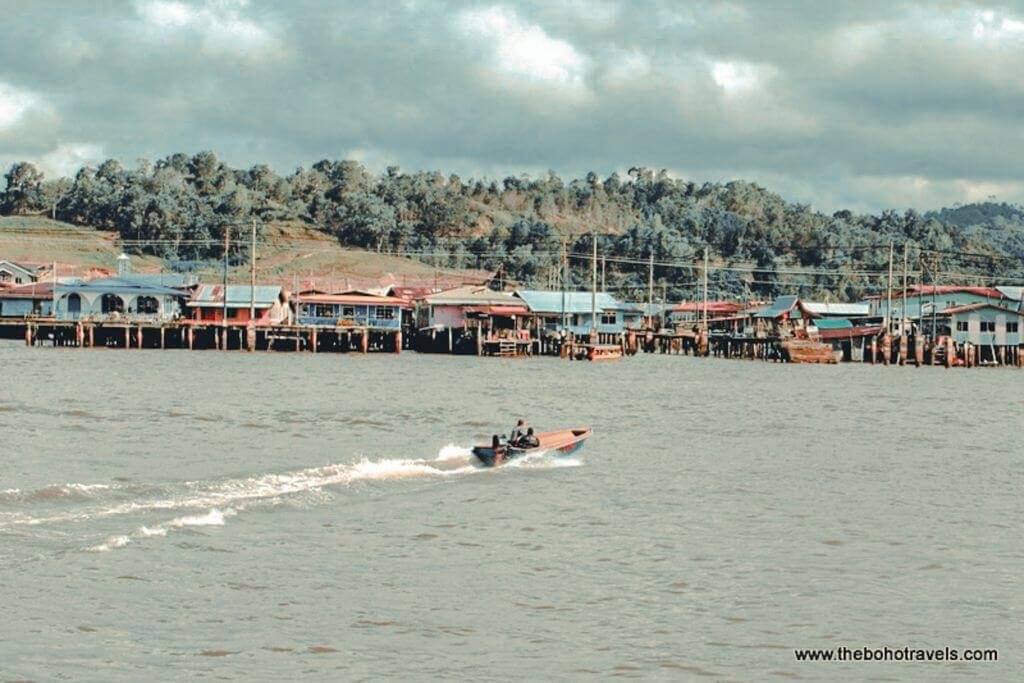
Built entirely on stilts above the Brunei River, this water village is home to roughly 10% of Brunei’s population — a number that was once closer to half the entire country. Over time, the demands of work, education, and convenience pulled people toward the mainland. But the community that remains has held on to something that feels rare: a way of life that’s genuinely its own.
We hired a boat and guide — arranged through our driver, Irwan — and spent about an hour going around the village. That hour ended up being one of the most memorable parts of the trip. Our guide walked us through the history of the community, pointed out the mosques, clinics, schools, and police stations that the government built to support residents, and showed us the footbridges that connect different parts of the village.
Before heading out on the water, we also stopped at the Kampong Ayer Cultural and Tourism Gallery, which sits right on the water’s edge. It traces the history of the village through artifacts, photographs, and displays covering its architecture, traditional occupations, and customs — and there’s a watchtower with views over the stilt houses. It’s free to enter and a good way to get your bearings before the boat tour.
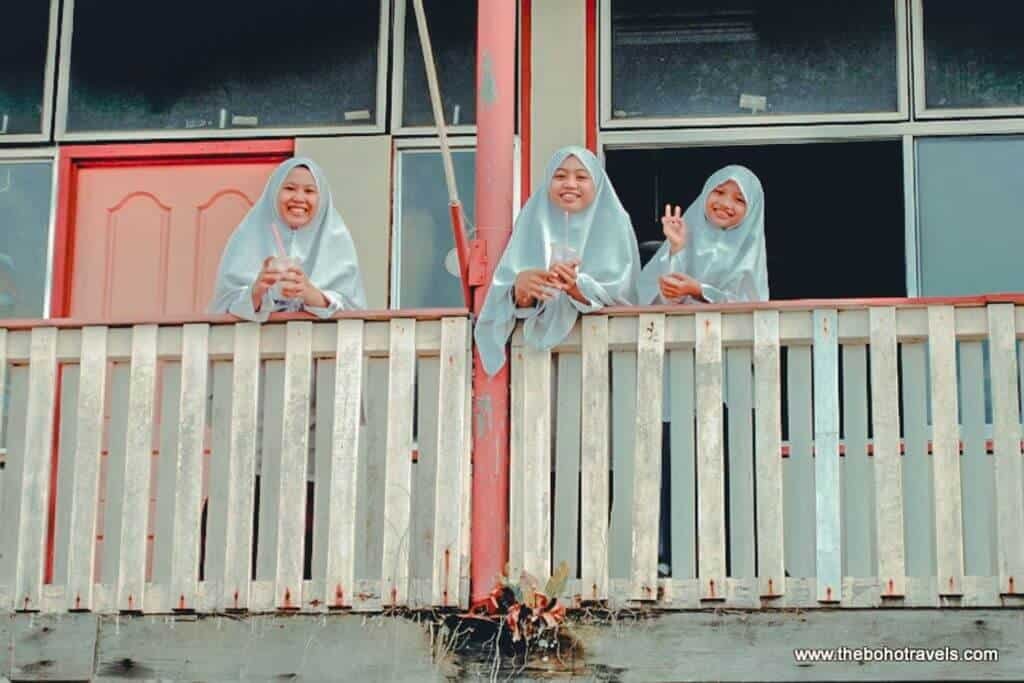
What I remember the most, though, is the people. Kids waving from doorways. Residents going about their day, unbothered by visitors, but not unfriendly. That openness is something I associate with Brunei as a whole — and Kampong Ayer is where I felt it most.
If you visit, I’d recommend going with a guide rather than just viewing it from the riverbank. The experience can give you perspective.
Tamu Kianggeh
Tamu Kianggeh is one of Bandar Seri Begawan’s most popular markets, sitting on the banks of the Kianggeh River in the heart of the city.
It’s primarily a wet and dry market — fresh produce, local snacks, cooked food, and everyday goods — and it’s most alive in the early morning when vendors are setting up and the stalls are fully stocked. We didn’t catch it at its busiest, but even on a quieter afternoon, it was worth the stop.
What I enjoyed most wasn’t the market itself but the conversations. Some of the sellers were locals; others had come from Nepal, the Philippines, and other parts of the region. It’s one of those places where you get a sense of how diverse Brunei actually is beneath its calm, orderly surface — a small country that draws people from all over.
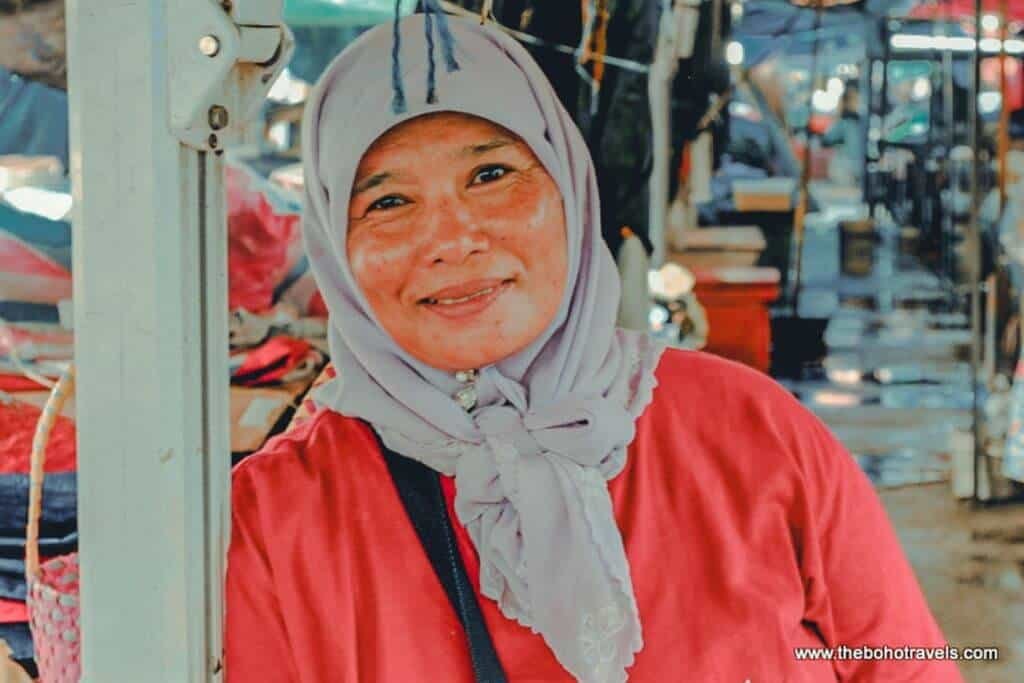
If you’re an early riser, aim to visit in the morning for the full experience. And if you’re curious about local food, this is a good place to start — nasi katok, Brunei’s beloved rice-and-fried-chicken dish, is one of the things you’ll find here.
For everything we got up to during our visit — from the river cruise to trying ambuyat for the first time — head to the full things to do in Brunei guide.
Places I’m Saving for My Next Visit
Two full days in Brunei is enough to cover the main spots in Bandar Seri Begawan — but it also means some places don’t make it into the itinerary. These are the ones I didn’t get to on my first visit, and the ones I’d prioritize if I went back.
Royal Regalia Museum
Free to enter and a short walk from Masjid Sultan Omar Ali Saifuddien, the Royal Regalia Museum houses the royal collection of Brunei’s reigning sultan — ceremonial regalia, gifts from foreign heads of state, and artifacts from the sultan’s coronation and Silver Jubilee celebrations. It’s one of those museums that gives you a window into how a country sees itself, which is why I wish we’d made time for it.
Istana Nurul Iman
The official residence of the Sultan of Brunei, Istana Nurul Iman is one of the largest palaces in the world. It sits along the Brunei River and is closed to the public for most of the year — but during Hari Raya Aidilfitri, the celebration marking the end of Ramadan, the gates open and visitors are welcomed in. If your trip happens to coincide with this, don’t miss it.
Ulu Temburong National Park
This is the one I regret missing most. Located in the Temburong District — a separate enclave of Brunei accessible by boat — Ulu Temburong is a 50,000-hectare expanse of old-growth rainforest that’s been largely untouched by development. The signature experience is the canopy walkway, which sits roughly 60 meters above the forest floor and puts you level with the treetops. For anyone who loves nature or is coming to Brunei specifically for something beyond the city, this is worth building your entire itinerary around.
💡 This Ulu Temburong day trip includes the canopy walk, a boat ride into the park, and lunch prepared by locals. Worth booking well in advance — it requires a minimum of four travelers to proceed.
💡 If spotting proboscis monkeys is on your list, this private proboscis monkey tour is consistently well-reviewed and takes about two hours. Book it early in your trip rather than leaving it to chance.
Gadong Night Market
Brunei’s most popular night market, and the one locals will point you to for street food. We didn’t make it — it rained every evening we planned to go. But from everything I heard, it’s the best place in the city to eat your way through local dishes in one sitting. Going back and spending a proper evening here is near the top of my Brunei list.
For Those Who Travel for Culture
If the mosques and the water village aren’t enough — or if you’re the kind of traveler who plans trips around heritage and local traditions — there’s more to Brunei than the usual stops.
These are spots I haven’t visited yet but have on my list for when I return.
Teraja Longhouse and Mendaram Besar Longhouse
About an hour’s drive from Bandar Seri Begawan, in the Labi area of Belait District, are two Iban longhouses open to visitors: Teraja and Mendaram Besar. Both offer a window into a way of life deeply rooted in Borneo’s forests — traditional weaving, ngajat dance performances, local cuisine, and guided hikes to nearby waterfalls. Teraja also runs a homestay if you want to stay overnight. Advance booking is required for both, and visiting with a guide is recommended.
Islamic Calligraphy and Art Study Centre, Yayasan Sultan Haji Hassanal Bolkiah
If Islamic art is something you’re drawn to, this centre in Bandar Seri Begawan is worth a visit. Divided into three galleries, it houses an extensive collection of calligraphic works from local and international artists, with a focus on the Jawi script and its role in Brunei’s cultural identity. They also offer hands-on calligraphy courses — so if you’ve ever wanted to learn how to write your name in Arabic script, this is a good place to try.
Where to Stay in Brunei
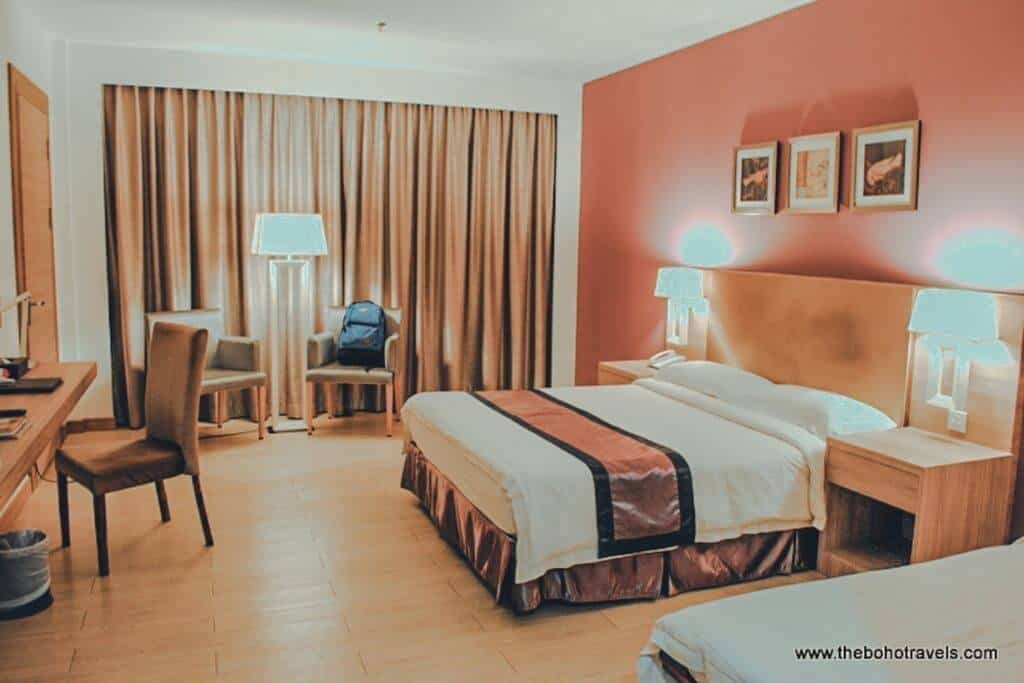
Bandar Seri Begawan has a decent range of accommodation options — from budget guesthouses to full-service hotels. We stayed at Badi’ah Hotel, a three-star property owned by a relative of the Sultan of Brunei. It was well-located, reasonably priced, had a pool, and came with 24-hour customer service that was genuinely helpful — including complimentary airport transfers before 11 pm.
For a fuller breakdown of accommodation options across different budgets, I put together a dedicated guide. ➡️ Where to Stay in Brunei
Where to Eat in Brunei
Eating in Brunei was one of the unexpected highlights of the trip. Food is affordable, portions are generous, and the variety reflects just how multicultural the country is.
We tried ambuyat — Brunei’s national dish, a starchy, sticky staple made from sago palm — at Aminah Arif, which is one of the most well-known spots for it in the city. We also had Indonesian food at Aneka Rasa and Japanese at Excapade. And one of our lunches at Tamu Kianggeh cost us just 1 BND for nasi katok — rice and fried chicken.
If you’re wondering where to eat, those three restaurants and Tamu Kianggeh are solid starting points.
Planning Your Visit to Brunei
I’ll be honest — this wasn’t one of my most meticulously planned trips. Justine and I went to Brunei with a loose idea of what we wanted to see and plenty of room to just… discover. No minute-by-minute itinerary, no pressure to tick every box. And it turned out to be how we were supposed to approach a country like this.
Brunei rewards slow travel. It’s small, it’s walkable in parts, and the best moments — lingering on the grounds of a mosque, falling into a conversation with a market vendor, watching the city reflect off the lagoon at night — aren’t the kind of things you can schedule.
How many days do you need?
Two full days is enough to cover the main spots in Bandar Seri Begawan comfortably. If you want to add Ulu Temburong National Park, add a third day — it deserves its own full day and isn’t something to rush.
When to visit
If you’re concerned about weather, aim for January to May — Brunei’s drier months. We visited outside this window and lost a couple of evenings to rain, which is how we missed the Gadong Night Market entirely.
One date worth planning around: Hari Raya Aidilfitri. This is when Istana Nurul Iman opens to the public — the only time of year you can visit the palace grounds.
Getting around
The most practical way to get around Bandar Seri Begawan is by hiring a private car. It’s more expensive than public transport, but Brunei isn’t a city built for walking between major sights, and the flexibility is worth it. Ask your hotel to help negotiate the rate — we found that made a difference.
A note on dress
Brunei is a conservative Muslim country. Wear sleeved tops and long pants or skirts, especially when visiting mosques. Come prepared — we missed going inside both mosques on our first attempt because we weren’t dressed appropriately.
Mosque visiting hours
Shops and businesses close on Fridays between 12 noon and 2 pm for prayer time. Plan your itinerary around this, especially if you want to visit the mosques — both Masjid Sultan Omar Ali Saifuddien and Jame’Asr Hassanil Bolkiah have specific visiting hours for non-Muslims.
FAQs: Brunei Tourist Spots
What are the most famous tourist spots in Brunei?
Masjid Sultan Omar Ali Saifuddien is the most iconic — the gold-domed mosque surrounded by an artificial lagoon in the heart of Bandar Seri Begawan. Kampong Ayer, the water village built on stilts above the Brunei River, is a close second. Jame’Asr Hassanil Bolkiah Mosque, the Royal Regalia Museum, and Ulu Temburong National Park round out the list of places most visitors prioritize.
How many days should I spend in Brunei?
Two full days is enough to comfortably cover Brunei’s main tourist spots, including the mosques, Kampong Ayer, Tamu Kianggeh, and a river cruise. But if you intend to experience Ulu Temburong National Park or go for a drive to visit a cultural destination outside Bandar Seri Begawan, I recommend building a third day in your itinerary.
What is the best time to visit Brunei?
January to May is Brunei’s drier season, with less rainfall and lower humidity — the most comfortable time for sightseeing and outdoor activities. We visited outside this window and lost several evenings to rain. One exception worth planning around: if you want to visit Istana Nurul Iman, time your trip to coincide with Hari Raya Aidilfitri, when the palace opens to the public.
Is Brunei worth visiting?
Yes — though it depends on what you’re looking for. Brunei isn’t a destination that overwhelms you with things to do, and it’s not the right trip for travelers seeking nightlife or a packed itinerary. But if you’re curious about a part of Southeast Asia that most people overlook, interested in Islamic culture and architecture, or simply want a slower, calmer travel experience, Brunei is genuinely worth the detour. For a fuller take, read our guide on whether Brunei is worth visiting. ➡️ Is Brunei Worth Visiting?
Do I need a visa to visit Brunei?
It depends on your nationality. Many nationalities enjoy visa-free entry for short stays of 14 to 90 days, while others may need to apply in advance or obtain a visa on arrival. All visitors are required to complete a mandatory E-Arrival Card before flying, regardless of visa status, so check that requirement before you travel. For the most current information specific to your passport, check the official Brunei Tourism visa page. ➡️ Brunei Tourism Visa Information
The Wrap-Up
Brunei is not the kind of destination that overwhelms you with options.
It’s a country that rewards you for slowing down — for spending an extra hour on the grounds of a mosque you didn’t expect to love, for letting a conversation with a market vendor run longer than planned, for saying yes when a stranger offers to show you around.
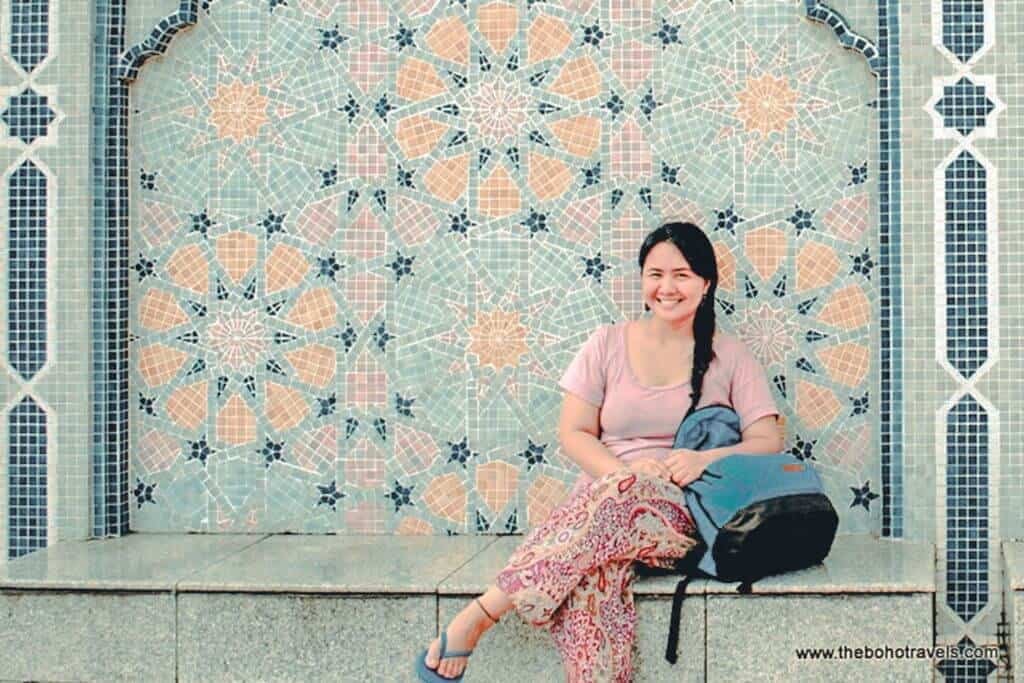
Justine and I went with no agenda and no pressure, and we came back with more than we expected. If you’re planning your first visit, I’d say do the same. Give yourself two days minimum, leave room for the unexpected, and don’t try to see everything. Brunei isn’t that kind of trip.
And if you do go — I hope you get to meet someone from there. That, more than any tourist spot, is what made Brunei feel like somewhere worth knowing.