
13 Best Things to Do in Bohol for First-Time Visitors

Bohol is one of those Philippine destinations that’s easy to underestimate. Most people come for the Chocolate Hills and leave wishing they’d stayed longer. This guide covers what the best things to do in Bohol are and what’s actually worth your time — and how to make the most of however many days you have.
Quick links: Chocolate Hills · Tarsier Sanctuary · Loboc River Cruise · Bilar Forest · Eskaya Tribe · Alona Beach · Island Hopping · Day Pass Resorts · Snorkeling · Diving · Waterfalls · Danao Adventure Park · Alicia Panoramic Park
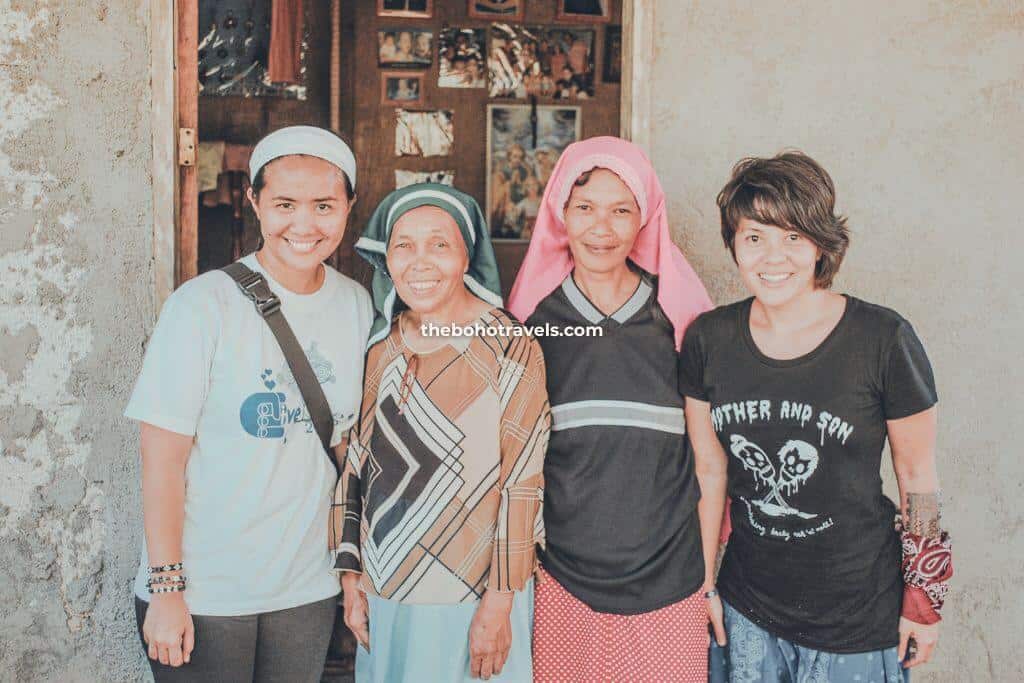
My first trip to Bohol in 2012 wasn’t really a Bohol trip at all. We were there to visit the Eskaya tribe — an indigenous community living in the hills of Duero — as part of a longer journey through some of the Philippines’ lesser-known cultures. Chocolate Hills was an afterthought, a quick detour on the way back to Tagbilaran — mostly so I could send a photo home. My parents had seen it in books their whole lives, and I just wanted to take a picture so they’d know that I was thinking about them, too, while I was on this trip.
What stopped me in my tracks, though, wasn’t the hills. It was the coastline on the way to Duero — stretches of water in a shade of blue I hadn’t expected. I filed it away and promised myself I’d come back just to swim in it.
Seven years later, I did. The 2019 trip was the proper Bohol experience: the countryside circuit, the beaches of Panglao, the food, the unhurried pace of it. It confirmed something I’d suspected on that first drive through — that Bohol is one of those places that keeps surprising you the longer you stay.
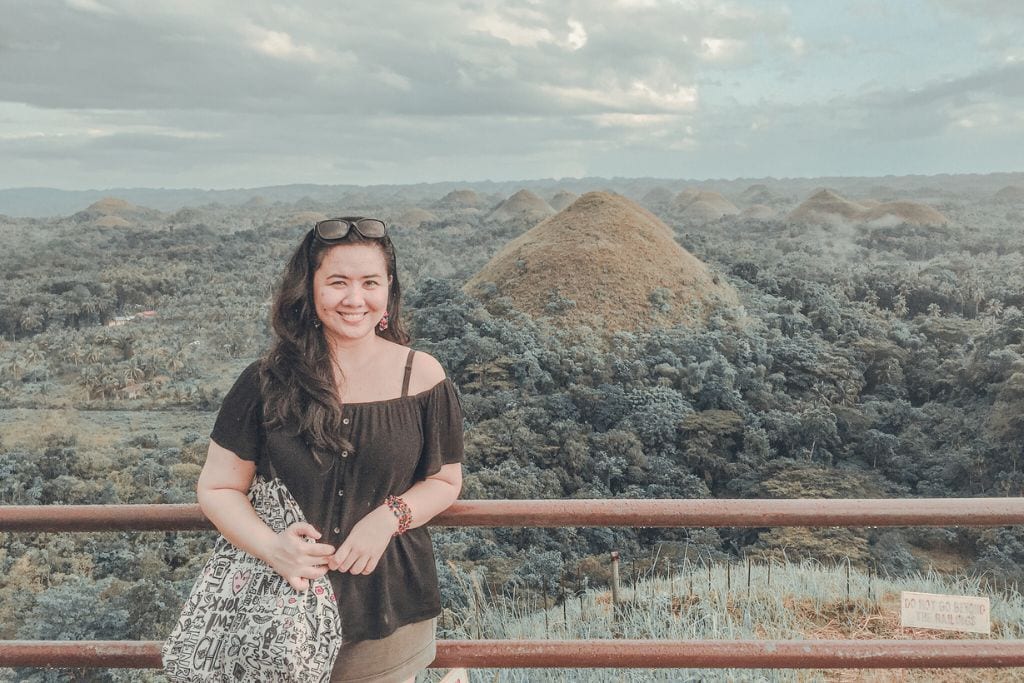
It’s easy to reduce Bohol to its postcard moments: the Chocolate Hills, the tarsiers, Alona Beach. But that’s like describing the Philippines as just beaches and rice terraces. The province has a layered character — part natural wonder, part colonial history, part living indigenous culture, part world-class dive destination — and the best version of a Bohol trip hits all of those.
Bohol consistently makes the list of best places to visit in the Philippines, and this guide covers the best things to do in Bohol whether you have three days or five. If you’re still getting oriented, the Bohol tourist spots guide is a good place to start before diving into the full activity breakdown. If you’re still building out your broader itinerary, my complete Philippines travel guide is a good place to start.
📝 A note on timing: I’ve been visiting Bohol since 2012, most recently in 2019 — long enough to watch a few things evolve, but the core experience hasn’t changed much. What has changed (flight routes, tour operators, ferry schedules) has been checked and updated as of 2026, even where the stories themselves are a few years old. Consider this guide both lived-in and current.
⏳ Planning your trip? Here’s what I use.
✈️ Flights: Trip.com
🚂 Buses and Trains: 12go
🚗 Car Rental: Klook
🛌 Hotels & Accommodations: Agoda.com and Booking.com
🏞️ Tours and Experiences: Klook, GetYourGuide, or Viator
🛡️ Travel Insurance: SafetyWing
These are the platforms I personally use when booking my own trips. If you book through them, some may earn me a small commission at no extra cost to you — it helps keep this site running. Thanks!
🏞️ Top things to do in Bohol for first-timers
You don’t have to be an adrenaline junkie or a beach lover to fall in love with Bohol. This popular and tourist-friendly destination in the Philippines has something to offer everyone, regardless of age, interest, or activity level.
But if you’re a first-time visitor, I recommend including these in your itinerary.
The Countryside Circuit
The countryside tour is the natural starting point for any first visit to Bohol. In one day, you can cover several of the province’s most famous landmarks.
Most tours pick you up from your hotel or the airport and cover the Chocolate Hills, the Tarsier Sanctuary, the Loboc River Cruise, and the Bilar Man-Made Forest, with lunch included on the river.
👉 Book a highly rated countryside tour on Klook or GetYourGuide. Pre-booking is recommended, especially if you’re doing this on your first day.
📍 Some routes also include the Blood Compact Shrine — a bronze monument marking the Sandugo, the 1565 blood compact between Spanish explorer Miguel López de Legazpi and local chieftain Datu Sikatuna, considered one of the first international treaties on Philippine soil. It’s a quick stop, more photo-op than destination, but worth knowing about if you’re into Philippine history.
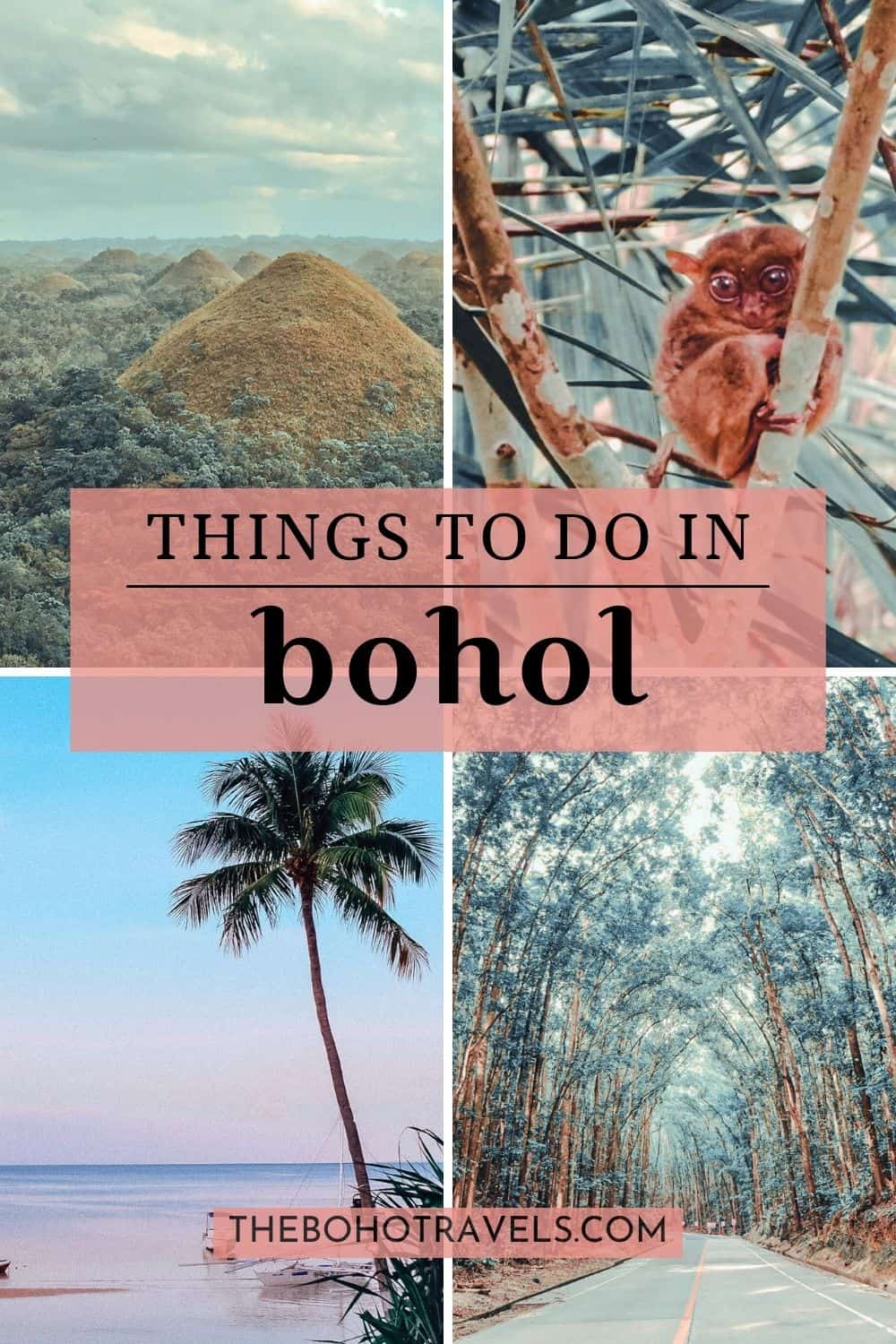
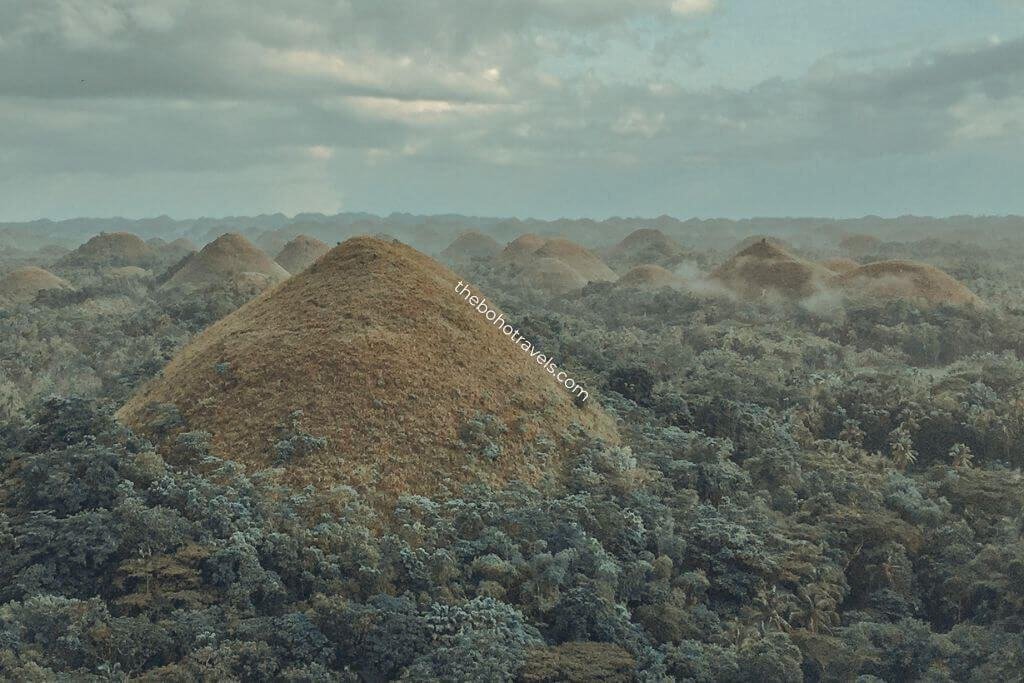
1. Watch the sunset over the Chocolate Hills
Seeing the Chocolate Hills for the first time is one of those experiences that doesn’t fully register until you’re standing in front of them. I had seen them in textbooks and travel magazines, but nothing quite prepares you for the scale of it — more than 1,200 grass-covered limestone mounds stretching as far as you can see in every direction.
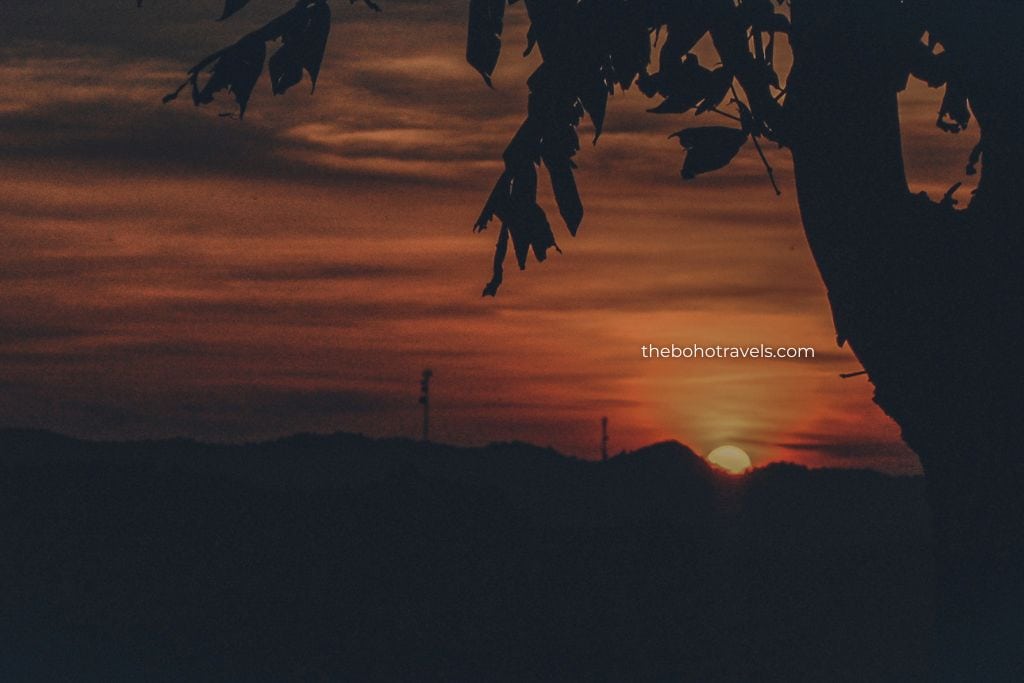
I was lucky enough to catch them at sunset on my first visit. The light was fading, and the hills were turning that warm brown the name comes from — in the dry season, the grass dries out and the whole landscape shifts from green to chocolate. Standing there at the tail end of a long trip through the country’s indigenous communities, it was a lot to take in, in the best way.
On my 2019 visit, the skies were overcast, and the hills were greener than brown. A different mood, but still worth it.
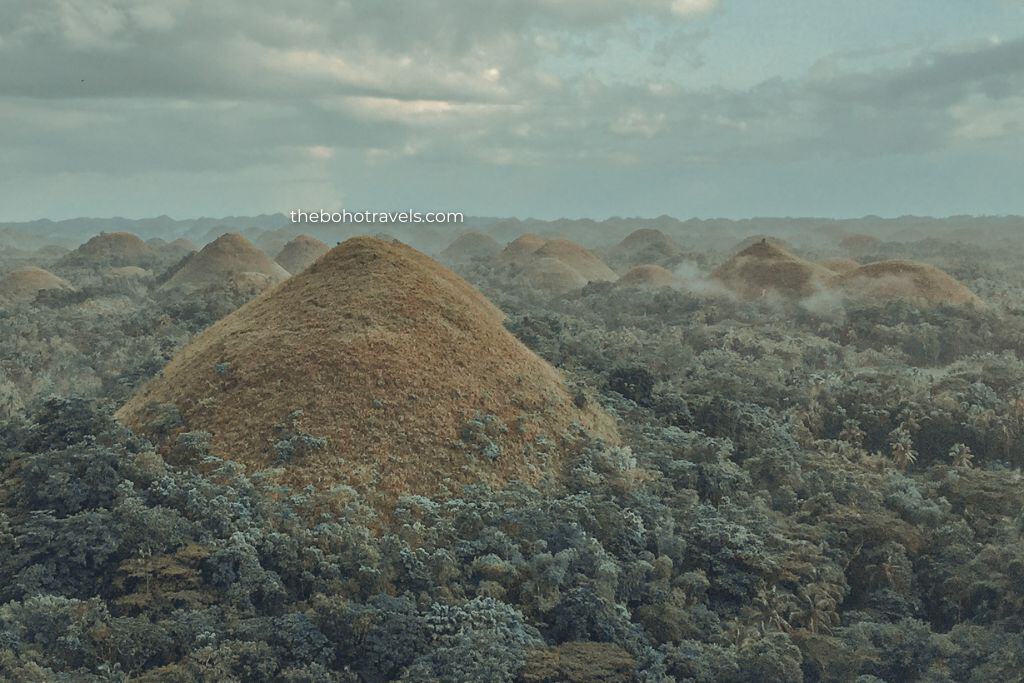
💡 The main viewpoint is in Carmen. If your tour includes an ATV ride around the base of the hills, it’s worth doing — the perspective from ground level is completely different from the lookout deck. Budget at least 30–45 minutes here.
Want to do an ATV ride around the Chocolate Hills? Check available tours here. You can also enjoy the view of Chocolate Hills while riding the rush bike zip, wave runner, or tony hawk at Chocolate Hills Adventure Park.
📍 If sunrise is more your thing than sunset, Alicia Panoramic Park offers a different vantage point over Bohol’s countryside hills — a popular spot for early risers and a good alternative if Chocolate Hills is fully booked or crowded when you visit.
💡 If you only have a short window here, I also wrote about what a quick Chocolate Hills stop actually looks like — useful if you’re doing Bohol as a day trip from Cebu.
2. Spot tarsiers in their natural habitat at the Philippine Tarsier Sanctuary
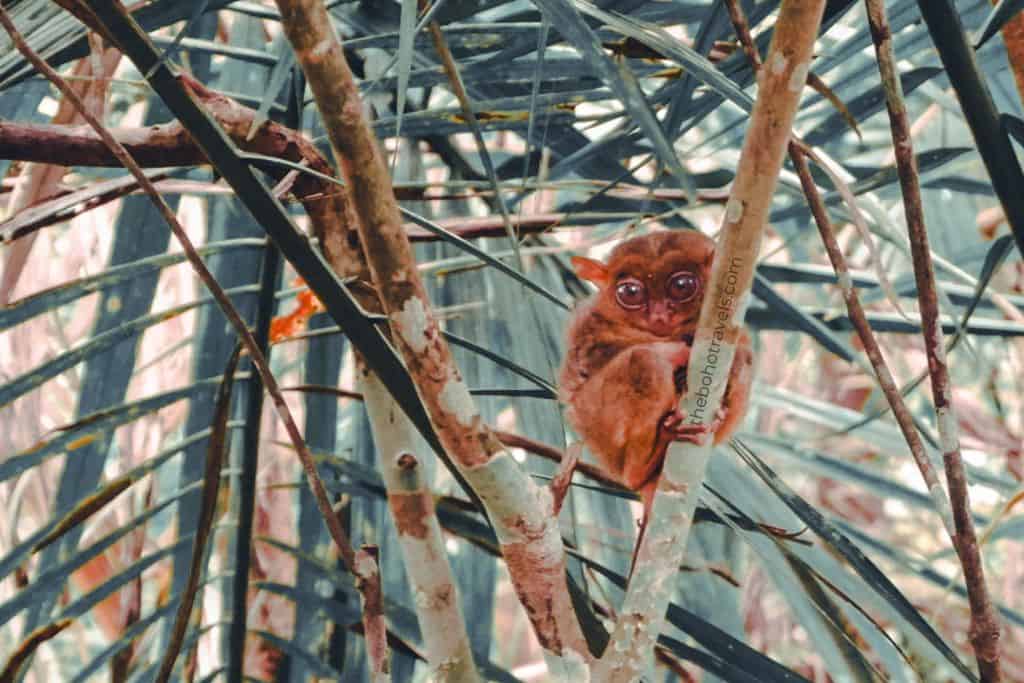
The tarsiers were smaller than I expected. These are some of the smallest primates in the world, and seeing them clinging to branches in the forest — enormous round eyes, completely still — feels like stumbling into something private.
The sanctuary in Corella operates as a protected habitat, not a zoo. The tarsiers roam freely in a forested area, and guides walk you through at a respectful distance.
💡 No flash photography, and keep noise to an absolute minimum. Tarsiers are easily stressed. Keep your distance even if they seem unbothered — think of it like visiting someone’s home. Observe, but try not to make your presence known more than necessary.
3. Cruise the Loboc River over lunch and a cultural show

The Loboc River Cruise is one of those experiences that sounds more touristy than it actually feels once you’re on it. You board a floating restaurant, have lunch while cruising down the Loboc River — which is genuinely beautiful, lined with palms and greenery — and at some point, you stop to watch a local cultural performance featuring traditional Philippine folk dances.
The food is decent rather than memorable. But you’re not really there for the food. You’re there to cruise a gorgeous river and see dancers perform in traditional costume, and that part delivers. For me, getting to see Philippine cultural performances in a setting like that is always worth it.
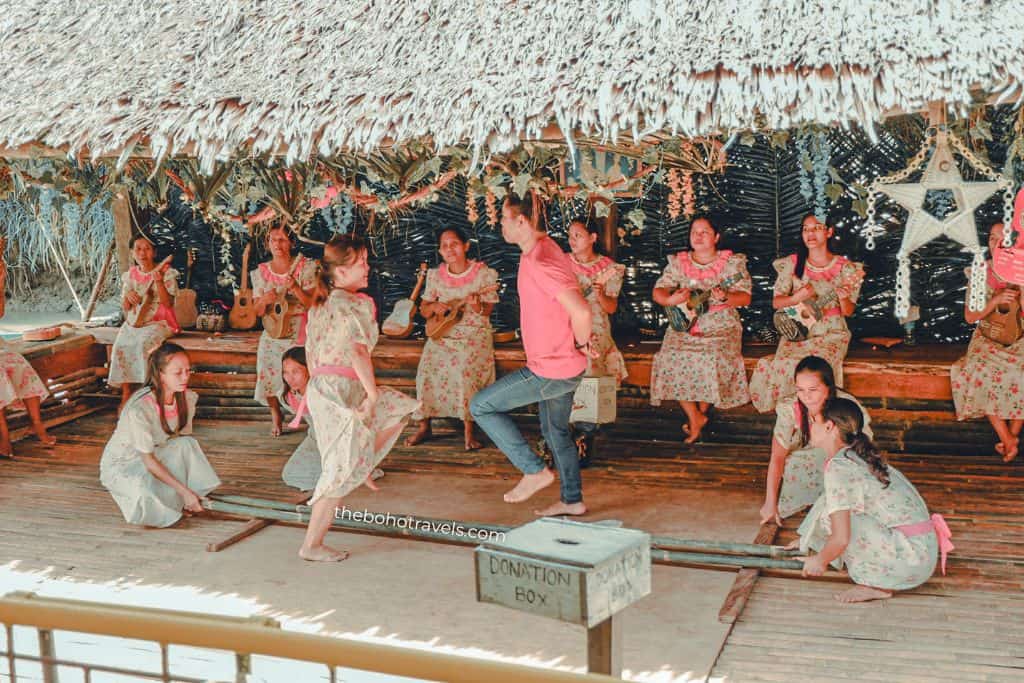
💡 Lunch is usually included in tour packages. The cruise typically takes about an hour. The boats are large and stable — it’s more like a floating platform than a conventional boat.
4. Stop for photos at the Bilar Man-Made Forest
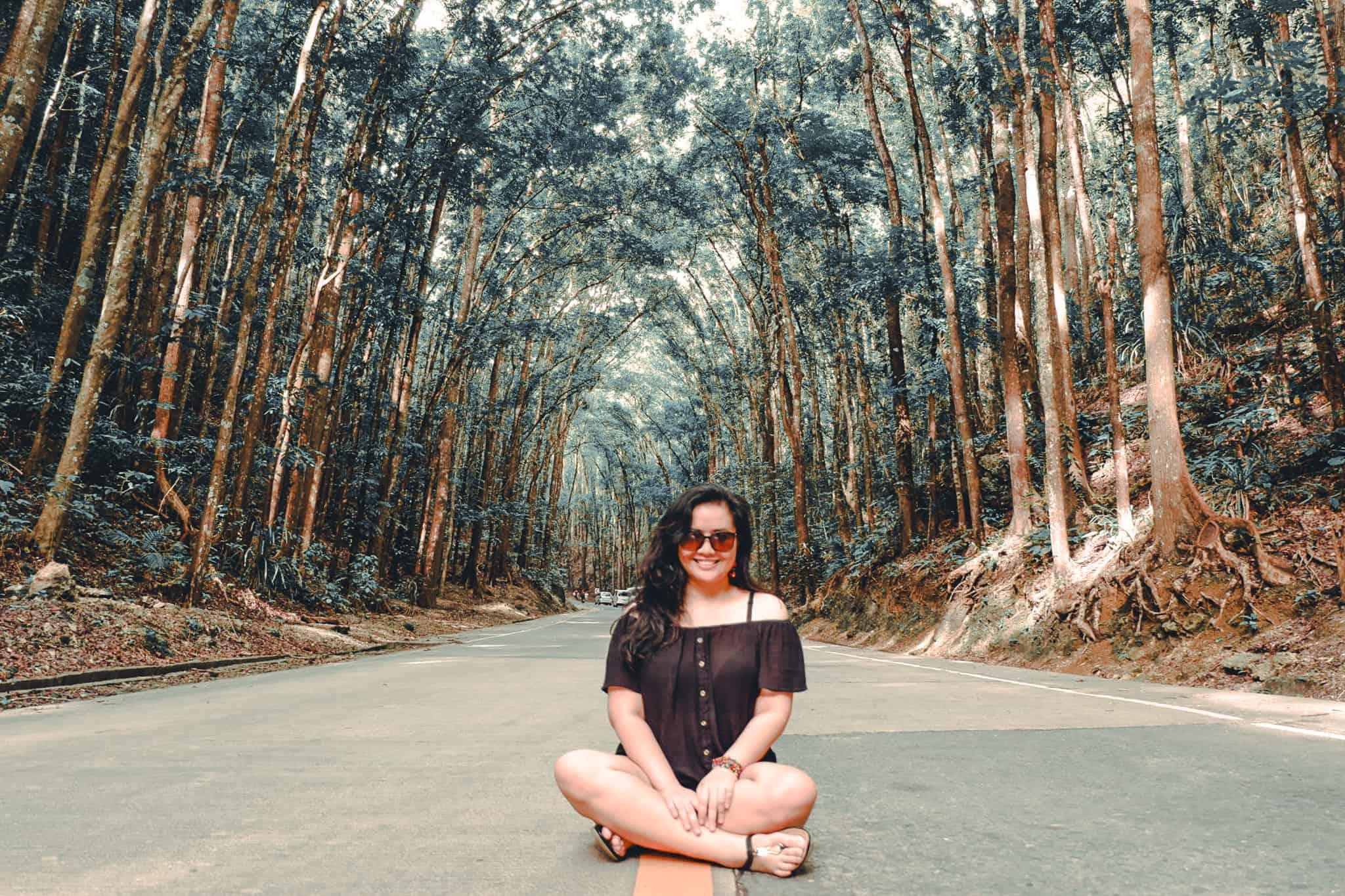
The Bilar Man-Made Forest is exactly what it sounds like — a stretch of mahogany trees planted to reforest an area that had been cleared. The canopy is dense enough to feel genuinely forest-like, and the road cuts straight through the middle of it.
Most people treat it as a photo stop, pulling over to take pictures with the trees arching overhead on both sides. Just be mindful that it’s an active road with traffic. If I hadn’t been on a schedule, I would’ve liked to spend more time walking through it rather than just stopping for photos.
Cultural Immersion
This is the part of my Bohol experience that most travel guides don’t cover, and it’s the one I keep coming back to.
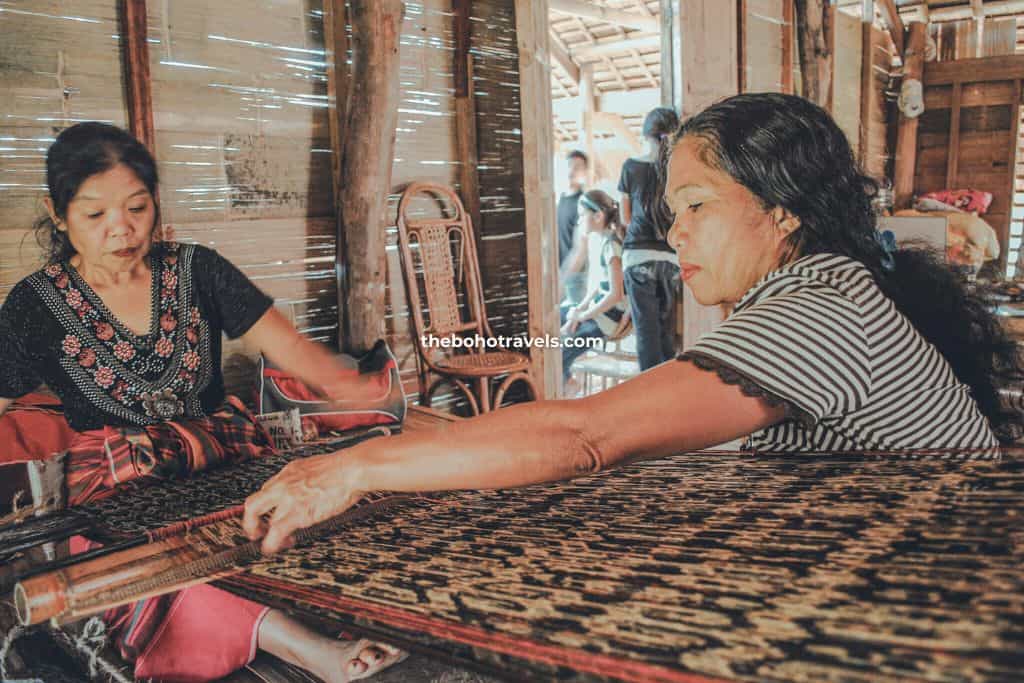
5. Visit the Eskaya Tribe in Duero
The Eskaya are an indigenous community living in the mountains of Duero, in southeastern Bohol. What makes them extraordinary — among other things — is that they are one of the only indigenous groups in the Philippines with their own written script, a syllabary that linguists have been studying for decades. Their language, their script, and their oral traditions have been passed down through generations largely outside the mainstream Filipino consciousness.

We visited them in 2012 as part of a longer journey through indigenous communities in the Philippines — I wrote about that visit to the Eskaya community in more detail here, including what we saw, what we got wrong, and what I’d do differently.
The short version: we showed up unannounced. Information about how to reach them was almost nonexistent at the time, and the community was warm and welcoming — as Boholanos tend to be — but I could tell they had wanted to prepare something for us and were caught off guard. It’s a memory I carry with some regret, because I think the experience would have been even more meaningful if we had arranged it properly.
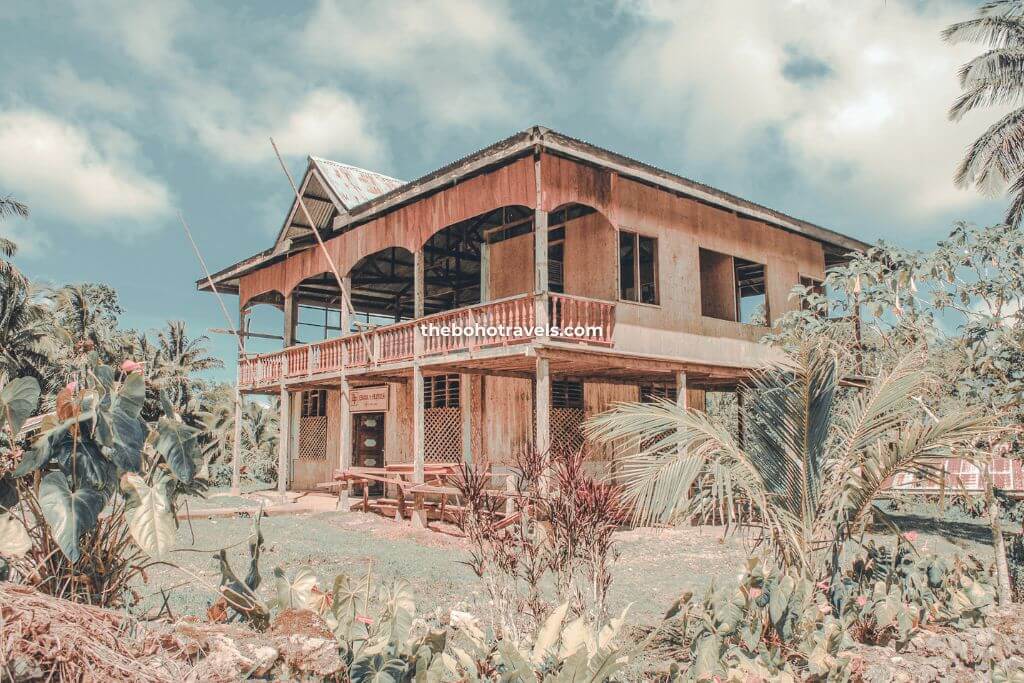
If you want to visit the Eskaya tribe — and I genuinely think it’s one of the most meaningful things you can do in Bohol — the right approach is to coordinate in advance through the National Commission on Indigenous Peoples (NCIP). Reaching out before your trip gives the community time to prepare and ensures your visit is welcomed rather than just tolerated.
💡 Visiting the Eskaya tribe is not one of the standard tours you can book through a regular travel agency. It requires advance coordination with the NCIP. Build it into your itinerary as a dedicated half-day or full-day trip.
The Eskaya are one of several indigenous communities across the Philippines worth learning about. If this kind of cultural travel interests you, my guide to indigenous art and culture in the Philippines covers more.
Beaches and Island Hopping
The beaches of Panglao Island — technically a separate island connected to Bohol by two bridges — are the reason a lot of people extend their trip beyond the countryside circuit. The water really is as blue as the photos suggest. I saw a preview of it on my first visit, driving past on the way to Duero, and it was exactly what brought me back in 2019.
6. Swim or unwind at Alona Beach
Alona Beach is Panglao’s most popular stretch, and the most developed. There are dive shops, restaurants, accommodation options at every price point, and the kind of easy social atmosphere that solo backpackers and groups tend to gravitate toward. If you want to be in the middle of things — surrounded by other travelers, easy access to organized activities — Alona is the right base.
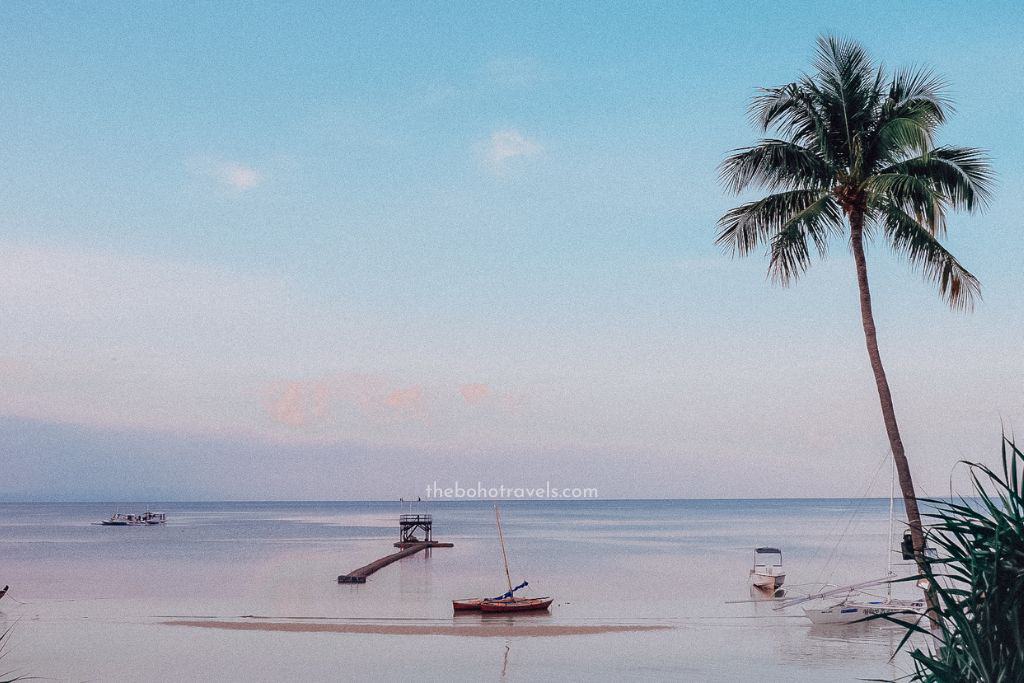
If you prefer something quieter, it might feel a bit much. But Alona has its appeal, especially if it’s your first time and you want the built-in energy of a traveler hub.
📍 Hinagdanan Cave in Panglao Island is worth a detour if caves are your thing — it has an underground lagoon you can swim in, with natural light filtering through holes in the ceiling. It’s a short visit and close enough to combine with a beach day.
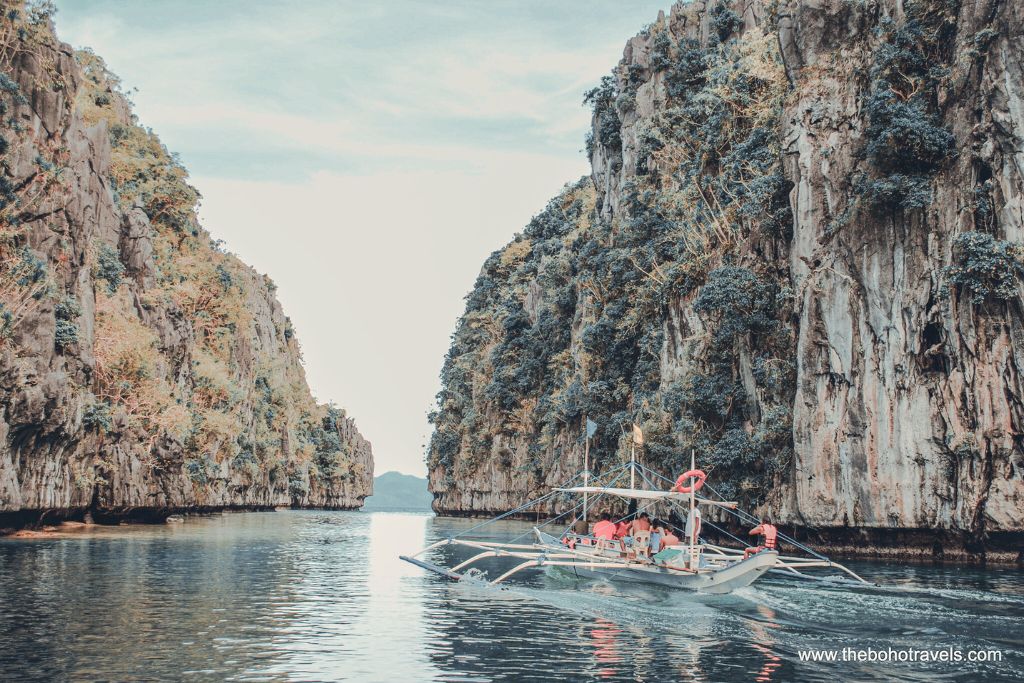
7. Go island hopping to Balicasag, Pamilacan, and Virgin Island
Bohol’s island hopping options will bring you to some of the most stunning waters in the Philippines. The usual route covers three stops in a day: Balicasag Island (known for its coral walls and turtle sightings), Pamilacan Island (where dolphin and whale shark encounters are possible), and the Virgin Island sandbar (a narrow strip of white sand that emerges from the water at low tide).
I haven’t personally visited all of these — Balicasag and Pamilacan are on my list for the next trip — but they come consistently recommended, and the reviews on organized tours back that up. This is the better choice if you want a taste of several spots in one day rather than spending extended time in the water at one location.
👉 Browse top-rated island hopping tours in Bohol on Klook, GetYourGuide, or Viator. Multi-stop dolphin watching and sandbar combos are among the most-booked.
8. Enjoy a day pass at a Panglao beach resort
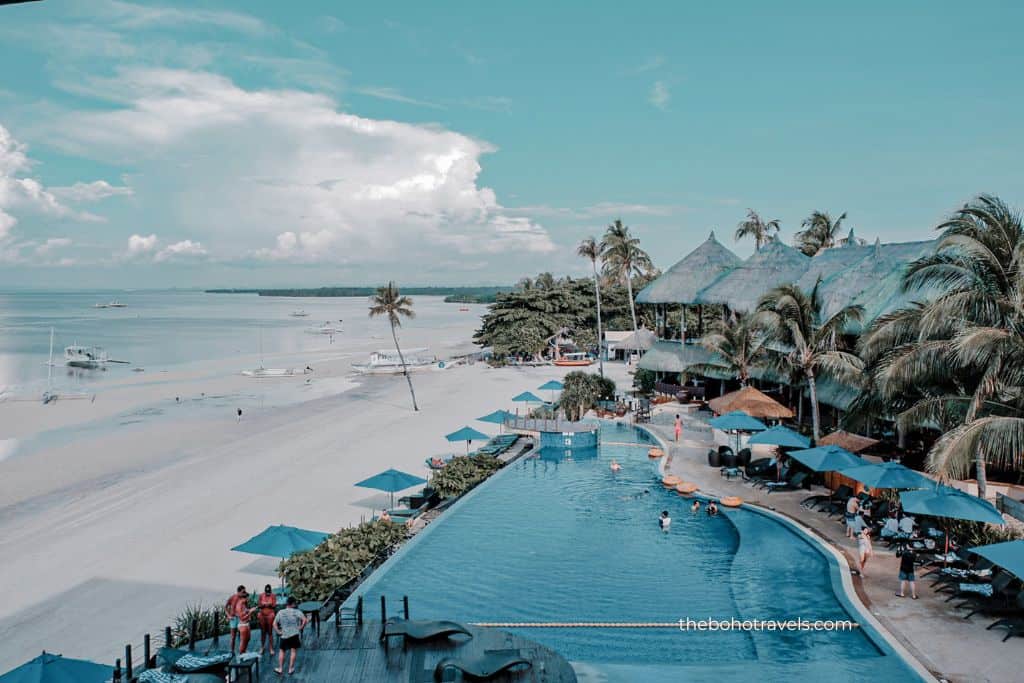
If you’re not staying at a beachfront property but still want that private-beach experience, several Panglao resorts offer day passes — North Zen Villas, Oceanica Resort, and Bluewater Panglao are all solid options that let you enjoy resort-level beach access without committing to an overnight stay. It’s a good way to get a taste of resort life without the price tag of an overnight stay there.
👉 Browse day pass options at Panglao beach resorts here.
Diving and Snorkeling
Bohol is one of the best dive and snorkel destinations in the Philippines, and it’s worth treating as its own activity rather than an add-on to a beach day. Whether you’re certified or just want to try it for the first time, here’s where to go.
9. Dive or snorkel at Balicasag Island
If you’d rather spend real time in the water than hop between stops, Balicasag deserves its own dedicated trip. Bohol is part of the Coral Triangle — the most biodiverse marine region on the planet — and Balicasag in particular is considered one of the top dive sites in the Philippines, with steep coral walls, sea turtles, schools of jacks, and the occasional thresher shark.
For non-divers, snorkeling at Balicasag Island offers genuinely good visibility and marine life. You don’t need to be certified to have a great underwater experience.
💡 If you’re not certified but want to try diving, several operators on Alona Beach offer intro dives and PADI courses. Bohol is a great place to get certified — conditions are generally good, and the marine life makes it immediately rewarding. Find top-rated dedicated dive and snorkel tours in Bohol here.
10. Freedive at Napaling Reef
If you want a quieter alternative to Balicasag, Napaling Reef is worth knowing about — it’s often cited as Bohol’s most accessible dive site, with relatively easy entry from shore and reliable sightings of sardine schools. It doesn’t get the same attention as Balicasag, but that’s part of its appeal if you’re looking for a less crowded spot. Check out this Freediving Tour at Napaling Reef.
Off the Beaten Path
Beyond the standard countryside circuit and Panglao beaches, Bohol has a second layer that most short-stay visitors never get to. These are worth planning for if you have more than three days or if you’ve already done the classics.
11. Chase waterfalls at Can-Umantad and Dimiao
Bohol has several waterfalls worth visiting, with Can-Umantad Falls — sometimes called the widest waterfall in the Visayas — and the Dimiao Twin Falls among the most recommended. They’re not part of the usual tourist route, so getting there independently requires some navigation. I’d recommend joining a guided tour or hiring a driver who knows the routes rather than going it alone.
👉 Browse waterfall tours in Bohol.
12. Get your adrenaline fix at Danao Adventure Park
For the adventure-minded, Danao Adventure Park sits in the mountains about two hours from Tagbilaran and offers some of Bohol’s more extreme activities — ziplines, rappelling, a canyon swing called ‘The Plunge,’ and ATV trails. It’s not a quick add-on given the distance, but worth planning a dedicated half-day for if adventure activities are your thing.
👉 Check Danao Adventure Park tour options here.
13. Catch sunrise at Alicia Panoramic Park
If Chocolate Hills is more on your radar for sunset, Alicia Panoramic Park offers the inverse — a quieter, less crowded vantage point that’s become known among early risers for sunrise views over Bohol’s countryside hills. It sits a bit off the standard countryside circuit route, so it’s better suited for travelers with some flexibility in their schedule or those looking for a quieter alternative if Chocolate Hills feels too touristy when they visit.
I haven’t been myself yet, but it’s consistently recommended by other Bohol travelers, and it’s an easy add if you’re already up early for a countryside tour departure.
More Bohol Tours to Consider
If you want to compare options before booking, here’s a categorized list of top-rated tours by activity.
🚗 Countryside Tours
🪸 Snorkeling Tours
🤿 Diving and Freediving
🏝️ Island Hopping
- Private Balicasag Island Tour and Dolphin Watching
- Island Sunset Watching and Snorkeling Tour
- Bohol Island Hopping (Balicasag & Virgin Island)
- Pamilacan Island Dolphin/Turtle Watching Tour & Lunch
- 🌅 Day Pass Beach Resorts
North Zen Villas - Oceanica Resort
- Bluewater Panglao
🌙 Other Experiences
💡 I usually check the 3-star and below reviews first — if nothing there would dissuade me from booking, that’s a good sign.
🛌 Where to stay in Bohol
For most visitors, Panglao Island is the best base. You’re close to the beaches, the dive shops, and the island hopping departure points, and it’s easy enough to do the countryside circuit as a day trip from there.
Tagbilaran City is the capital and more centrally located for exploring the province, but it’s not a beach destination. If your priorities are beaches and diving, stay in Panglao. If you’re planning to spend significant time on the countryside circuit or in Duero for an Eskaya visit, Tagbilaran is more convenient.
The Bellevue Resort Bohol — Personal Pick
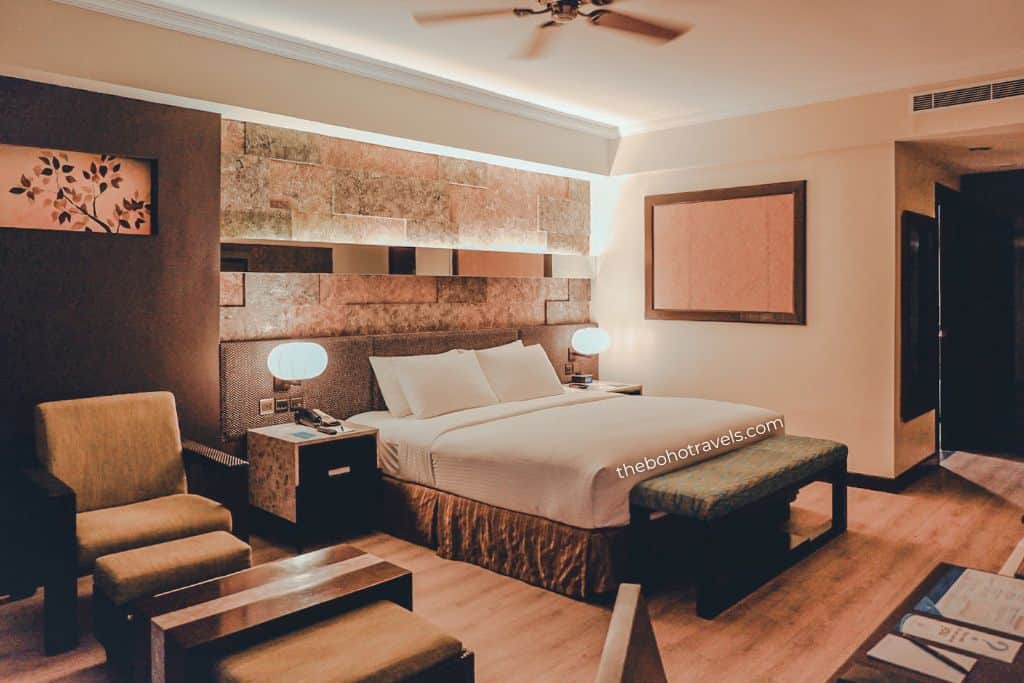
I stayed at The Bellevue Resort Bohol on my 2019 trip, and it was exactly what I wanted from a Bohol hotel. The view from the room was the first thing that struck me — a proper balcony looking out over the water, the kind of view that makes you set an alarm for sunrise. The beds were genuinely comfortable, the room was spacious, and there was a live band playing near the bar most evenings, which gave the whole place a relaxed, lived-in energy.
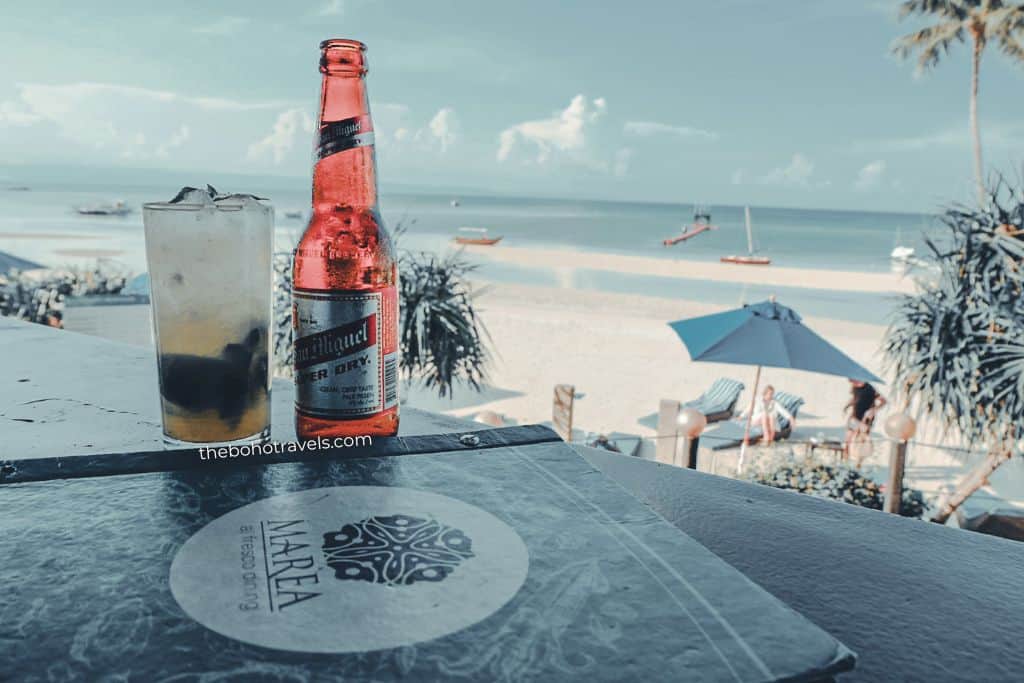
We spent our last few hours before leaving just at the bar, having a couple of drinks, watching the water. That’s the kind of hotel it is — the kind where you’re content just to be in it. I’d recommend it for couples, small groups, or anyone who wants comfort and atmosphere without going full luxury resort.
👉 Check availability and rates for The Bellevue Resort Bohol on Agoda.
Other Properties Worth Considering
A few other Panglao properties come consistently recommended:
- Amorita Resort — clifftop boutique resort with a strong reputation for service and views
- Bohol Bee Farm Hotel — an eco-resort known for its organic food and relaxed, sustainable atmosphere; the restaurant is worth visiting even if you don’t stay
- Abraham Bohol — an affordable property getting strong reviews for value
👉 Browse Panglao hotels on Agoda — filter by your dates to see current availability and rates.
📝 Plan your trip to Bohol
How to get to Bohol
There are two main ways to get to Bohol, and I’ve tried both.
Fly Direct to Panglao Airport
If you’re coming from Manila, flying directly to Panglao International Airport is the most straightforward and possibly the most convenient option. Flight time from Manila is about 1.5 hours. Several carriers serve this route, including Cebu Pacific and Philippine Airlines.
For anyone who doesn’t love traveling by water, this is the simpler choice.
Fly to Cebu, Then Take the Ferry
The other option — which works well if you’re already planning a stop in Cebu — is to fly into Mactan-Cebu International Airport and take a fast ferry from Cebu City to Tagbilaran Port. The crossing takes roughly two hours, with multiple daily sailings. OceanJet and SuperCat are the main operators.
I’ve done both, and both work well. The ferry adds travel time, but the crossing is generally calm. Just book your tickets in advance during the dry season when demand is higher.
💡 The ferry drops you at Tagbilaran Port on the mainland. From there, you’ll need a tricycle or van transfer to reach Panglao — roughly 20–30 minutes away.
Getting around Bohol
Getting around Bohol is manageable — it’s not a complicated island to navigate — but how you do it depends on your travel style.
On my 2019 trip, we hired a van and driver for the countryside tour, and it was the right call. Our driver handled the route, knew the best stops, and gave us the freedom to adjust timing on the fly. Not having to think about directions meant I could just look out the window and take it all in.
If you’re more independent and comfortable with Waze or Google Maps, renting a motorbike or scooter gives you more flexibility. Habal-habal (motorcycle taxis) are also available, and jeepneys and buses connect the larger towns.
For the countryside circuit specifically, joining an organized tour or hiring a driver is the easiest and most cost-effective option, especially for first-timers. Boholanos are genuinely helpful — on my first trip they went out of their way to help us find the road to Duero; on my second, a local helped a companion recover a lost phone. But having someone in the car who knows the route takes the mental load off.
💡 Van hire for a full day typically runs around Php 2,500 – Php 3,500. Most countryside tours from booking platforms include transportation.
Best time to visit Bohol
The same logic that applies to the rest of the Philippines applies here: December through May is when you want to be in Bohol.
The dry season — especially December through March — gives you the clearest skies, the calmest seas, and the best conditions for both beaches and the countryside. The Chocolate Hills turn their signature chocolate brown as the grass dries out, which is worth seeing if you’ve only ever seen them green. April and May are hotter but still dry, and beach conditions remain good.
The months of June through November (wet season) bring lower prices and fewer tourists. However, the rain can be heavy and unpredictable, possibly limiting what you can do and enjoy. Island hopping in rough seas is no fun, and the countryside looks its best in clear light (I’ve seen it under gloomy skies, too, and, while it’s still pretty, I’d rather see it in bright skies). I’d reconsider traveling during these months unless you’re feeling adventurous, or unless budget is the primary constraint.
💡 If diving is your main reason for visiting, Bohol’s underwater visibility is good year-round, though the dry season is preferred for surface conditions around the dive sites.
🗺️ Sample itineraries
3 Days in Bohol (First-Timer)
This is the minimum I’d recommend for a proper introduction to the island.
- Day 1: Countryside circuit — Chocolate Hills, Tarsier Sanctuary, Loboc River Cruise, Bilar Forest. Check into your Panglao hotel in the evening.
- Day 2: Island hopping or diving — Balicasag, Pamilacan, or the Virgin Island sandbar.
- Day 3: Beach day in Panglao — swim, relax, explore Alona Beach.
5 Days in Bohol (Going Deeper)
With five days, you can cover the essentials and still leave room for something less obvious.
- Day 1: Countryside circuit
- Day 2: Visit the Eskaya Tribe in Duero — arrange in advance through NCIP, as this requires a dedicated day
- Day 3: Diving or snorkeling around Balicasag or Napaling Reef.
- Day 4: Chase waterfalls or get your adrenaline fix at Danao Adventure Park.
- Day 5: Beach day — Panglao, Alona, or a quieter stretch of coast
Day Trip from Cebu: Is It Worth It?
Technically yes — if your only goal is to tick off the Chocolate Hills, tarsiers, Loboc River, and Bilar Forest, it can be done in a day. The fast ferry from Cebu takes about two hours each way, which gives you roughly six to eight hours on the ground.
But I’d encourage you to stay at least one night. The logistics are less rushed, you can add a beach stop in Panglao at the end of the countryside circuit, and you get to see Bohol at a pace that matches the island’s actual character — which is unhurried. A day trip is better than nothing; a night or two is better than a day trip.
💭 FAQs on things to do in Bohol
Is Bohol worth visiting?
Yes — and it’s worth more than a single day. Bohol offers a combination of natural wonders, beaches, diving, adventure, and indigenous culture that’s hard to match in a single Philippine province. If you’re building a Philippines itinerary, it deserves a proper allocation, not just a day trip. If you’re still on the fence, I go into more depth on this in my dedicated guide to whether Bohol is worth visiting.
How many days do you need in Bohol?
Four days is a comfortable minimum if you want to cover the main attractions and spend at least a day by the beach or diving. Three days works if you’re tight on time. Five days or more allows you to go deeper — waterfalls, Danao Adventure Park, or a visit to the Eskaya tribe.
What is Bohol most famous for?
The Chocolate Hills and the Philippine tarsier are Bohol’s most iconic attractions. But the province is also well-regarded for its diving (Balicasag Island is a world-class dive site), its beaches in Panglao, and its colonial history.
How much does it cost to visit Bohol?
Costs vary a lot depending on your travel style — Bohol works for backpackers and comfortable travelers alike. For the most current pricing on tours, activities, and accommodation, I’d recommend checking rates directly on Klook, GetYourGuide, or Agoda, since prices shift by season and operator.
Is Bohol safe for tourists?
Yes. In my experience across two visits, Boholanos are among the most helpful and welcoming people I’ve encountered in the Philippines. Standard precautions apply — watch your belongings, don’t leave valuables unattended on the beach — but I’ve never felt unsafe there.
Is Bohol good for solo travelers?
Very much so. Alona Beach has the kind of traveler-friendly setup that makes it easy to meet people, and organized tours naturally bring you into contact with other visitors. Bohol is compact enough that solo navigation is manageable with a bit of planning.
Can I visit Bohol from Cebu in a day?
You can, but staying at least one night is worth it. A day trip gives you time for the countryside circuit or a beach stop, but not both. Staying overnight opens up the island considerably.
What is the best time of year to visit Bohol?
December through May, with December through March being the sweet spot for clear skies and calm seas. April and May are warmer. The wet season (June–November) is cheaper but comes with the risk of heavy rain that can limit what you can do and enjoy.
Do I need a guide to visit Bohol?
Not strictly. For the countryside circuit, most people join an organized tour or hire a van and driver, which makes the day significantly smoother. For beach days and Alona Beach, you can manage independently without any trouble. For anything off the main tourist path — waterfalls, Danao, or the Eskaya tribe — a guide is strongly recommended.
Is the Philippines worth visiting?
If Bohol has you curious about the rest of the country, my guide to whether the Philippines is worth visiting covers the bigger picture — what to expect, who it’s best for, and how to plan a broader trip.
➡️ Where to go next
If Bohol has you wanting more of the Philippines, Cebu and Boracay are the most natural next stops — many travelers pair one of them with a Bohol trip, especially since the Cebu–Bohol ferry route makes that connection easy. I’ll be covering both in more depth soon.
💌 The Wrap-Up:
Bohol has a way of making you wish you’d planned for more time. Whether you’re here for three days or five, the province tends to reveal something new the longer you stay — a stretch of beach you didn’t expect, a conversation with someone who knows the way to somewhere that isn’t on any map. I hope this things to do in Bohol guide gives you a solid starting point. If you have questions, feel free to reach out — I’m happy to help.